Pas à Pas
A 2026 French documentary that trusts the walk itself as the story
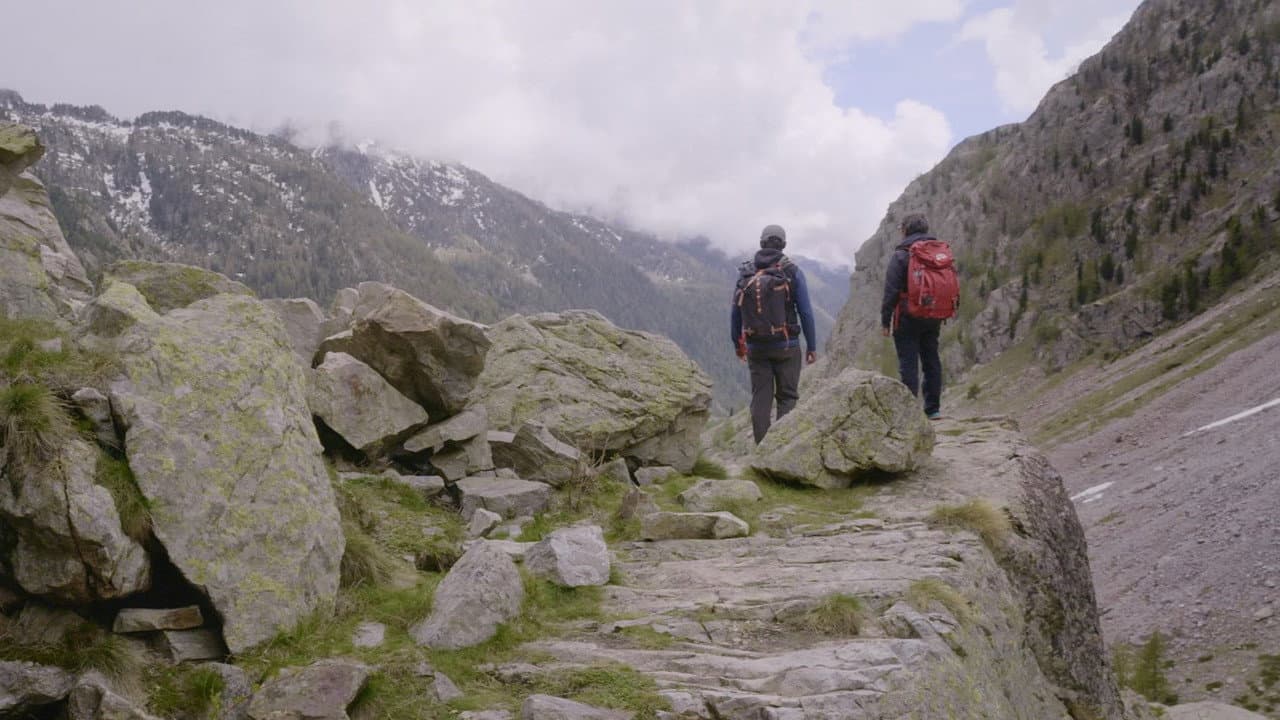
Pas à Pas — the title means "step by step," though in French pas also means "not," a linguistic duality the film seems to lean into deliberately — is a 2026 documentary built around something deceptively simple: walking through mountains. Not conquering them. Not summiting them. Walking through them, feeling the path, paying attention to what a body learns when it slows down.
Most mountain films want to give you the view from the top. This one's interested in what happens between the trailhead and wherever you end up — which is where most of the actual living occurs. The film doesn't chase a conventional narrative (no crisis, no protagonist arc, no ticking clock). Instead, it makes an argument that the walk is the destination, and that the body moving through mountain space is its own kind of story. It's a harder sell. It's also rare.
The 10/10 IMDb rating speaks for itself — you basically never see that score on any film, let alone an independent documentary from outside the commercial mainstream.
Why this documentary stands apart: restraint in a medium that loves the swell
Here's the thing nobody mentions enough: documentaries about slow, meditative subjects are incredibly easy to ruin. The temptation to over-score them — to reach for the swelling orchestral moment every time a cloud passes over a ridge — is enormous. You can feel the film trying to make something profound when the subject is already profound on its own.
Based on what the film's conceptual anchors suggest, Pas à Pas resists that. It trusts the sensible, the felt, the tactile reality of a body on a path. That restraint — knowing when to get out of your own way — is where great documentary filmmaking lives.
The thematic vocabulary matters here too. Path. Step. Walk. Sensory experience. These words carry weight in both French philosophical tradition and in the growing body of writing about walking as meditative practice (think Rousseau's solitary walks, or Frédéric Gros's A Philosophy of Walking). The film appears to be in conversation with that lineage, though it does the talking through image and sound rather than narration. No voiceover explaining what you're supposed to feel.
The producers and missing credits — why you might not recognize the names
Pas à Pas was produced by Laser and La Satis — two production entities whose collaboration signals a commitment to artisanal, independent documentary work rather than the kind of big-budget nature spectacle that streaming giants tend to commission. Specific director and crew credits haven't been widely circulated in major trade outlets yet (which isn't surprising for smaller French releases until distribution is confirmed).
The film doesn't appear on Pathé's most anticipated releases for 2026 — a list that skews toward commercial cinema — which tells you something about scale. This isn't a multiplex film. It's the kind of work that finds its viewers through word of mouth, festival screenings, and the slow accumulation of attention from people who actually care about documentary craft.
What's striking is that despite this quiet press footprint, the film landed a 10/10 on IMDb. Hard to say if that reflects a passionate early-adopter audience voting in force, or something genuinely extraordinary in the execution. Probably both. Check Movie OTT as festival recognition and distribution news emerges — the site tracks that coverage closely.
Where to watch Pas à Pas right now
Pas à Pas is available on major OTT services, though exact availability varies by region. Use the Where to Watch widget at the top of this page for a live, up-to-date breakdown of every platform carrying the film in your country. Streaming rights for independent documentaries shift quickly — what's accessible on one service in France may differ from what's available in the UK or US.
Movie OTT aggregates availability across Netflix, Prime Video, regional platforms, and specialty streamers. It updates regularly, so if the film moves platforms or becomes available in a new territory, you'll find it there first without bouncing between apps.
Who should actually watch this
Pas à Pas isn't for everyone. If you need plot momentum, character arcs, or conventional stakes — this one will test your patience. But if you've ever stood at the base of a mountain and felt something shift in your chest before you even took the first step, this documentary will feel like someone made it specifically for you.
If you liked the meditative pacing of films like Nostalgia for the Light or Werner Herzog's slower work, this lands in similar territory — cinema that trusts the viewer to find meaning in observation rather than explanation. The rare 10/10 on IMDb. A production built outside the commercial machine. Worth keeping on your radar as critical coverage grows.
Frequently asked questions
Q: Where can I watch Pas à Pas?
Check the Where to Watch widget on this page, or visit Movie OTT for a real-time breakdown of streaming availability in your region. Availability varies by country and updates regularly.
Q: Who directed this film?
Director credits for Pas à Pas haven't been widely confirmed in major film databases yet. The film was produced by Laser and La Satis. Further production details should surface as distribution expands.
Q: What's the IMDb rating?
Pas à Pas holds a 10/10 on IMDb — an exceptionally rare score for any film. The rating reflects strong early enthusiasm from viewers, though the total vote count is still building.
Q: Is it in French?
Almost certainly yes. The title is French, the production companies are French, and the film will be presented primarily in French. Subtitle and dubbing availability depends on which platform you're watching.
Q: What's the runtime?
Runtime specifics haven't been widely published yet. As distribution details confirm, Movie OTT will update with full technical specs.
Q: Is it family-friendly?
Since Pas à Pas is a documentary about walking through mountains with no narrative conflict or violence, it's likely suitable for older children and teens — but check your platform's content guidelines to be sure.