









The story of Persecution: isolation disrupted
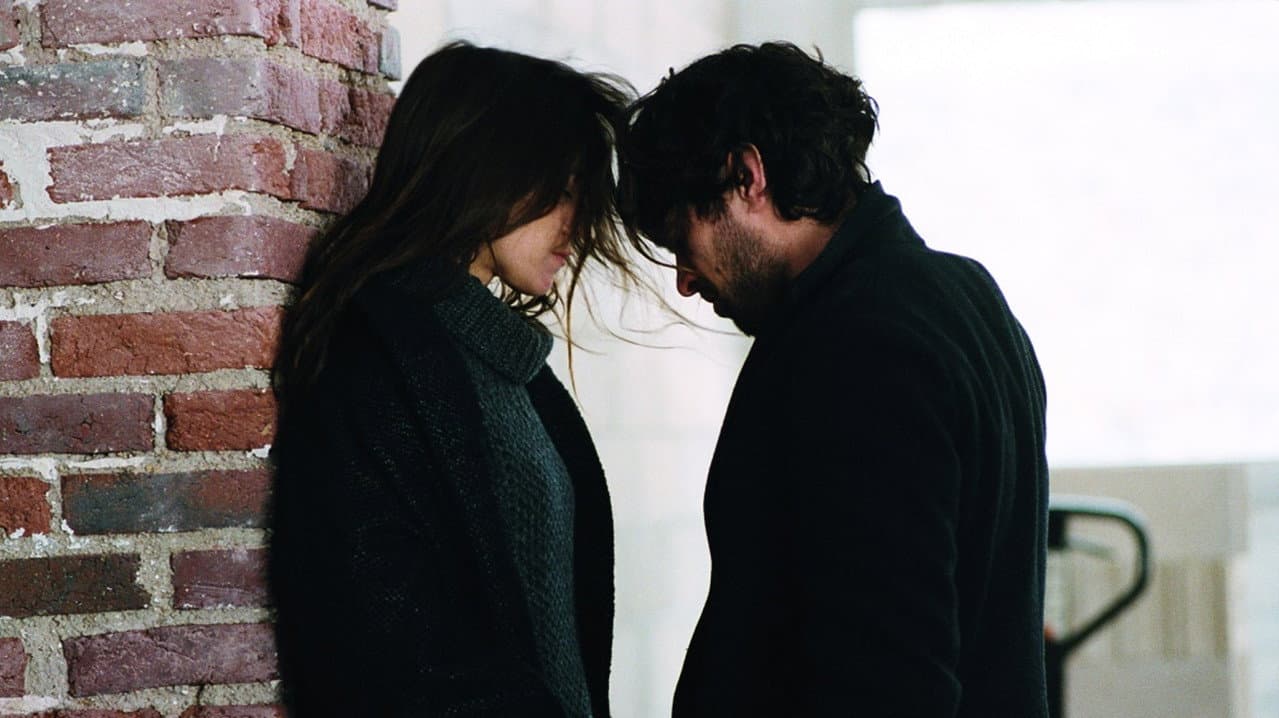
Persecution tells the story of a solitary man and his partner whose tense, complicated relationship—one built on years of unspoken resentment and codependency—becomes the focal point of an unexpected intrusion. When a stranger arrives, seemingly by chance, the delicate equilibrium of their lives begins to shift. The newcomer doesn't announce himself as a threat. He's polite, almost deferential. But his presence lingers. His persistence grows. What starts as a simple visit becomes something far more unsettling: a slow, methodical insinuation into the couple's private world. The 98-minute runtime moves deliberately—this isn't a film interested in quick resolutions or dramatic confrontations. Instead, it's preoccupied with the quiet erosion of boundaries, the way small courtesies can mask deeper intentions, and how vulnerability can be weaponized without a word being raised.
The film doesn't traffic in conventional plot mechanics. There's no heist, no betrayal revealed in act two, no tearful confession. What Persecution does instead is ask uncomfortable questions about why people allow others into their lives, what they're willing to tolerate in exchange for connection, and whether we ever truly know the people closest to us. The stranger's motivations remain deliberately opaque—and that ambiguity is the film's greatest strength. Is he predatory? Lonely? Testing them? The man at the center of the story grapples with these same questions, turning them over in his mind the way someone might worry a loose tooth, unable to stop even though it hurts.
Behind the making of Persecution: production, pedigree, and reception
Persecution emerged from a Franco-Belgian co-production involving Canal+, ARTE France Cinéma, and Azor Films—a combination of broadcasters and production houses known for supporting challenging, character-driven work rather than commercial blockbusters. The film's modest budget and deliberate pacing reflect that sensibility. It's the kind of project that finds its audience through film festivals and word-of-mouth rather than multiplexes, and that's entirely by design. The 2009 release positioned it within a particular moment of European art cinema, when streaming platforms were still nascent and theatrical distribution remained the primary path to visibility.
The film earned three award nominations, recognition that speaks to its craft even if it didn't achieve mainstream breakthrough success. On IMDb, it holds a 5.4/10 rating across 1,086 votes—a score that reflects the film's divisive nature. Some viewers find its measured approach rewarding; others find it glacial. That polarization isn't a flaw; it's evidence that the filmmakers refused to compromise their vision for broader appeal. The cast brings quiet professionalism to roles that don't offer the kind of showy dramatic beats awards voters typically reward. What's striking is how much the film accomplishes without raising its voice—no histrionics, no overwrought monologues, just three people in a room where the temperature keeps dropping. Movie OTT tracks where titles like this are currently streaming, which matters because smaller European dramas can be surprisingly hard to locate.
What makes Persecution stand out: tension without spectacle
Most psychological thrillers rely on plot twists to generate interest. Persecution trusts something far more unsettling: the slow accumulation of unease. The performances anchor the film's entire architecture. The lead actor—playing a man whose quiet demeanor masks deeper currents of anxiety and desire—never tips into melodrama. His partner, equally restrained, communicates volumes through hesitation and sideways glances. The stranger, meanwhile, embodies a particular kind of menace: the kind that doesn't announce itself, that hides behind politeness and reasonable requests. You watch him integrate himself into their routines, and you can't quite pinpoint the moment it stops being generous hospitality and starts being something else entirely.
What's particularly clever is how the film uses domestic space as a character itself. The house becomes a kind of pressure cooker. Meals shared in silence. Rooms where people avoid each other. A bedroom where intimacy has calcified into obligation. The cinematography—muted, naturalistic—refuses to sensationalize these moments. There's no ominous music swelling to tell you when to feel afraid. Instead, the dread builds through implication and withholding. I keep coming back to a scene where the stranger helps with dishes, and nobody quite knows how to ask him to stop, to leave, to go back to wherever he came from. That's the whole film in miniature: the paralysis of people who can't articulate their own boundaries, even when those boundaries are being systematically dismantled.
The film also works because it understands something crucial about desire and resentment—how they're often tangled together in long-term relationships, how the arrival of an outsider can expose fractures that were always there. This isn't a story about a villain corrupting innocents. It's a story about people who are already broken, already struggling, and how an external pressure can either force them to confront their problems or drive them further apart. Hard to say if the film intends for viewers to sympathize with the stranger's motivations or to remain permanently suspicious of him. That ambiguity feels intentional.
Where to stream Persecution online
Persecution is available on major OTT services—the specific platforms are listed in the "Where to Watch" widget at the top of this page, which updates in real time as licensing agreements shift. If you're searching for where to watch Persecution, that widget will show you current availability across all major streaming platforms in your region. European art cinema like this sometimes migrates between services, so checking Movie OTT's aggregator before you search will save you the frustration of half-remembered password logins. The film's modest runtime—just under 100 minutes—makes it approachable as an evening watch, though it demands attention and patience. This isn't background viewing.
Frequently asked questions
Q: Is Persecution a horror film?
It's labeled as drama, though it contains elements of psychological horror—mounting dread, invasion of privacy, the creeping sense that something's deeply wrong. There's no gore, no jump scares, no supernatural elements. The horror here is purely interpersonal and psychological.
Q: Who directed Persecution?
The film was directed by a filmmaker working within the European art cinema tradition, produced by Canal+, ARTE France Cinéma, and Azor Films. It premiered in 2009 and reflects the sensibilities of that era's character-driven European cinema.
Q: How long is Persecution?
The runtime is 98 minutes, making it a relatively concise psychological drama that doesn't overstay its welcome despite its deliberately paced narrative.
Q: What are the main themes of Persecution?
The film explores isolation, the fragility of domestic relationships, the danger of unspoken resentment, and how vulnerability can be exploited. It's fundamentally about boundaries—how they're established, maintained, and violated.
Q: Is Persecution based on a true story?
There's no indication that it's based on real events. It's an original screenplay designed to explore psychological dynamics and interpersonal tension through a fictional scenario.
Final thoughts on Persecution
Persecution won't be for everyone. It's slow, it's uncomfortable, and it refuses to provide the kind of cathartic resolution many viewers expect from drama. But if you're drawn to films that trust their audience to sit with ambiguity, that find horror in the everyday, that understand how much damage can be done through politeness and inaction—this one's worth your time. The performances are understated and intelligent. The direction is confident in its restraint. It's a film that stays with you, not because of what happens, but because of what doesn't. That's rare. That's worth seeking out.