








The story of Phantom of the Theatre
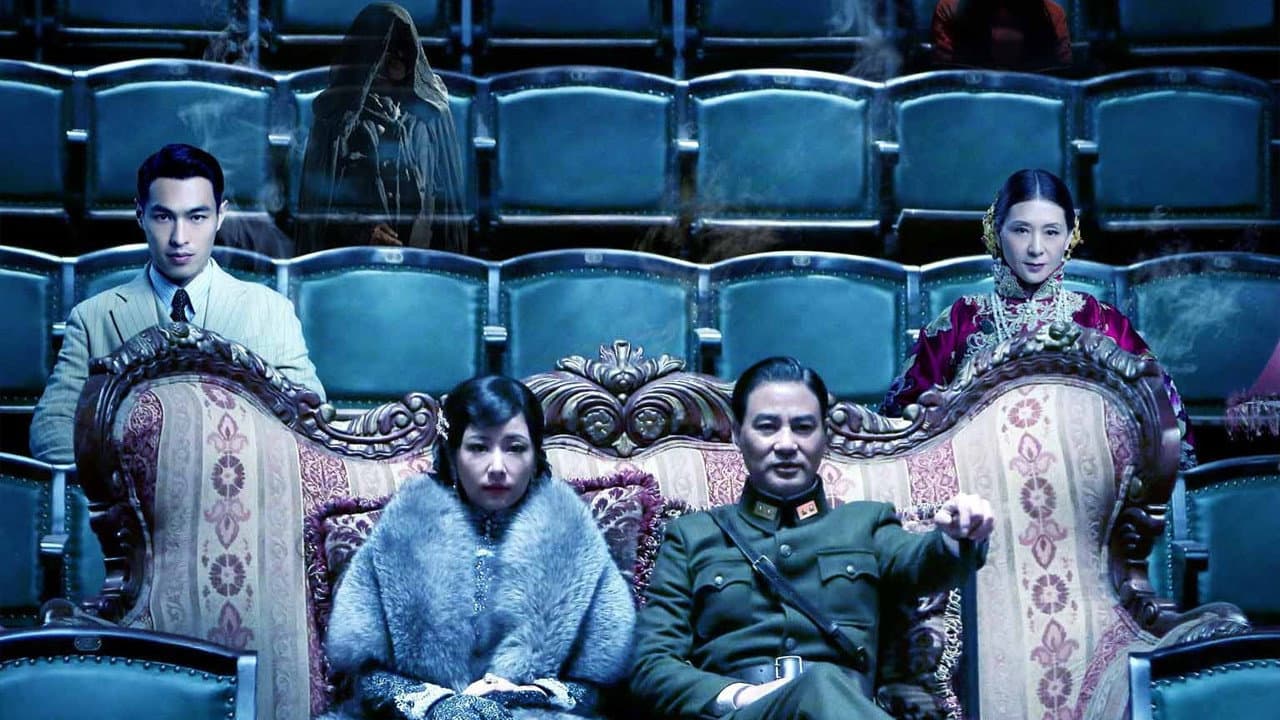
Phantom of the Theatre is a 2016 supernatural thriller set in Shanghai during the 1930s, a period when the city thrummed with theatrical grandeur and cultural collision. The film centers on a once-magnificent palatial playhouse that's about to reopen after years of silence—but not before a dark secret demands to be unearthed. Thirteen years earlier, a performance troupe perished in a catastrophic fire while trapped inside the theatre's walls. Now, as a new production takes the stage, those vengeful spirits begin to stir, hungry and furious, waiting for fresh victims to cross the threshold. What unfolds is part love story, part ghost story, part locked-room mystery, all set against the glittering but dangerous backdrop of Shanghai's golden age of performance and cinema.
Behind the making of Phantom of the Theatre
Directed by Raymond Yip, Phantom of the Theatre arrived as a Chinese-Hong Kong co-production, a partnership that allowed the filmmakers to tap into both mainland and Hong Kong talent and production resources. The ensemble cast includes Ruby Lin, Tony Yang, Simon Yam, and Huang Lei—seasoned performers with considerable prestige in Asian cinema. Yip's vision was to marry the ghost-story tradition (itself rooted in classical Chinese and Hong Kong horror) with the theatrical world's inherent melodrama and visual spectacle. The 1930s Shanghai setting wasn't arbitrary; it's a time and place steeped in glamour, corruption, and tragedy—perfect soil for a haunting.
The film clocked in at 103 minutes and carried a 13+ rating, positioning it as accessible to teen audiences while maintaining genuine scares. However, the box office told a quieter story: Phantom of the Theatre earned just $43,955, a modest return that suggests limited theatrical distribution or audience interest at the time of its 2016 release on April 29. Critical reception was similarly mixed. The film scored a 5.2 out of 10 on IMDb (from 409 votes), a 47 on Metascore, and a 50% on Rotten Tomatoes—right on the fence between "fresh" and "rotten." That split verdict is telling: some critics saw potential in its ambition, while others found the execution uneven.
What makes Phantom of the Theatre stand out
The film's real strength lies in its setting and atmosphere. Shanghai in the 1930s is a character unto itself—neon, shadow, colonial architecture bleeding into traditional Chinese design, and the theatre as a liminal space where performance and reality blur. The acrobatic sequences that punctuate the narrative aren't just spectacle; they're a way to explore the bodies of the murdered performers, their art frozen in time and now weaponized by their rage. What's striking is how the film treats the theatre itself as a living, breathing antagonist—every curtain, every light rig, every backstage corridor becomes a potential death trap.
The performances, particularly Simon Yam's turn as a figure drawn into the theatre's orbit, carry weight and gravitas. Yam brings a weathered intensity to his role, and there's a moment where he's confronted with evidence of the past fire that feels genuinely unsettling. Ruby Lin anchors the emotional core, though the script doesn't always give her character the agency she deserves. The romance subplot—which the film leans on heavily—feels at odds with the horror machinery grinding away around it, and that tonal whiplash is both the film's most intriguing and most frustrating quality. You're never quite sure if you're watching a gothic love story or a slasher, and while that ambiguity can work, here it sometimes just feels like the filmmakers weren't entirely sure either.
I keep coming back to the production design, though. The theatre's interiors—all crimson velvet, ornate mirrors, and cramped dressing rooms—create a palpable sense of claustrophobia and decay. It's a space that feels lived-in and haunted before the ghosts even show up. The cinematography captures that 1930s glamour without oversaturating it, and there are genuinely eerie moments, particularly when the film leans into silence and the sound design of creaking wood and distant music.
Where to stream Phantom of the Theatre online
Phantom of the Theatre is available on major OTT services, and Movie OTT tracks its current streaming availability across platforms in real time. Rather than hunting across multiple apps, you can check Movie OTT's "Where to Watch" widget at the top of this page to see exactly which service has the film in your region right now. Streaming rights shift frequently, so what's available today might move tomorrow—that's where the aggregator approach saves you time. Whether you're in the mood for a supernatural mystery on a weekend night or you're curious about international horror cinema, knowing where to find it beats the guessing game.
Frequently asked questions
Q: Who directed Phantom of the Theatre?
Raymond Yip directed the film. Yip is known for his work in Hong Kong and Chinese cinema, and he brought his sensibility for atmospheric storytelling to this 2016 supernatural thriller.
Q: Is Phantom of the Theatre based on a true story?
No, it's an original screenplay. Though the 1930s Shanghai setting is historically grounded, the ghost story itself is fictional—though inspired by the real tragedies that befell theatres and performance spaces during that era.
Q: What's the runtime and rating for Phantom of the Theatre?
The film runs 103 minutes and is rated 13+, making it suitable for older teens and adults. It contains horror elements and some violence, but nothing gratuitously graphic.
Q: Why did Phantom of the Theatre receive mixed reviews?
Critics were divided on its tonal balance. While the film's atmosphere and design earned praise, some felt the romance subplot clashed with the horror elements, and the pacing occasionally stumbled. It scored 5.2 on IMDb, 47 on Metascore, and 50% on Rotten Tomatoes—a classic split verdict.
Q: What's the plot of Phantom of the Theatre about?
The film follows a theatre in Shanghai that reopens after years of closure, only to be haunted by the spirits of a performance troupe who died in a fire 13 years earlier. As a new show begins, the vengeful ghosts start claiming victims, and the cast must uncover the truth of what happened that night.
Final thoughts on Phantom of the Theatre
Phantom of the Theatre won't blow your mind, and it won't haunt your dreams—but it's a genuinely atmospheric piece of supernatural cinema that deserves a look if you're into Asian horror or 1930s period aesthetics. The film's real magic is environmental: the theatre itself, the era, the tension between elegance and decay. It's imperfect, uneven, occasionally clumsy in its storytelling. But there's something earnest and ambitious about it that lingers. If you can find it on your preferred streaming service, give it an evening. Just don't expect perfection—expect atmosphere, mystery, and a few genuinely creepy moments wrapped in Shanghai's golden-age glamour.