Phutaniganjer Mahesh: How a Small-Town Theatre Dream Became a Feature Film
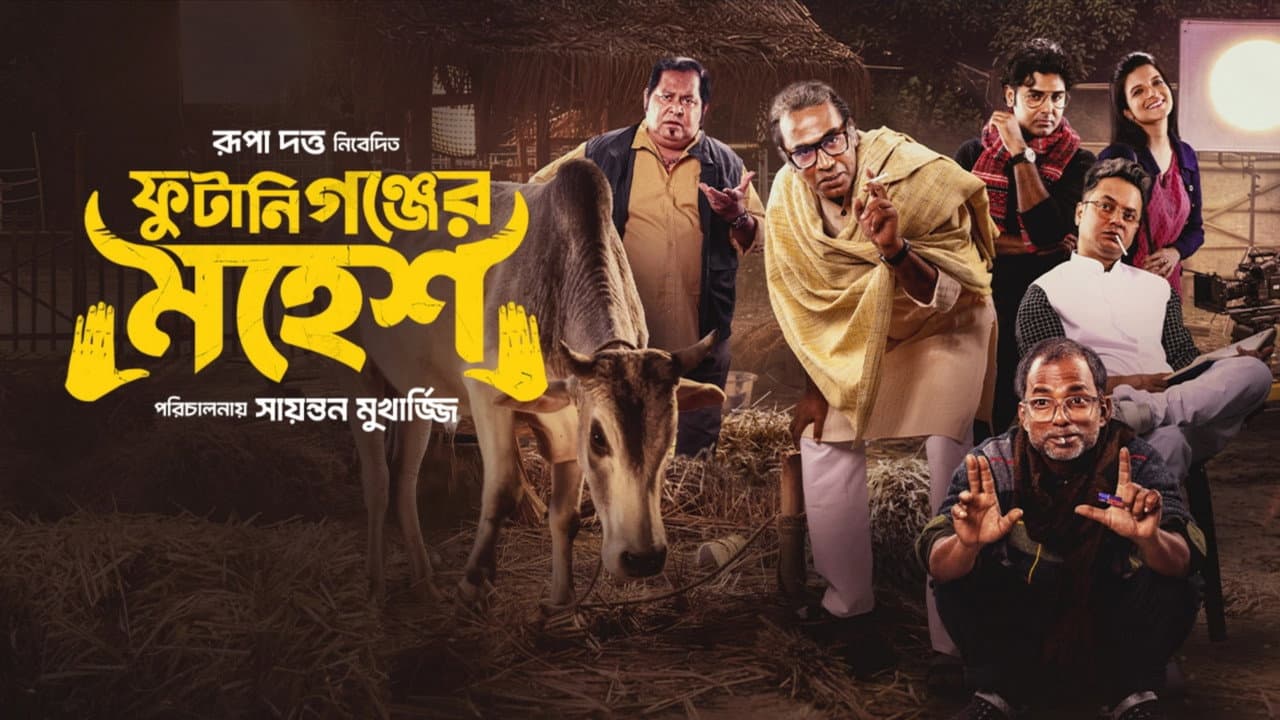
Phutaniganjer Mahesh is a 2026 Bengali drama that does something most Indian regional films don't bother with — it takes its literary source seriously, and it takes its town seriously. The story follows Arunava Bagchi, a government officer from Balurghat who acts in theatre on the side, as he teams up with veteran director Chandramadhab Shil to revive a defunct theatre group by adapting Sarat Chandra Chattopadhyay's Mahesh. What starts as a modest theatrical revival spirals into something far messier and more ambitious: Balurghat's first-ever feature film.
This is a small film with outsized ambition, and it's worth watching if you care about how stories actually get made in towns nobody's heard of.
Why a Real Bull Mattered More Than the Budget
Here's the thing that tells you everything about this production. Chandramadhab insisted on casting an actual bull in the title role — not a prop, not a stand-in, a living animal. That decision reportedly caused chaos on set. Scheduling around an animal, managing its welfare, dealing with the unpredictability of live livestock on a film set — it's a nightmare from a logistics perspective.
But it's not pointless stubbornness. In Sarat Chandra's original story, the bull isn't a side character. The animal's suffering is the story's suffering. Its bond with the peasant who owns it carries the full weight of what Sarat Chandra was writing about: poverty, dignity, and the cruelty of circumstance. You can't fake that with metaphor. You need the weight of an actual creature on screen — vulnerable, present, real.
I keep coming back to that choice because it explains what kind of film this is trying to be. Not a slick adaptation. Not a prestige project built for awards season. A film that's willing to make its own production harder if it means honoring the source material.
Balurghat's Cultural Moment
Balurghat, a town in South Dinajpur district of West Bengal, isn't a place that shows up in most film conversation. It has a modest but genuine theatre history — the kind of local cultural pride that runs deep and quiet. When you make a feature film there, marking it as the town's first, you're doing something that matters beyond the frame rate.
The project reflects a specific moment in Bengali cinema. Regional Bengali dramas rooted in literary tradition have found real audiences on streaming platforms in recent years. Movie OTT tracks these releases across India's growing regional film ecosystem, and the appetite for stories like this — small-town, literature-focused, unrushed — is there.
What's striking is how the film mirrors its own plot. Arunava's character sits at an interesting crossroads: bureaucrat by day, theatre actor by night. That tension — between the life you're required to live and the life you actually want — is where the emotional core lives. Chandramadhab, meanwhile, is the older creative figure who refuses to accept that his era has passed. The dynamic between them drives everything.
What Sarat Chandra Wrote, and Why It Still Matters
Mahesh is one of the most emotionally direct pieces in the Bengali literary canon. It's a short story, not a novel, which means every word carries weight. The narrative concerns a peasant and his bond with his bull — a relationship that becomes a meditation on what you're willing to lose when you have nothing left to give.
Adapting that for stage, then for film, in 2026, in a town like Balurghat — there's a deliberate choice there. You're not picking the easiest material to dramatize. You're not chasing contemporary relevance. You're saying: this story from 1916 still speaks to what poverty looks like, what dignity costs, and how you survive when the world doesn't care whether you do.
The framing narrative — about a theatre group staging this story — appears to be a construction built around Sarat Chandra's source material. That layering is what makes the film more than just a literary adaptation. It's a story about what it means to perform that story, to believe in it, to keep it alive in a place where that kind of cultural work doesn't come with institutional support.
Where to Watch, and What to Expect
Phutaniganjer Mahesh released in 2026 and is currently available on major OTT platforms serving Bengali-language audiences. The where-to-watch widget at the top of this page shows current streaming availability, updated as platforms shift titles between services.
Streaming availability for regional Indian films can move around without much notice — titles rotate off catalogues or migrate between platforms. If you're looking for where it's available right now, checking the widget directly is more reliable than guessing. Movie OTT's tracker keeps that information current across major services, so you're not chasing it manually.
As of now, the film doesn't carry an IMDb rating yet — audience consensus is still forming. Awards recognition, if it comes, will likely surface through regional Bengali film festivals and circles rather than major international festivals.
This isn't a film for everyone. It's slow-burn regional drama about theatre people in a small town. No plot twists, no spectacle, no easy climax. But if you care about Bengali literature, or about how stories survive in places without much infrastructure to preserve them, or simply about films that take their source material seriously, this one delivers something genuine. The story of a town finding its cultural identity through art is old. Done right, though — with a real bull and a cast who won't let it go — it doesn't feel tired.
Watch it if you liked the literary precision of other Sarat Chandra adaptations, or if you're interested in how regional Indian cinema is slowly documenting its own towns on film.