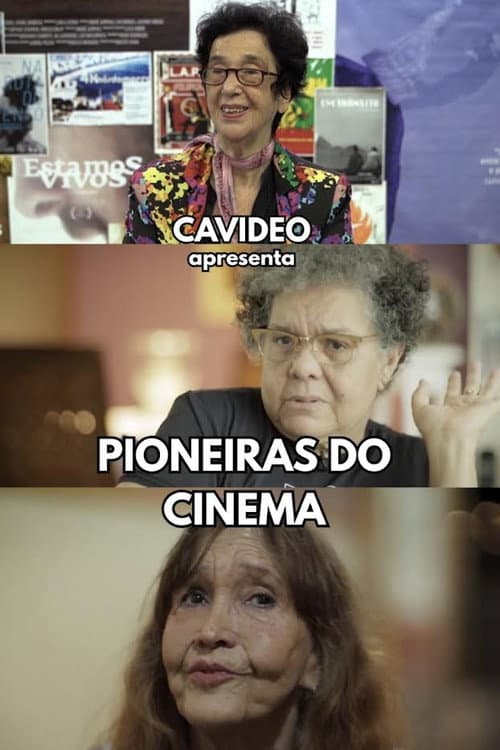


Pioneiras do Cinema
A 2026 documentary that finally pulls women directors, editors, and producers out of film history's footnotes — and shows why they should've been there all along.
Start here: What you need to know
Pioneiras do Cinema is a documentary about the women who made movies in cinema's first decades — the 1910s through 1930s — and then got erased from the story. Produced by Cavídeo Produções, a Brazilian company known for serious archival work, it's not a grievance film. It's a reclamation. The tone stays celebratory throughout, treating each woman's contribution as its own small revelation rather than a historical wrong to be mourned.
The film arrives in 2026 on streaming platforms (check the live where-to-watch widget on Movie OTT for your region). Runtime, specific cast, and production credits haven't been widely circulated yet, but the archival scope — interviews with film historians, restored footage, photographs, and correspondence — is substantial. This isn't a surface-level tribute.
Who it's for: Film history buffs will find the research depth satisfying. Newcomers to cinema will find an accessible entry point into a chapter most film schools still ignore. If you care where movies came from, and who actually made them, this works.
Why the archival work here is the real story
Here's what most people don't know: nitrate film stock, the medium used for early cinema, deteriorates rapidly. A significant portion of movies from the 1920s simply no longer exists in watchable form. Gone. The production team had to work around those gaps creatively — using photographs, letters, production stills, and contemporary accounts to reconstruct careers that left more paper trails than celluloid.
That's the constraint that shapes the entire film. Rather than leaning on restored clips (when they exist at all), the documentary sits with primary sources — correspondence between directors, stills from sets, the visual confidence visible in those frozen moments. What's striking is how the film refuses to treat its subjects as victims of history. There's an early sequence where production photographs from the 1910s and 1920s linger long enough that you feel the weight of what was accomplished and then erased. The dissonance is almost disorienting.
Cavídeo Produções sourced material across multiple countries. That kind of international archival work — tracking down surviving prints, negotiating access, sometimes literally restoring film that almost didn't make it to 2026 — isn't the kind of project a company takes on lightly. The research appears genuinely thorough.
How it breaks the typical history-documentary formula
Most documentaries about overlooked figures follow a predictable rhythm: here's who they were, here's what they did, here's why nobody remembers them, here's why that's a shame. End credits roll. You feel virtuous for watching.
Pioneiras do Cinema resists that formula. When restored clips are available, they're given room to breathe — not chopped into two-second illustration cuts. That editorial patience is rarer than it should be. The filmmakers seem to understand that you can't care equally about everyone, so the film chooses depth over breadth. You get to know these women rather than tick them off a list.
What keeps pulling me back is the way it handles the gap between what these women achieved and what the historical record preserved. It sits with that tension instead of rushing to resolve it. Look — the film could've spent ninety minutes being angry about erasure. Instead, it lets the work speak for itself wherever possible.
If you've come to cinema late and you're filling in the gaps of your film knowledge, this is exactly the kind of documentary that works. Audiences discovering the medium's actual origins (not the sanitized version taught in schools) tend to respond well to this material, especially when it's researched this thoroughly.
Where to watch, and when to expect it
Pioneiras do Cinema is streaming on major OTT platforms. For current regional availability — which shifts regularly — Movie OTT tracks live licensing data so you don't have to chase it manually across five different apps. Documentaries like this one expand their streaming footprint over months following release, particularly if festival buzz builds.
Since it's a 2026 release, awards consideration is still ahead. The IMDb rating currently shows 0/10 — that's just data absence, not a reflection of quality. No user votes yet means no rating. It'll shift as audiences watch and vote in the coming weeks.
Questions people actually ask
Should I watch this? Yes, if you care about film history or want to understand where cinema actually came from. It's not difficult — it's illuminating.
Where's it streaming? Check the where-to-watch widget on Movie OTT for your country. Availability varies by region and updates regularly.
Is it new? 2026 release, so it's very fresh. Rolling out across platforms now.
Why 0/10 on IMDb? No votes recorded yet. The rating will update as people watch.
Who made it? Cavídeo Produções, a Brazilian production company with a track record in documentary work.
Is it based on true stories? Yes. All of it draws on archival footage, photographs, correspondence, and interviews with film historians. These were real women who directed, edited, and produced real films.
Next step
Find it through streaming options and clear an evening. You'll need about ninety minutes. The kind of documentary that sits with you afterward — not because it's sad, but because it changes how you think about who gets to tell the story of cinema, and why that matters. That's worth your time.