









The Story of Professor Layton and the Eternal Diva
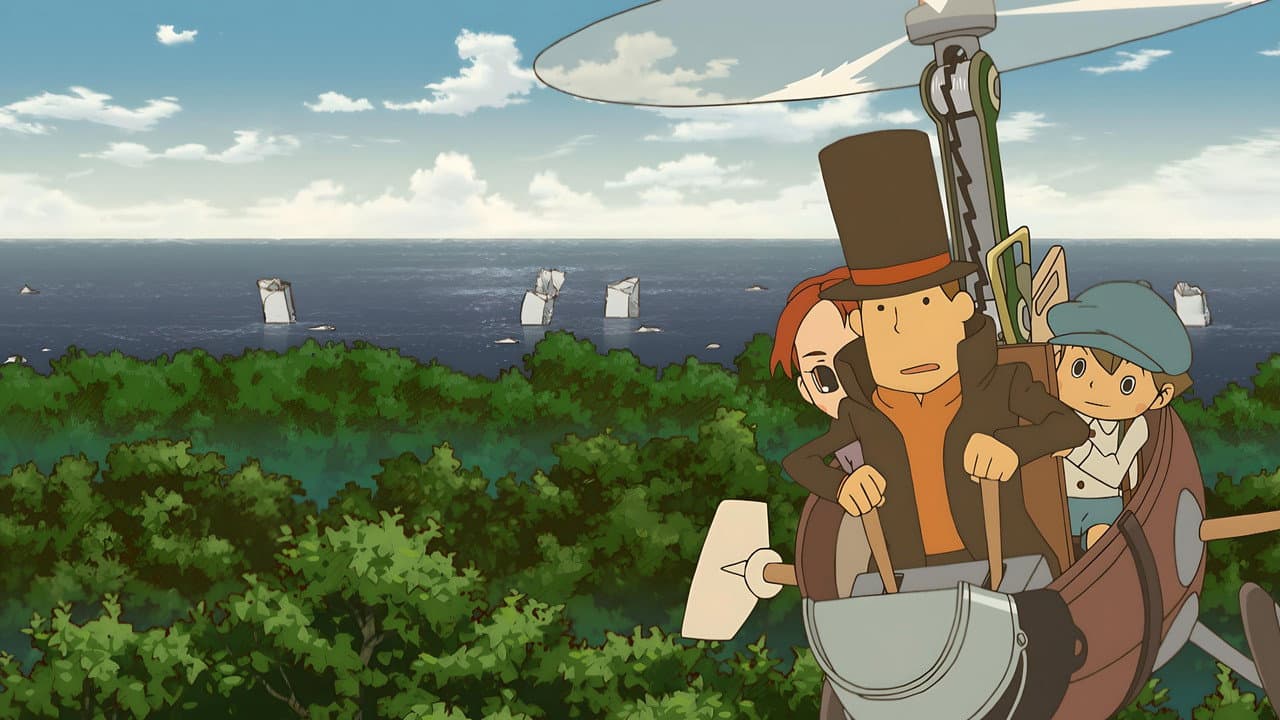
Professor Layton and the Eternal Diva opens with a premise that's equal parts elegant and unsettling: a renowned opera star named Janice Quatlane reaches out to her old teacher, Professor Hershel Layton, after encountering a mysterious young girl who claims to be the reincarnation of her deceased friend. It's the kind of hook that promises both emotional weight and supernatural intrigue. When Layton and his sharp-witted apprentice Luke Triton attend one of Janice's performances, they're suddenly caught in something far more sinister than a night at the opera. A masked figure orchestrates an audacious theft—the entire opera house vanishes—and the audience finds itself trapped in a puzzle-themed battle royale where the stakes couldn't be higher. The winner receives the gift of eternal life. The losers? Well, that's where things get dark.
What makes this setup work is that it doesn't feel like a simple hostage scenario. Instead, it's a locked-room mystery wrapped in steampunk aesthetics and layered with philosophical questions about mortality, identity, and the price of immortality. Layton's role shifts from curious academic to reluctant participant, forced to use his legendary puzzle-solving abilities not just to entertain himself, but to keep people alive. The film moves at a brisk 99 minutes—no wasted time, no filler—which keeps the momentum taut even as it weaves between multiple character threads and reveals.
Behind the Making of Professor Layton and the Eternal Diva
The film emerged from a collaboration between LEVEL5's video game franchise and a powerhouse animation studio partnership: P.A. Works and OLM handled production, with support from TBS, Shogakukan, TOHO, and several other major Japanese media companies. Director Masakazu Hashimoto brought the story to life based on a screenplay by Aya Matsui, working from a concept by Akihiro Hino—the creator of the Professor Layton games themselves. This wasn't some loose adaptation or cash-grab spin-off; it was designed to sit between the events of the games Professor Layton and the Last Specter and Professor Layton and the Miracle Mask, giving fans a canonical adventure that felt earned.
The production team faced a unique challenge: translating the puzzle-solving charm of an interactive game into a narrative film without losing what made the series tick. They didn't shy away from the games' DNA. The film incorporates actual puzzles, the iconic musical score that fans knew by heart, and the character chemistry that made the games work—especially the banter between Layton's unflappable logic and Luke's youthful earnestness. According to Level-5, the filmmakers stayed deliberately true to the source material, which meant respecting both the whimsy and the genuine mystery at the heart of the story. The voice acting, animation quality, and production values reflect the budget and care you'd expect from a major studio anime release backed by companies like Pony Canyon and Hakuhodo DY Media Partners. The result is a film that doesn't feel like a glorified episode; it feels like a proper theatrical event.
What Makes Professor Layton and the Eternal Diva Stand Out
Here's what's striking about this film: it trusts its audience. There's no heavy-handed exposition, no moment where a character turns to the camera and explains what's happening. You're dropped into the mystery and expected to keep pace—which, honestly, is refreshing in family animation. The IMDb rating of 7.456 reflects this balance; it's well-regarded without being overhyped, which suggests it's found an audience that appreciates its particular blend of puzzle-box plotting and character-driven drama.
The opera setting is no accident either. Operas are inherently theatrical, melodramatic, and built on secrets—perfect scaffolding for a mystery narrative. The steampunk aesthetic (those brass gears, the Victorian-era technology, the industrial grandeur) gives the film a visual identity that stands apart from typical anime fare. There's a richness to the production design that makes even quiet moments feel intentional, weighty. And then there's the central conceit of eternal life itself, which the film doesn't treat as a simple MacGuffin. Instead, it asks uncomfortable questions: What would you sacrifice for immortality? What does it mean to live forever if the people you love don't? These aren't questions you'd necessarily expect from a puzzle-adventure film, but that's precisely why they land so hard when they appear.
The voice performances anchor everything. The chemistry between Layton (calm, methodical, faintly amused by the chaos around him) and Luke (eager, impulsive, genuinely scared sometimes) gives the film an emotional core that prevents it from becoming a cold intellectual exercise. When Luke is in danger—and he is, repeatedly—you feel it. When Layton has to make a difficult choice, it costs him something. That emotional grounding is what separates a good puzzle film from a great one.
Where to Stream Professor Layton and the Eternal Diva Online
Professor Layton and the Eternal Diva is currently available across major OTT platforms, and Movie OTT makes it easy to find exactly where you can watch it right now. Streaming rights shift frequently, so checking the Where to Watch widget at the top of this page ensures you're getting real-time availability across all the services that carry it. Rather than hunting through multiple apps or subscriptions, you can see all your options in one place—a genuine time-saver when you're ready to dive in. Since the film is nearly 15 years old, it's had time to circulate across multiple platforms, so there's a decent chance it's available on at least one service you already subscribe to.
Frequently Asked Questions
Q: Is Professor Layton and the Eternal Diva based on the video games?
Yes, it's a direct adaptation of the Professor Layton game series, taking place canonically between The Last Specter and The Miracle Mask. The film was created with input from the original game creator, Akihiro Hino, and stays true to the games' tone and puzzle-solving mechanics.
Q: Do I need to have played the games to understand the movie?
No. While fans of the games will catch extra references and appreciate the continuity placement, the film is designed to stand alone. New viewers can jump in without any prior knowledge and still follow the mystery and character arcs.
Q: Who directed Professor Layton and the Eternal Diva?
Masakazu Hashimoto directed the film, with a screenplay by Aya Matsui based on a story by Akihiro Hino. The animation was produced by P.A. Works and OLM, two of Japan's most respected studios.
Q: How long is the movie?
The film runs 99 minutes, a tight runtime that keeps the pacing brisk without sacrificing character moments or plot complexity.
Q: What age group is this film for?
It's rated as family-friendly animation, though the mystery elements and some darker themes (death, immortality, betrayal) make it more suited to older children and teens than very young viewers. There's no violence or profanity, but the psychological stakes are real.
Final Thoughts on Professor Layton and the Eternal Diva
Professor Layton and the Eternal Diva works because it understands what made the games special: the joy of solving puzzles, the warmth of character relationships, and the satisfaction of a mystery that plays fair with its audience. It's not a perfect film—some plot threads resolve faster than others, and the climax hinges on a reveal that won't shock anyone paying attention—but it's a genuinely enjoyable puzzle-box mystery that respects both the source material and the viewer's intelligence. If you loved the games or you're just looking for a smart, visually polished anime mystery with heart, this one's worth your time.