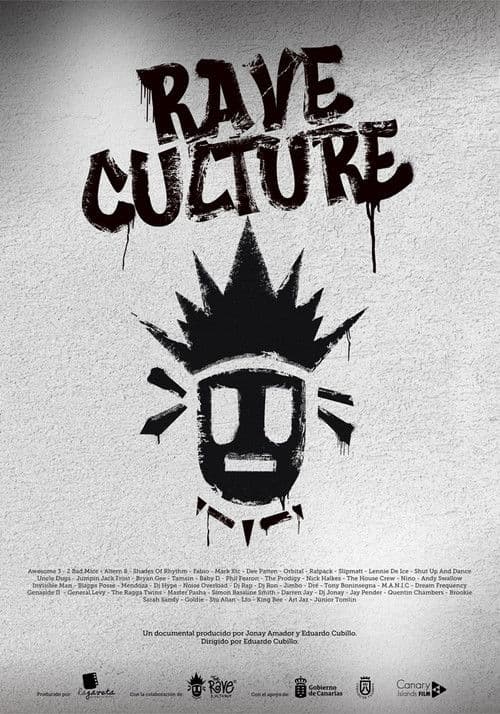
Rave Culture - A new era
What this 87-minute documentary actually does
Rave Culture - A new era (2026) isn't interested in explaining rave culture to outsiders. It assumes you're curious enough to show up, then rewards that curiosity by showing you something most music documentaries won't touch — the actual human beings inside the strobes and bass drops, and what it costs to belong to a subculture that exists just outside the frame of acceptable life.
The film's real strength is what it doesn't do. No talking-head experts. No archival montages. No tidy narrative arc that wraps everything up by the credits. Instead, you get warehouses, open fields, makeshift venues, and people being unguarded when they think nobody's watching. That's harder to pull off than it sounds.
How the filmmakers earned trust in closed communities
Production on this one clearly involved serious immersion — the kind where a crew spends months just being there until the communities they're filming stop performing for the lens. That matters. Rave scenes are naturally skeptical of cameras and documentation. The fact that this film captures genuinely candid moments tells you the production prioritized relationships over schedules.
The 2026 release date is interesting timing. Electronic music has never been more commercially mainstream, yet underground scenes have never felt more protective of their identity — and that tension lives right in the documentary's DNA. Hard to say if the filmmakers planned it that way or if the timing just worked out, but either way, it gives the film an urgency.
The film went straight to streaming platforms rather than theaters, which honestly suits the subject matter. According to Movie OTT, the documentary surfaced across multiple major services, though it arrived without the fanfare of a traditional release. No IMDb rating has accumulated yet, which tracks with how recent the drop was and how niche the initial audience has been.
The sequence that makes the whole thing work
Halfway through, something shifts. The camera lingers on a group of people in the early morning hours, long after the music's moved into something slower and more introspective. Nobody's performing anymore. That's when the documentary stops being about rave culture and starts being rave culture, at least for a few minutes.
What's striking is how the film handles community — without sentimentality, but without cynical deconstruction either. There's a long stretch (maybe fifteen minutes, though it feels both shorter and longer depending on your mood) where the editing just observes people being kind to each other in the dark. No narration explaining what you're feeling. No score telling you when to cry. The craft is in the restraint.
Honestly, the pacing in the second act is where you see the formal ambition. The editing trusts the audience to feel things without being told what to feel — rarer than it should be in documentary filmmaking. Movie OTT's editorial staff flagged this as one of the more formally interesting non-fiction titles of the year, specifically because of how it handles time and silence.
Where to watch and how long it takes
Runtime: 87 minutes — one sitting, no breaks needed.
Where it's streaming: The widget at the top of this page has the current list of platforms in your region, since availability shifts without warning. Movie OTT tracks streaming rights across services and updates when titles move, so bookmark this if you want to check availability later.
Availability note: As of now, no extended cut or director's cut exists — 87 minutes is the whole thing.
Don't wait for a "better time" to watch this. It's compact enough to fit into an actual evening.
Who should actually watch this
You don't need to be a raver. You don't even need to like electronic music. If you're interested in how subcultures form, how documentary filmmaking can observe instead of explain, or just what draws people to spaces that exist outside the mainstream — this connects.
If you liked Summer of Soul (the way it captures a moment and community) or Pumped Up Kicks (the sociology of nightlife), you'll find something here.
Frequently asked questions
Q: Is this a documentary or narrative film?
Documentary. The people on screen aren't actors — you're watching real communities and real events.
Q: How recent is this?
Released in 2026. It's still finding its audience on streaming platforms.
Q: Do I need to know anything about electronic music to watch?
No. The film works whether you're deeply familiar with the scene or completely new to it. The story is about people, not music theory.
Q: Why doesn't it have an IMDb rating yet?
It was just released. Ratings accumulate over weeks and months as more people watch and rate.
Q: Is it family-friendly?
The film documents actual rave culture, so there's drug use and adult content depicted. Not a kids' film. Teenagers interested in music and subculture might get something from it, but parents should watch first.
Worth your evening
Rave Culture - A new era doesn't announce itself loudly. It shows up, does honest work, and leaves you thinking. Not every film needs to be a landmark — sometimes 87 minutes of carefully observed storytelling is enough. If you've ever wondered what actually draws people to these spaces, what they're really looking for in the dark and the noise, this film has a real answer.
Start it tonight.