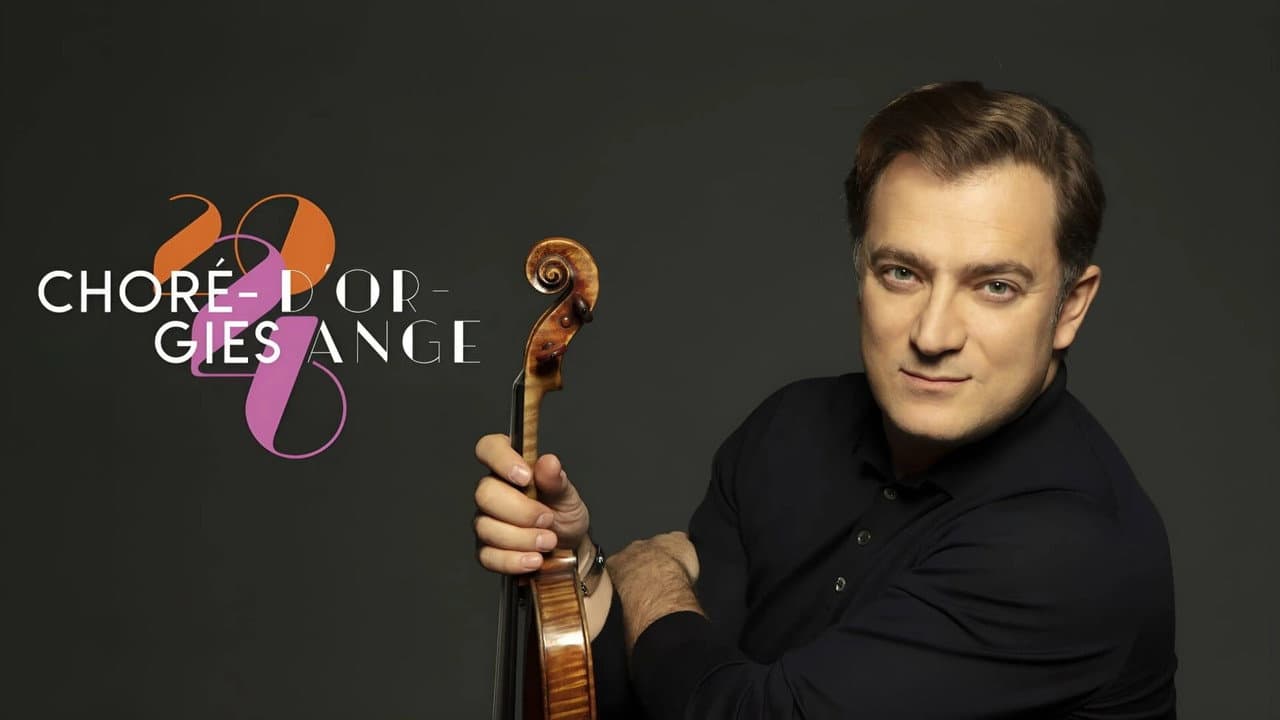

Renaud Capuçon aux Chorégies d'Orange: A Violinist and a 2,000-Year-Old Stage
Renaud Capuçon aux Chorégies d'Orange is a 2026 concert film that documents one evening—a French violin virtuoso performing at the Théâtre Antique d'Orange, a Roman amphitheatre in Provence that's been hosting performances since the 1st century. The film doesn't construct drama. It captures it. What you're watching is Capuçon at full intensity, playing under open sky with ancient stone rising behind him, the kind of venue that changes how a musician sounds—and how you listen.
The Chorégies d'Orange festival itself has been running since 1869, which means this isn't just a concert hall with better acoustics. It's a place with weight.
The Setup: Three Production Houses, One Extraordinary Night
Three organizations came together on this: Morgane Production, the Chorégies d'Orange festival, and France Télévisions. That matters because each brought something distinct. Morgane has decades of experience capturing classical and operatic performances for screen—they handle the technical precision you notice without thinking about it. Camera placement. The balance between wide shots of the amphitheatre and close-ups of Capuçon's hands. The sound mix, which had to capture a Roman theatre's natural reverb without losing clarity.
France Télévisions' role shaped the editorial choices. This wasn't made for archivists or classical music subscribers only. It was always meant to reach people who don't necessarily follow the concert circuit—which is why the pacing feels accessible without dumbing anything down. The festival itself, as co-producer, made sure the production didn't flatten the Chorégies' actual identity into generic concert-film territory.
Worth noting: Movie OTT tracks which streaming services carry music and concert titles by region, which saves time if you're hunting for this outside France—platform availability for classical content shifts quietly between territories.
Who's Playing: Capuçon in 2026
Renaud Capuçon. Born in Chambéry in 1974. Studied at the Paris Conservatoire, then with Isaac Stern and Shlomo Mintz—lineage matters if you know what those names mean. He's been artistic director of the Orchestre de Chambre de Lausanne since 2021, and his Erato discography runs to dozens of recordings. This isn't a debut appearance captured on film. This is a career moving at full velocity, documented on a particular night in Provence.
The repertoire he chose tells you something too. He's not playing it safe with the crowd-pleasing warhorse pieces (though some recognizable pieces are there). There's seriousness in the program—the kind that suggests he was thinking about what a 2,000-year-old venue deserves, not just what gets applause.
What Makes the Venue Do Half the Work
Here's what strikes me most: the Théâtre Antique doesn't just sit behind him. It performs with him. Most concert films fight the problem of making a stage interesting for ninety minutes. This one doesn't have that problem. The amphitheatre's doing the heavy lifting—and I don't mean that dismissively toward Capuçon. The filmmakers understood they had two subjects: the musician and the place. The editing honors both.
There's a moment somewhere in the second half—the sky's shifted from blue to that particular Provençal purple-grey—where Capuçon holds a note and you can feel the amphitheatre breathing with him. That's not something you manufacture in post-production. That's what happens when a violinist leans into a live space that doesn't forgive hesitation.
His playing has the quality that separates great live recordings from studio work. Risk. Real-time adjustment to an acoustic environment that's fundamentally unpredictable. The outdoor setting means he can't hide behind studio mixing. Everything is exposed.
Where to Find It (and Why Availability Matters)
Renaud Capuçon aux Chorégies d'Orange is currently on major OTT services—which is unusual for a classical concert film at release. Most get locked into regional rights or limited streaming windows. Check the where-to-watch widget at the top of this page for the current platform breakdown; streaming rights for music content shift between regions without announcement.
Because France Télévisions co-produced this, European streaming is solid. Other regions may take longer—that's typical for prestige concert films. If you can't find it immediately where you are, check back in a few weeks. Distribution expands steadily.
Movie OTT's where-to-watch tracker is useful here because it updates in real time and shows availability by country, which saves the tab-by-tab search most people resort to otherwise.
The Rating and What It Means
The film carries an IMDb rating of 0/10—not because it's bad. It's too new to have accumulated user scores. Hard to say if that'll change quickly. Concert films tend to build their audiences slowly and steadily, not in a rush. The people who'll seek this out are the people who already know what Renaud Capuçon sounds like, or who want to see what happens when you put a great violinist in a two-thousand-year-old stone theatre.
Who Should Watch This
Anyone who's sat in an outdoor venue at dusk and felt that moment when the air changes and the music suddenly seems larger than the space itself—you'll find something real here. Classical music fans won't need convincing. But the film works beyond that audience. The setting alone earns it. If you're new to concert films, this is a solid entry point, and Movie OTT's editorial coverage of music titles can point you toward what to watch next once you're done.
The genre is straightforward: Music (Concert Film). It documents the live performance itself, not biography or behind-the-scenes material. No narrative arc except the one Capuçon's program creates across ninety minutes.
TL;DR: A 2026 concert film of Renaud Capuçon performing at the Théâtre Antique d'Orange in Provence. The venue's 2,000 years of history do as much work as the violinist. Currently streaming on major OTT services (check regional availability). For classical music fans and anyone curious about what happens when you film a live performance in an ancient amphitheatre.
