The Story of Requiem and Its Wartime Revenge Plot
Requiem is a 1970 Yugoslav war drama that positions itself squarely in the commando-action tradition of postwar European cinema. Directed by Časlav Damjanović, the film centers on a soldier caught in the machinery of World War II who becomes entangled with a group of local patriots determined to stop Nazi forces from commandeering a train headed for Berlin. The setup is straightforward enough—a revenge narrative wrapped in the chaos of D-Day preparations—but the execution is where things get complicated. What starts as a conventional resistance story becomes something murkier, a film that doesn't quite know whether it wants to be a tight action thriller or a brooding character study of men pushed to extremes by war.
The premise taps into familiar postwar anxieties: occupation, collaboration, the moral cost of resistance. Yet Damjanović's approach feels deliberately unglamorous. There's no heroic score swelling as our protagonist joins the cause. Instead, what we get is a film interested in the grinding, unglamorous work of sabotage and the personal vendettas that simmer beneath the surface of any resistance movement. The train itself becomes more than a MacGuffin—it's a symbol of Nazi industrial efficiency, something that must be stopped before it reaches its destination.
Behind the Making of Requiem and Its Cast
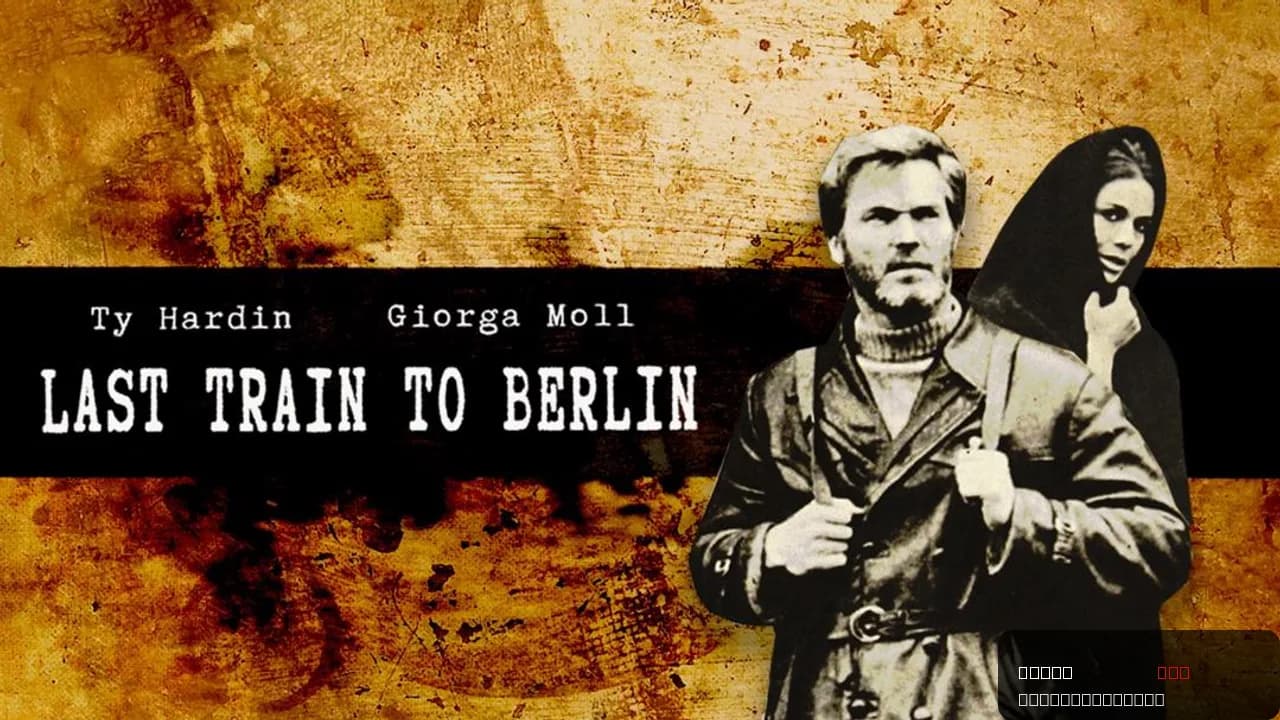
Requiem emerged from Yugoslavia's postwar film industry at a moment when Eastern European studios were experimenting with genre cinema. The country had its own tradition of partisan narratives—films celebrating the Yugoslav resistance against Nazi occupation—but Damjanović's film takes a different tack, focusing less on collective heroism and more on individual actors driven by personal grudges and survival instincts. The director brought together an international cast that reflected the film's pan-European ambitions: American television actor Ty Hardin (best known for his role in the Western series Bronco) plays the lead commando, while Italian actress Giorgia Moll rounds out the ensemble. The supporting cast included Yugoslav performers like Danilo 'Bata' Stojković and Abdurrahman Shala, alongside Greek actor Stathis Giallelis, creating a genuinely multinational production that was common in Yugoslav co-productions of the era.
The film clocks in at 84 minutes—lean, almost spare by the standards of war epics. There's no record of major festival recognition or significant box-office success, and the IMDb rating of 4 out of 10 suggests it's long been consigned to the margins of cinema history. That said, the film's obscurity is partly a function of distribution. Yugoslav films from this period often struggled to find audiences outside the Eastern Bloc and art-house circuits, and Requiem was no exception. What we're left with is a film that's been largely forgotten, rediscovered now only through streaming platforms and the patient work of archivists who believe every film—even the failed ones—tells us something about the era that produced it.
What Makes Requiem Stand Out as a War Drama
I keep coming back to the film's refusal to sentimentalize its setting. Most war films of the 1970s, whether American, European, or Soviet, carried some ideological weight—a message about the nobility of sacrifice, the evil of fascism, the righteousness of one's own side. Requiem seems almost indifferent to such moralizing. What's striking is how the film treats its characters as trapped actors in a situation none of them fully control, rather than as heroes making noble choices. The revenge subplot—the personal vendetta that drives the commando forward—cuts against the grain of collective resistance narratives. He's not fighting for Yugoslavia or for democracy. He's fighting because someone wronged him, and the war happens to be the arena where that wrong can be righted.
The performances, particularly Hardin's, carry a weariness that's not often seen in action films. There's no swagger, no quips. Instead, we get a protagonist who looks like he'd rather be anywhere else, a man doing what needs doing because stopping now would mean death. Giorgia Moll's presence adds another layer—her character exists in the margins of the plot, and the film doesn't always know what to do with her, which is oddly true to how women often appeared in male-dominated resistance narratives. The ensemble work, especially from the Yugoslav cast members who understood the historical weight of these stories in their own country, grounds the film in something that feels lived-in, even when the plot mechanics creak a bit.
The thing nobody mentions is that the film's modest runtime works in its favor. There's no bloat, no lengthy exposition scenes explaining the political situation. You're dropped into the action and expected to keep up. That directness—that unwillingness to hold your hand—gives the film a kind of authenticity that more polished productions often lack. It's not that Requiem is a masterpiece. It's that it's trying something different, and that ambition deserves recognition even when the execution falters.
Where to Stream Requiem Online
If you're curious about tracking down Requiem, Movie OTT makes it simple to find where it's currently available. The film is streaming on Prime Video, where you can add it to your watchlist and dive in whenever you've got 84 minutes to spare. The streaming landscape shifts constantly—titles move between platforms, licensing agreements expire, new deals get struck—so checking Movie OTT's where-to-watch widget at the top of this page ensures you're getting real-time availability data rather than chasing dead links. Prime Video's catalog includes a surprising number of obscure international films from this era, and Requiem sits alongside other Yugoslav and Eastern European productions that have found new life through streaming distribution.
Frequently Asked Questions
Q: Who directed Requiem?
Requiem was directed by Časlav Damjanović, a Yugoslav filmmaker working in the 1970s. Details about his broader career are limited, but Requiem represents his attempt to blend action and drama within a wartime setting.
Q: Is Requiem based on a true story?
There's no evidence that Requiem is based on a specific historical event. Rather, it's a fictional narrative that draws on the broader context of Yugoslav partisan resistance and Nazi occupation during World War II.
Q: What's the runtime of Requiem?
The film runs 84 minutes, making it a lean war drama that doesn't linger on exposition or unnecessary scenes.
Q: Who stars in Requiem?
The cast includes American actor Ty Hardin in the lead role, alongside Italian actress Giorgia Moll and Yugoslav performers like Danilo 'Bata' Stojković and Abdurrahman Shala, creating an international ensemble.
Q: Where can I watch Requiem right now?
Requiem is currently available on Prime Video. Use the where-to-watch widget on this page to confirm current availability, as streaming rights shift over time.
Final Thoughts on Requiem
Requiem won't appeal to everyone. It's too slow for action-film purists, too bleak for those seeking traditional war-movie heroism, and too obscure for casual viewers scrolling through streaming catalogs. But for those interested in how postwar European cinema grappled with WWII—how Yugoslav filmmakers in particular tried to move beyond state-sanctioned partisan narratives—it's worth ninety minutes of your time. The film's modest ambitions and genuine craftsmanship, even where they don't quite succeed, offer a window into a specific moment in cinema history. Don't expect a masterpiece. Expect a flawed, interesting film that's been waiting decades for someone to pay attention.