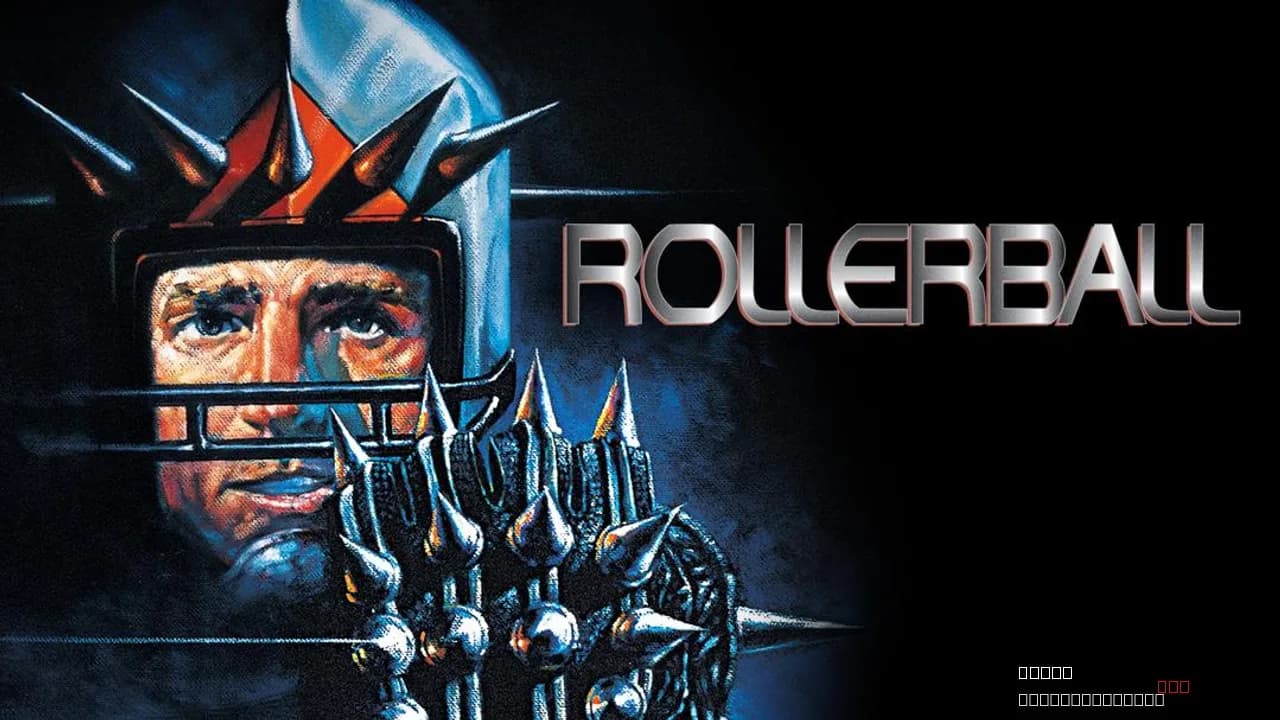
The Story of Rollerball's Deadly Future Sport
Rollerball takes place in 2018—a world that probably seemed impossibly distant when the film premiered in 1975—where six corporate cartels have consolidated global power and eliminated war, poverty, and conventional politics altogether. In this eerily ordered future, society's aggression and tribal impulses are channeled into a single, televised outlet: Rollerball, a no-holds-barred sport played on roller skates inside a circular arena where violence isn't incidental but the entire point. James Caan plays Jonathan E, the sport's most celebrated champion, a player whose dominance has made him wealthy and famous. But when his corporate overlord—the calculating Bartholomew, played by John Houseman—demands his retirement, Jonathan refuses. What unfolds is a tense game of wills between an individual determined to keep his autonomy and a system designed to crush any threat to its control.
Behind the Making of Rollerball
Rollerball emerged from William Harrison's short story "Roller Ball Murder," published in Esquire in September 1973, which director Norman Jewison and Harrison himself adapted into a feature-length screenplay. Jewison, already known for socially conscious filmmaking, brought his characteristic intelligence and visual flair to the project, transforming a pulpy premise into something that felt genuinely prophetic. The 125-minute runtime gave the film space to build its world methodically—we're not rushed through exposition but allowed to absorb the cold, corporate aesthetic of this future. The ensemble cast assembled around Caan was impressive: John Houseman brought gravitas and menace to Bartholomew, while Maud Adams, John Beck, Moses Gunn, and Pamela Hensley rounded out a supporting cast that treated the material with appropriate seriousness. What's striking is that Jewison didn't treat Rollerball as a B-movie spectacle (though it had those elements) but as a genuine political allegory. The film was rated R and found an audience that wanted their science fiction with teeth. Box office returns were respectable for a mid-1970s sci-fi film, and the movie's influence on how we think about corporate control and media manipulation has only grown with time.
What Makes Rollerball Stand Out as Prescient Cinema
There's something almost uncomfortable about watching Rollerball now—not because the action hasn't aged well, but because so much of its paranoia has proven justified. The film's central thesis, that corporations will gladly replace democratic institutions if it keeps the population docile and entertained, doesn't feel like wild speculation anymore. Caan's performance is the emotional anchor; he plays Jonathan as someone caught between the seductive appeal of fame and the creeping realization that he's a product, a commodity to be used and discarded. The thing nobody mentions is how the film's pacing mirrors Jonathan's growing dread—early scenes move with the sleek efficiency of the corporate machine, but as Jonathan pushes back, the editing becomes more frenetic, the violence more graphic, the world more chaotic. Houseman's Bartholomew is a masterclass in quiet menace; he doesn't need to shout to convey absolute power. The Rollerball sequences themselves—shot with visceral energy and genuine danger (the skaters were really moving at speed)—work both as thrilling spectacle and as critique of spectacle. That's the film's real trick. It doesn't condemn the audience for enjoying the violence; it implicates us in the same way the film's fictional crowds are implicated.
Where to Stream Rollerball Online
If you're ready to experience this dystopian classic, you'll find Rollerball currently available on Prime Video. The film streams in solid picture quality that does justice to the original cinematography and those kinetic arena sequences. For the most up-to-date information on where this title is available—streaming services do shuffle their catalogs—check the "Where to Watch" widget at the top of this page on Movie OTT. Movie OTT tracks current streaming availability across platforms, so you'll always know exactly where to find your next watch. At 125 minutes, it's a commitment, but the kind worth making.
Frequently Asked Questions
Q: Who directed Rollerball and what was it based on?
Norman Jewison directed this 1975 film, adapting William Harrison's 1973 short story "Roller Ball Murder" from Esquire into a full-length feature. Harrison wrote the screenplay himself, expanding his original concept into a sprawling dystopian narrative.
Q: What's the IMDb rating for Rollerball?
Rollerball holds a 6.4/10 rating on IMDb, which reflects its cult status—critics and serious sci-fi fans often rate it higher than casual viewers, as it's a film that rewards engagement with its themes rather than offering easy entertainment.
Q: Is Rollerball based on a true story?
No, Rollerball is entirely fictional. It's an original science-fiction concept created by William Harrison, designed as social commentary on corporate power and media control rather than as an adaptation of real events.
Q: How long is Rollerball?
The film runs 125 minutes, giving Jewison enough time to build his dystopian world deliberately and let the tension between Jonathan and the corporate system develop organically.
Q: Can I watch Rollerball on streaming services?
Yes—Rollerball is currently available on Prime Video, and you can check the Where to Watch widget on Movie OTT for the most current platform availability.
Final Thoughts on Rollerball
Rollerball deserves its place in the science-fiction canon not because it's flawless—some pacing lags in the middle, and the ending divides viewers—but because it refuses to look away from uncomfortable truths about power and entertainment. Jewison made a film that works as both visceral sports thriller and political warning, a trick that's harder to pull off than it seems. If you haven't seen it, it's worth your time. If you have, it's worth revisiting.