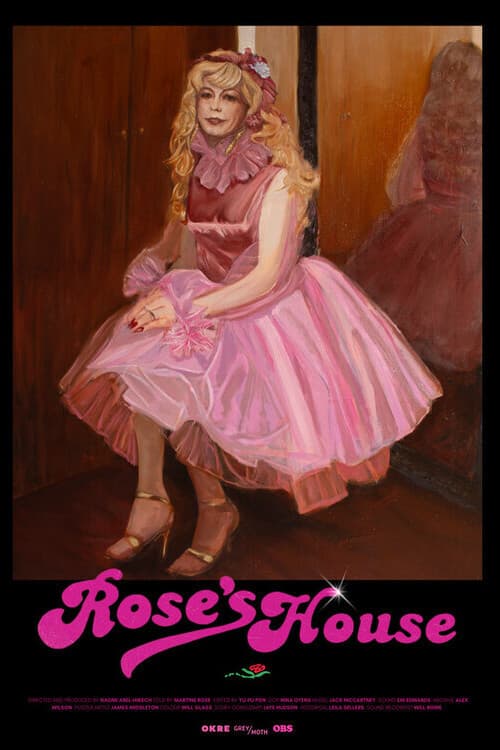
Rose's House
2026 short documentary | 20 minutes | Sheffield DocFest premiere | Streaming on major OTT platforms
The actual story: Why one Sheffield house mattered
In 1979, Martine Rose bought a crumbling terraced house in Sheffield and rebuilt it herself into one of the UK's first safe spaces for trans people. No institutional support existed. No community infrastructure. Just a woman, a leaking roof, and the decision to let people in.
That's the whole pitch. And it's remarkable.
Rose's House is a 20-minute documentary that premiered at Sheffield DocFest — which makes sense, given that the city is as much the subject here as Martine is. The film pieces together archival material (photographs, footage from 1979) that apparently hasn't been publicly seen before, combines it with interviews from Martine and people whose lives the house touched, and holds them up against the present day. It's not asking "how far have we come?" so much as "what's actually changed, and what hasn't?"
What strikes me is how much weight the film carries without ever feeling rushed or manipulative. The archival material does the heavy lifting — you're not imagining the house, you're seeing it. The streets of 1979 Sheffield. The specific texture of that moment. Martine herself doesn't come across as a symbol or activist (at least not how the film presents her). She fixed a house. She let people in. The gap between that quiet pragmatism and what it meant to the people who came through the door — that's where everything lives.
Why this film keeps getting buried (and where to find it)
Short documentaries about local queer history don't get promoted the way features do. They don't have the budget. They don't trend on social media. They premiere at a festival in October and then... disappear into the algorithm.
Movie OTT tracks exactly these kinds of titles — short-form work that streaming platforms carry but don't surface. Because Rose's House has no major distributor behind it, no theatrical run, and no marketing spend, it lives on OTT platforms as part of curated documentary collections or festival spotlight sections. That's actually where you'll find it more easily than searching the main title bar.
The film's runtime is part of why it works. Precision over length. Some stories need 90 minutes to breathe; this one doesn't. It needs exactly what it's got — 20 minutes, tight editing, and the freedom to move between past and present without overstaying.
Hard to say if a longer cut exists or was ever considered. But the tight structure feels deliberate, not like something was cut for time.
The archival work nobody talks about
Here's what's rare about this film: someone did actual archival detective work. In 1979, trans communities weren't being documented by mainstream media. There was no institutional record-keeping. Someone had to track down photographs, film footage, interviews from decades ago — material that could easily have been lost entirely.
That detective work shows on screen. You can feel it. The specificity of the images, the texture of the era — it's not reconstruction or dramatization. It's evidence.
The interviews are described as warm and engaging, which in documentary language usually means the filmmaker built real trust with subjects (not an easy thing with communities that have good reasons to be cautious about how their stories get told). Nobody's performing for the camera. There's no sensationalism. The story is remarkable enough on its own — one woman, one house, Sheffield, 1979.
Context: 2026 and queer cinema
Worth noting: 2026 has seen significant appetite for stories about gender, history, and survival. Markus Schleinzer's Rose premiered at Berlinale this year — a completely separate German-language period drama starring Sandra Hüller (Sight and Sound called her performance "quietly mesmerising" in a gender-defying role). That's a different film entirely, but it signals something about what audiences are asking for right now.
Rose's House arrives into that moment. It's not competing for theatrical screens or prestige festival slots in the same way. It's finding its audience through streaming aggregators, word-of-mouth, and platforms that actually care about short-form work.
Who should actually watch this
Anyone with an interest in queer British history. Anyone who finds that mainstream streaming platforms don't surface short documentaries (honestly, they don't). Anyone curious about what ordinary people do when institutions fail them.
Twenty minutes. That's the commitment. If you liked documentaries like Moonlight (which told a queer history through specificity rather than spectacle) or any local history work that doesn't need to be nationally famous to matter — Rose's House is exactly the kind of title worth seeking out.
Where to watch and what's next
Rose's House is available on major OTT services. Check the where-to-watch widget at the top of Movie OTT's listing page, or search the short-film sections of platforms like Movie OTT — streaming availability for festival shorts can shift quickly after premiere runs, so real-time tracking beats old information every time.
The film sometimes appears as part of documentary collections or festival spotlight sections rather than as a standalone search result, so check both the main search bar and any dedicated short-film hubs on whichever platform you're using.
That's it. Go watch it. Twenty minutes. One house. A story that matters.