The story of Serpent Island
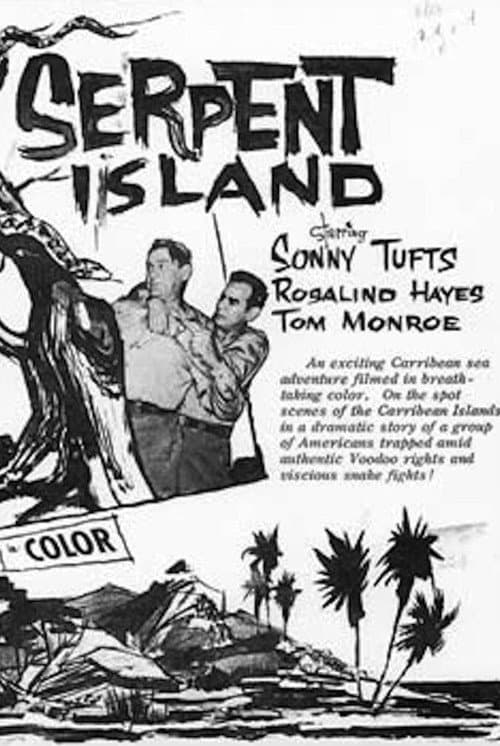
Serpent Island is a 1954 adventure-horror hybrid that doesn't waste time getting to the good stuff. An Eastern woman with a map and a million-dollar mystery hires a down-on-his-luck dockside bum from California to join her expedition into the Caribbean jungle. What could go wrong? Everything, as it turns out—the locals aren't particularly welcoming, voodoo drums echo through the trees, and then there's the matter of the giant serpents that apparently have a taste for human flesh. The film's official tagline says it all: "Giant Serpents That Feed On Human Flesh!" There's no pretense here, no slow-burn mystery. You get exactly what the poster promises, and the movie seems genuinely pleased about that fact.
What makes the premise work, however schlocky it sounds, is that it taps into something primal: the fear of the unknown jungle, the lure of hidden treasure, and the creeping dread that maybe—just maybe—the locals know something the outsiders don't. The film clocks in at just 63 minutes, which means there's no fat to trim. It's all forward momentum, all setup and payoff.
Behind the making of Serpent Island
Serpent Island holds a curious place in cinema history as the feature directorial debut of Tom Gries, a name that would later become synonymous with serious, character-driven television and film work. But here's the thing—he didn't direct it alone. Bert I. Gordon, a legendary B-movie producer and special effects innovator, both produced and co-directed, making this his own film debut as well. Gordon would go on to become famous for his giant-creature features (think giant ants, giant grasshoppers), so there's a thematic thread running through his career that starts right here on this Caribbean island.
The film was shot on location in Haiti, which gives it an authenticity that studio backlots simply couldn't replicate. The cast includes Sonny Tufts, a former leading man whose star had dimmed by the 1950s, and Mary Munday, making this a project that brought together talent at different points in their careers. The production itself was modest by any standard—this wasn't a major studio tentpole. Z-A Productions, the outfit behind it, was working with limited resources and had to get creative. That scrappiness shows on screen, and it's part of the film's charm. The runtime of 63 minutes reflects the economics of the era: shorter films meant more theater showings per day, more revenue potential. But it also meant filmmakers had to be ruthlessly economical with every scene. There's no bloat here—just pure, concentrated adventure.
What makes Serpent Island stand out
Look—this movie isn't going to win over everyone. The IMDb rating of 3.833/10 tells you that plenty of viewers find it either too campy, too cheap-looking, or too earnest for its own good. But that's precisely what makes it fascinating. What's striking is how seriously the film takes its own absurdity. The voodoo sequences aren't played for laughs; they're played as genuine menace. The serpents, however they were achieved (practical effects, animation, or some combination), are treated as a real threat rather than a wink-wink monster-movie gimmick. There's a sincerity to the filmmaking that you don't always find in 1950s B-pictures.
Sonny Tufts brings a world-weary charm to his role as the reluctant adventurer—he's not thrilled about any of this, but he needs the money, and that's enough to get him into the jungle. Mary Munday, meanwhile, carries the drive of the expedition, the one who actually believes in the treasure and won't be deterred by warnings or danger. The dynamic between them crackles with a certain chemistry born from desperation and circumstance rather than romance. The supporting cast, made up largely of Haitian actors, grounds the film in a sense of place and culture, even if the script doesn't always handle that with great sophistication.
What I keep coming back to is the film's willingness to be weird. The voodoo drums on the soundtrack, the ritual sequences, the general atmosphere of dread that builds as the expedition ventures deeper into the jungle—it's all surprisingly effective for a movie that cost next to nothing. The creature effects might not hold up to modern scrutiny, but they work within the film's own logic and tone. You're never pulled out of the story by unconvincing effects because the story itself is so committed to its own mythology.
How to watch Serpent Island online
Serpent Island is currently available on major OTT services, making it easier than ever to catch this cult oddity without hunting down a dusty VHS or waiting for a revival screening. The where-to-watch widget at the top of this page will show you exactly which streaming platforms have it right now—availability shifts frequently, so it's worth checking before you settle in. Movie OTT tracks current streaming availability across all the major services, so you can find Serpent Island wherever it's currently living. Since the film is only 63 minutes long, it's the perfect length for a weekend viewing session or a late-night curiosity break. You're not committing to a four-hour saga here; you're signing up for a quick, weird adventure that gets in and gets out.
Frequently asked questions
Q: Who directed Serpent Island?
Tom Gries made his feature directorial debut with Serpent Island, though Bert I. Gordon, the legendary B-movie producer, co-directed and produced. It was also Gordon's film debut as a producer-director.
Q: Where was Serpent Island filmed?
The film was shot on location in Haiti, which gave it authentic jungle and Caribbean atmosphere rather than relying on studio sets.
Q: What's the runtime of Serpent Island?
At just 63 minutes, Serpent Island is a lean, economical adventure that wastes no time getting to the action and creature encounters.
Q: Is Serpent Island based on a true story?
No, it's a fictional adventure story about treasure hunters encountering giant serpents in the Caribbean, though it draws on the mythology and cultural elements of Haiti.
Q: What year was Serpent Island released?
Serpent Island came out in 1954, making it a genuine artifact of 1950s B-movie cinema and creature-feature culture.
Final thoughts on Serpent Island
Serpent Island isn't for everyone. If you need polished dialogue, cutting-edge effects, or a story that makes perfect logical sense, you're going to have a rough time. But if you're the kind of viewer who appreciates the weird corners of cinema—the films that were made on a shoestring budget by people who genuinely cared about entertaining an audience, even if the results are gloriously uneven—then this film is absolutely worth your 63 minutes. It's a snapshot of a particular moment in Hollywood, when creature features and adventure yarns were still figuring out what they could be. Honest, strange, and utterly committed to its own strangeness. That's Serpent Island.