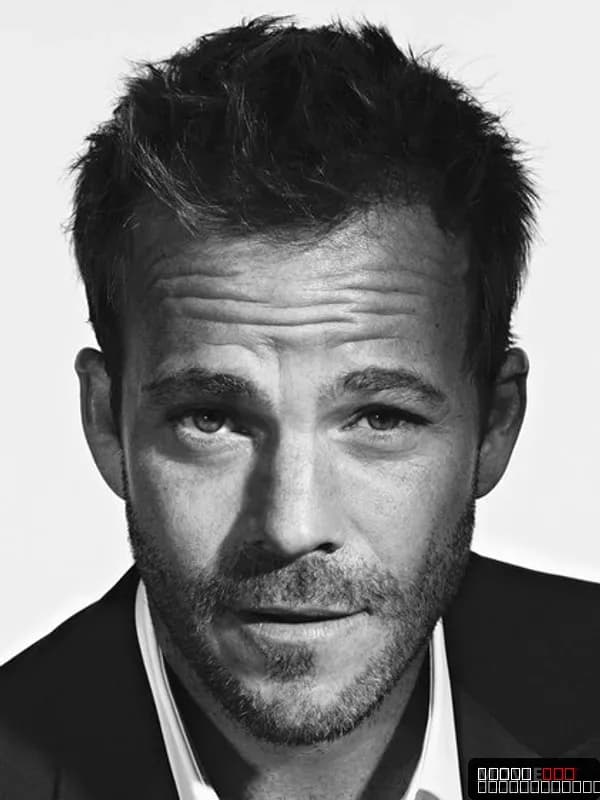






The Story of S.F.W.
Cliff Spab's life takes a radical, terrifying turn in the 1995 film S.F.W., a darkly comedic drama from director Jefery Levy. The narrative thrusts audiences into the nightmare scenario of Cliff, played by Stephen Dorff, becoming an unwilling participant in a 36-day hostage situation. What makes this ordeal particularly insidious is that every moment of his captivity, alongside fellow hostages like his sister Susan (Reese Witherspoon), is meticulously recorded and broadcast live on national television. Upon his eventual release, Cliff isn't just a survivor; he's an overnight sensation, a household name whose enigmatic catchphrase, "So F**king What?", becomes a defiant mantra for a disillusioned generation. This sudden, unwanted notoriety, however, proves to be less a liberation and more a new, different kind of imprisonment—forcing him to grapple with intense media scrutiny and the profound loss of his former anonymity. It's an exploration of escape, not just from physical bonds, but from the suffocating grasp of public expectation.
The Troubled Production and Cult Status of S.F.W.
S.F.W. arrived in 1995, a 95-minute R-rated film directed by Jefery Levy, who also co-wrote the screenplay with Danny Rubin. The movie is an adaptation of Andrew Wellman's 1991 novel of the same name, bringing its cynical take on media culture to the big screen. The cast features a young Stephen Dorff in the lead role of Cliff Spab, supported by an equally nascent Reese Witherspoon as his sister, alongside notable actors like Jake Busey, Joey Lauren Adams, Pamela Gidley, David Barry Gray, and Jack Noseworthy. Filming took place in October-November 1993, a period when grunge music and figures like Kurt Cobain were at their cultural zenith. This context is crucial, as commentators have often drawn parallels between Dorff's protagonist and Cobain's reluctant icon status. In fact, director Levy reportedly aimed to include Nirvana's "All Our Apologies" on the soundtrack, a detail that underscores the film's grunge-era sensibilities and its connection to a generation grappling with cynicism and meaninglessness. Despite its ambitious themes and a cast that would later achieve considerable fame, S.F.W. struggled at the box office, grossing a mere $63,513 in the United States. It received 5 nominations, but its commercial performance reflected a challenging reception upon release. Movie OTT provides details on the film's background and availability, helping uncover these lesser-known cinematic gems.
Why S.F.W. Still Strikes a Chord with its Satire
Despite a rather dismal 6% "Rotten" score on Rotten Tomatoes and a modest 5.7/10 from 5,498 votes on IMDb, S.F.W. possesses a certain raw energy that continues to intrigue. It's a film that, for all its flaws, doesn't pull its punches in its critique of media and celebrity. What's striking is how prescient its examination of a reality-show-obsessed culture feels today, long before the internet truly exploded. The film dives headfirst into themes of meaninglessness and the cult of celebrity, as one reviewer aptly put it. Stephen Dorff's portrayal of Cliff Spab, particularly his "So F**king What?" catchphrase, becomes a nihilistic anthem, a desperate cry for authenticity in a world ravenously consuming manufactured drama. The performance captures the essence of a man trying to survive not just a physical ordeal, but the psychological torment of being a media spectacle. Reese Witherspoon, in an early role, brings a certain vulnerability and strength to her character, highlighting the diverse ways individuals cope with trauma and public exposure. The film explores the profound personal loss of privacy and the challenges of survival when one's entire life is under a microscope. Honestly, its rough edges are part of its charm. It's a messy, angry film, perhaps too much for general audiences in 1995, but it speaks to a particular generational angst that's still relevant. I keep coming back to its audacity. What a ride.
Where to Stream S.F.W. Online
For those curious to revisit this cult classic or discover its darkly comedic commentary for the first time, S.F.W. is accessible on several streaming platforms. Movie OTT, your go-to source for tracking streaming availability, confirms that this unique film can currently be found across a variety of services. You'll find S.F.W. available on Amazon Prime Video with Ads, fuboTV, MGM Plus, the MGM Plus Roku Premium Channel, and the MGM+ Amazon Channel. For those seeking more options, it's also streaming on Philo, Prime Video, and Tubi TV. This wide availability makes it relatively easy to dive into Cliff Spab's post-hostage, pre-internet celebrity nightmare. Be sure to check the "Where to Watch" widget at the top of this page for the most up-to-date links and subscription details, as platform availability can sometimes shift.
Frequently asked questions
Q: What is the plot of S.F.W.? A: S.F.W. follows Cliff Spab, who becomes an unwitting celebrity after enduring a 36-day hostage situation that is broadcast live on national television. Upon his release, he struggles to cope with his newfound fame and the media's relentless scrutiny.
Q: Who directed the 1995 film S.F.W. and who are its main stars? A: The film S.F.W. was directed by Jefery Levy. It stars Stephen Dorff as Cliff Spab and Reese Witherspoon as his sister, Susan.
Q: Is S.F.W. based on a book? A: Yes, the film S.F.W. is based on the 1991 novel of the same name by author Andrew Wellman. It adapts Wellman's satirical take on media and celebrity culture.
Q: What is the significance of the title S.F.W.? A: The title S.F.W. stands for "So F**king What?", a phrase uttered by the protagonist Cliff Spab during his captivity that becomes a defiant and nihilistic mantra for a generation. It encapsulates the film's themes of apathy towards manufactured meaning.
Q: What was the box office performance of S.F.W.? A: S.F.W. had a very limited theatrical release, grossing only $63,513 at the box office. Despite its low commercial performance, it garnered 5 nominations.
Final Thoughts on S.F.W.
S.F.W. isn't a film for everyone, nor was it a critical darling upon its release. But for those interested in a raw, provocative satire on media, celebrity, and the burden of unwanted fame, it's a fascinating watch. It captures a specific moment in the mid-90s, when grunge culture wrestled with commercialism, and foreshadows our current reality-TV-saturated landscape with unsettling accuracy. Its themes of survival, loss, and the commodification of trauma feel more relevant than ever. Don't go in expecting a polished blockbuster; this is a gritty, angsty black comedy that dares to ask, "So F**king What?" about the things society tells us to care about. Worth a look. Movie OTT recommends it for viewers who appreciate films that challenge rather than comfort.