
The story of Shark Kingdom
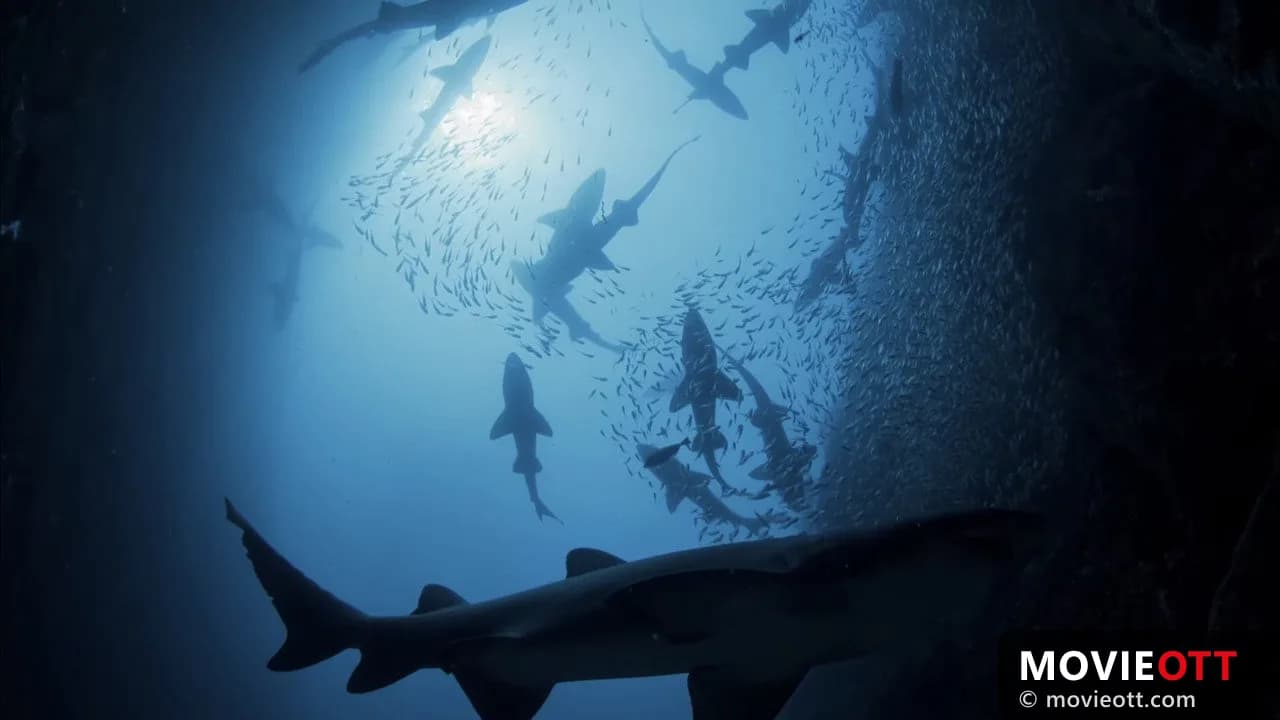
Shark Kingdom arrives as a bold family-friendly documentary that refuses to treat sharks as mere villains. Instead, it positions them as heroes of their own epic narrative—creatures worth understanding, respecting, and ultimately protecting. The film follows three marine conservationists, Jess Cramp, Liv Rose, and Cristina Zenato, as they navigate some of Earth's most breathtaking underwater locations to showcase how different shark species have evolved extraordinary survival abilities. From the wind-swept waters off New Zealand's coast, where great whites hunt with precision, to the Australian coastlines where whale sharks have learned to coexist alongside fishing communities, Shark Kingdom constructs a globe-trotting adventure that's as much about human connection to the ocean as it is about the animals themselves. The filmmakers take viewers deeper still—into the Pacific's uncharted depths where elusive oceanic white tip sharks, sometimes called "shipwreck sharks," traverse waters few humans will ever witness.
Behind the making of Shark Kingdom
Shark Kingdom is a production collaboration between K2 Studios and Definition Films, two companies known for high-caliber nature documentary work. The 40-minute runtime positions this as a premium streaming documentary rather than a feature film, allowing the filmmakers to balance cinematic storytelling with the kind of intimate educational moments that make modern nature docs so compelling. What's striking is the choice to center three female conservationists—Cramp, Rose, and Zenato—as the narrative anchors. These aren't just talking heads; they're active participants in their own stories, diving alongside the creatures they study and bringing decades of combined field experience to every sequence. The production values clearly reflect a substantial budget: the underwater cinematography across multiple continents, the logistical complexity of filming with great whites in New Zealand and whale sharks in Australia, the access to remote Pacific locations—none of that happens without serious resources and planning. While Shark Kingdom hasn't yet accumulated major award nominations (it's a recent 2025 release), the pedigree of its production companies and the evident quality of its execution suggest this is a title positioned for consideration in the documentary space.
What makes Shark Kingdom stand out as a conservation documentary
There's something refreshing about a documentary that doesn't lean into fear-mongering. Shark Kingdom could've gone the sensational route—lean into Jaws mythology, exploit the predator angle, manufacture tension. Instead, it commits to something harder: genuine wonder paired with scientific literacy. Each shark species gets its own narrative arc centered on the specific "powers" that let it dominate its ecosystem. The great white's hunting prowess in New Zealand's tempestuous seas becomes a study in adaptation and physics. The whale shark's filter-feeding mechanism and its surprising docility around human fishermen offers a counternarrative to the "apex predator" trope. The oceanic white tip's deep-ocean navigation strategies highlight how little we actually know about our own planet. What I keep coming back to is how the film uses the three conservationists' genuine passion as the emotional throughline. They're not performing expertise; they're sharing obsession. When Zenato or Cramp describes why a particular shark behavior matters, or what it means for ocean health, it doesn't feel like a lecture. It feels like someone trying to convince you that something beautiful is worth saving. The cinematography does heavy lifting too—underwater sequences that manage to be both scientifically informative and aesthetically gorgeous, which isn't easy when you're filming animals that don't perform on cue.
Where to stream Shark Kingdom online
Shark Kingdom is currently available on major OTT services, making it accessible to most households with existing streaming subscriptions. Rather than hunting across multiple platforms, Movie OTT aggregates current availability so you can see exactly where the title is streaming in your region—no more guessing or trial-and-error sign-ups. The 40-minute length makes it perfect for a single sitting or a family viewing night, and the documentary format means it works well whether you're a marine biology enthusiast or just someone looking for quality nature content. Check the "Where to Watch" widget at the top of this page for real-time platform availability.
Frequently asked questions
Q: Who are the three conservationists featured in Shark Kingdom?
Jess Cramp, Liv Rose, and Cristina Zenato lead the documentary, each bringing their own expertise in marine conservation and shark research. They serve as both guides and protagonists throughout the film's global journey.
Q: How long is Shark Kingdom?
The documentary runs 40 minutes, making it an ideal length for streaming viewing without requiring a major time commitment.
Q: Is Shark Kingdom appropriate for families?
Yes—while it's a documentary about predators, Shark Kingdom is framed as a family adventure and educational experience rather than a horror or thriller, so it's suitable for most ages.
Q: What shark species are featured in Shark Kingdom?
The film focuses on great whites (filmed off New Zealand), whale sharks (in Australian waters), and oceanic white tip sharks (in the Pacific), each highlighted for their unique survival strategies.
Q: Where was Shark Kingdom filmed?
The documentary was shot across multiple continents and some of the world's most renowned diving locations, including New Zealand, Australia, and the Pacific Ocean.
Final thoughts on Shark Kingdom
Shark Kingdom arrives at a moment when ocean conservation documentaries feel both urgent and necessary. It's not a film that preaches doom or guilt-trips viewers into caring. Instead, it opts for something more durable: curiosity. The kind of curiosity that makes you wonder what's happening in the waters you can't see, and why it matters that these ancient animals thrive. Whether you're a marine biology buff or just someone who wants to see stunning underwater cinematography paired with genuine storytelling, this one's worth 40 minutes of your time. It's a reminder that the ocean still holds mysteries—and that the creatures we feared in childhood deserve a second look.