The Story of Shin Kamen Rider
Shin Kamen Rider tells the story of Takeshi Hongo, a man whose body has been forcibly augmented into something beyond human by SHOCKER, a secret organization bent on reshaping society through genetic modification. Stripped of his former life and agency, Hongo finds an unexpected ally in Ruriko Midorikawa, a woman who's turned against the organization that created him. Together they flee, hunted by assassins at every turn, while grappling with questions that don't have easy answers: What separates justice from violence? Where's the line between evolution and monstrosity? The film's official tagline captures this perfectly — "Those which change. Those which never change. And those that don't want to change." It's a meditation on resistance, mutation, and the price of power wrapped inside a high-octane action narrative.
What's striking is how the film refuses to let its protagonist simply celebrate his newfound abilities. Instead, Hongo's augmented strength becomes a burden, a constant reminder of what was taken from him. Ruriko, meanwhile, has regained her humanity after years inside SHOCKER's machinery, but freedom comes with its own psychological weight. The central tension isn't hero versus villain — it's two damaged people trying to carve out something resembling choice in a world designed to deny them any.
Production, Cast, and the Completion of Anno's Shin Trilogy
Shin Kamen Rider arrived in 2023 as the crowning achievement of director and writer Hideaki Anno's ambitious "Shin" trilogy, following his 2016 reimagining of Godzilla and his 2022 take on Ultraman. Produced to celebrate the 50th anniversary of the original Kamen Rider franchise, the film marks Anno's first entry in the series without his frequent collaborator Shinji Higuchi, representing a deliberate shift in creative approach. The production was a massive undertaking, with involvement from khara, Cine Bazar, Toei Company, TV Asahi, Bandai, and numerous other major Japanese entertainment entities — the kind of institutional backing that signals serious intent.
The ensemble cast includes Sosuke Ikematsu in the lead role as Takeshi Hongo, alongside Minami Hamabe as Ruriko Midorikawa. Supporting performances come from Tasuku Emoto, Nanase Nishino, and character actor Shinya Tsukamoto, whose presence alone signals that this isn't a conventional superhero film. The runtime stretches to 121 minutes, giving Anno room to breathe beyond typical action-movie pacing. While the film carries no MPAA rating (being a Japanese production), its thematic content — body horror, racism, state violence, and existential dread — skews toward mature audiences. The film earned one award nomination and has already begun circulating through international festival circuits and streaming platforms, introducing Western audiences to Anno's distinctive approach to the source material.
Why Shin Kamen Rider Stands Apart from Typical Superhero Fare
Critically, Shin Kamen Rider has struck an unusual balance. Rotten Tomatoes rates it at a Fresh 89%, while IMDb sits at 6.1 out of 10 across 3,811 votes — a split that tells you something important: critics and genre enthusiasts are much more aligned on this one than casual viewers, suggesting it demands engagement rather than passive consumption. What makes the film resonate isn't flashy CGI or quippy banter; it's Anno's willingness to treat body modification as genuine body horror, not wish fulfillment. When Hongo discovers what's been done to him, there's no triumphant music. Just revulsion and rage.
The film grounds itself in real-world anxieties about race, power, and institutional control. SHOCKER isn't just a villain organization — it's a metaphor for systems that consume and remake human bodies according to their own logic. That Ruriko and Hongo's journey involves questioning their own complicity in that system, rather than simply defeating it, separates this from standard good-versus-evil storytelling. Sosuke Ikematsu brings a physicality and emotional restraint to Hongo that's crucial; he's not playing a hero, he's playing a man trying to hold onto his humanity while his body betrays him at every turn. Minami Hamabe, meanwhile, anchors the film's emotional core — her character's skepticism about happiness isn't cynicism, it's hard-won wisdom.
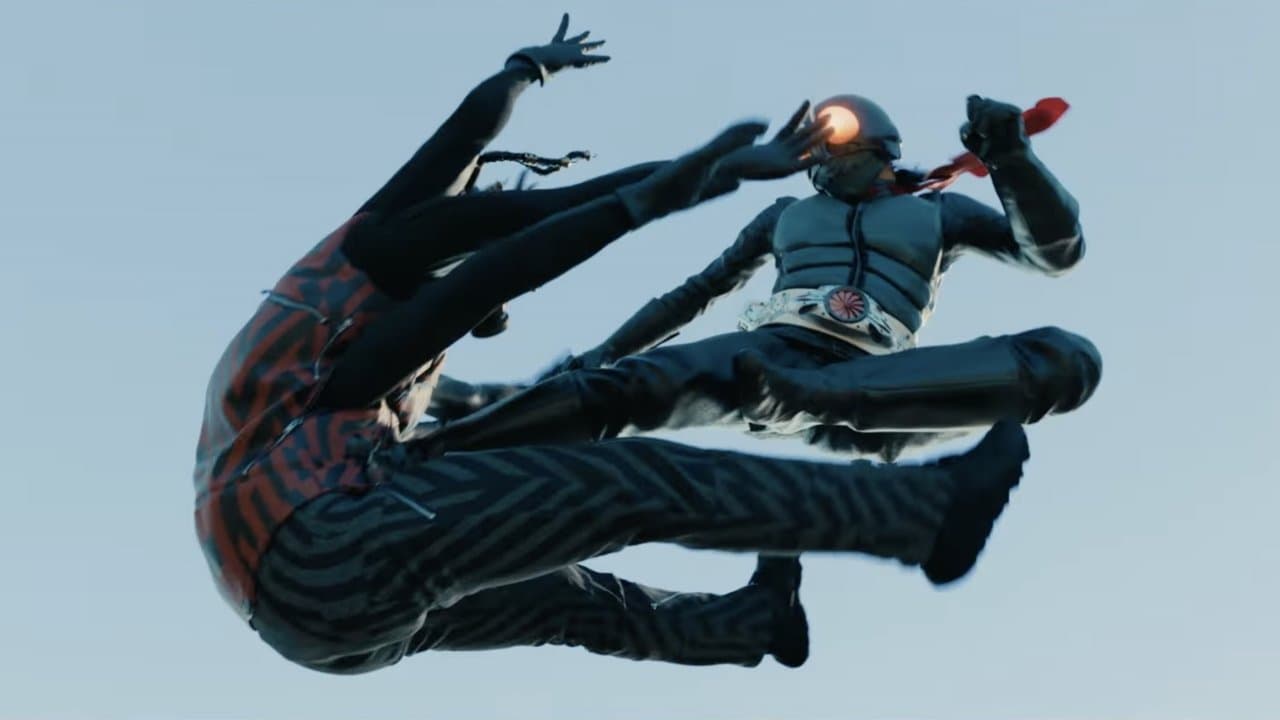
What's most impressive is how the film honors the original manga and TV series created by Shotaro Ishinomori while advancing its own thematic agenda. Fans of both the source material and Anno's previous Shin films recognize that he's not interested in nostalgia — he's interested in asking what these stories mean now, in an era of biotechnology, surveillance, and institutional distrust. The action sequences themselves are kinetic and inventive, avoiding the weightless superhero-movie choreography that's become standard. When characters fight, there's real consequence. Real pain.
Where to Stream Shin Kamen Rider Online
Shin Kamen Rider is currently available on major OTT services, and you can check Movie OTT's Where to Watch widget at the top of this page for real-time streaming availability in your region. The film's international rollout has been gradual but steady, with different platforms acquiring rights in different territories. Because streaming rights shift frequently, Movie OTT tracks current availability across Netflix, Prime Video, and other major platforms — so rather than guessing whether it's available where you are, the widget gives you the answer instantly. The 121-minute runtime makes it a substantial but manageable watch on a weeknight, though you'll want to be in the right headspace for it. This isn't background entertainment.
Frequently Asked Questions
Q: Who directed Shin Kamen Rider?
Hideaki Anno directed and wrote Shin Kamen Rider as the third film in his "Shin" reimagining trilogy, following Shin Godzilla (2016) and Shin Ultraman (2022). This is his first entry in the series without frequent collaborator Shinji Higuchi.
Q: Is Shin Kamen Rider based on the original Kamen Rider?
Yes, it's a reimagining of the classic Kamen Rider franchise created by Shotaro Ishinomori. The film was produced to celebrate the 50th anniversary of the original series, though Anno takes significant creative liberties with the source material.
Q: What's the runtime and rating?
Shin Kamen Rider runs 121 minutes and carries no MPAA rating, as it's a Japanese production. Its themes of body horror, violence, and institutional control suggest it's intended for mature audiences.
Q: Where can I watch Shin Kamen Rider?
The film is available on major OTT streaming services. Check the Where to Watch widget at the top of this page for current availability in your region, as streaming rights vary by territory and change over time.
Q: What's the critical reception?
Rotten Tomatoes rates Shin Kamen Rider at 89% Fresh, while IMDb users gave it 6.1 out of 10. Critics and genre fans generally praised its thematic depth and action choreography, though it's a challenging film that rewards active viewing.
Final Thoughts on Shin Kamen Rider
Shin Kamen Rider isn't a film that lets you sit passively. It demands you think about power, transformation, and what we're willing to sacrifice for freedom. Anno's completed trilogy — Godzilla, Ultraman, and now Kamen Rider — represents something rare in contemporary cinema: a major director using beloved IP as a vehicle for serious philosophical inquiry. You don't have to love tokusatsu or be familiar with the original series to find something here. What you need is patience for a film that'd rather ask difficult questions than provide comfortable answers. The action's excellent, the performances are grounded and real, and the film's visual language is distinctly Anno's own. If you're hunting for superhero cinema that actually has something to say, Shin Kamen Rider deserves your time.