









The Story of Ship of Fools
Ship of Fools unfolds aboard a German ocean liner in 1933, carrying passengers from Mexico toward an increasingly ominous Europe. The voyage becomes a floating microcosm of society itself — a cross-section of humanity bound together by circumstance, separated by class and circumstance, all hurtling toward a continent teetering on the edge of darkness. Among the passengers is Jenny, a young American woman traveling with David, a man she loves but doesn't quite understand; La Condesa, a Spanish countess with secrets and charm; and Dr. Schumann, the ship's physician whose professional composure masks a growing romantic obsession. The crew is German, which matters — it's 1933, after all, and the ship itself becomes a stage where ideology, desire, and human frailty collide. What starts as a voyage becomes something closer to a reckoning. No spoilers here, but the film doesn't let you forget what's waiting at the destination.
Behind the Making of Ship of Fools
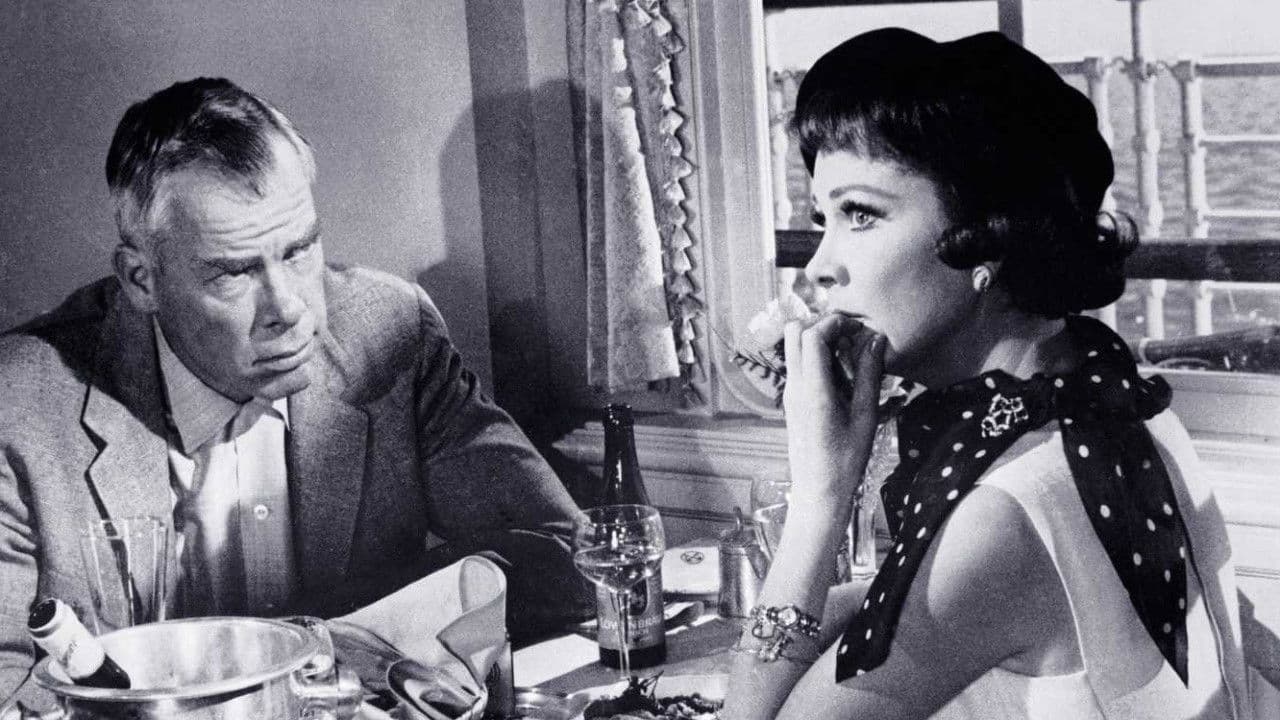
Director Stanley Kramer assembled one of the most formidable ensemble casts ever committed to a single film: Vivien Leigh, Simone Signoret, Jose Ferrer, Lee Marvin, Oskar Werner, Elizabeth Ashley, George Segal, and a supporting cast that reads like a who's who of 1960s cinema. The production itself was a feat of logistics and star management — getting that many heavyweight actors to commit to a 149-minute drama in black and white, set almost entirely on a ship, required not just money but faith in the material. Columbia Pictures and Stanley Kramer Productions backed the project, and the film was released in 1965 to significant acclaim and box-office performance. It earned multiple Academy Award nominations, including Best Picture, Best Director, and acting nominations across the ensemble, cementing its status as a prestige picture of its era. The decision to shoot in black and white — rather than the color that was becoming standard — gave the film a documentary-like gravity, a visual restraint that forces you to watch faces and listen to dialogue rather than get distracted by palette. Kramer's reputation for tackling social and political themes was already established, but Ship of Fools represented his most ambitious attempt yet to marry intimate character work with sweeping historical commentary.
What Makes Ship of Fools Stand Out as Political Drama
What's striking is how the film doesn't announce its themes with a megaphone. The story unfolds as a series of personal entanglements — flirtations, betrayals, small humiliations, moments of unexpected kindness — and only gradually does it become clear that these private dramas are playing out against a backdrop of historical inevitability. Dr. Schumann's infatuation with La Condesa, for instance, isn't just a romance; it's a meditation on how we choose desire and distraction over moral reckoning. The other passengers include a Spanish dancer, a Mexican businessman, a German industrialist, a dwarf entertainer, a Swedish immigrant — each one a type, yes, but rendered with enough specificity that you can't reduce them to symbols. The performances anchor everything. Oskar Werner's Dr. Schumann carries the weight of a man caught between professional duty and personal longing, his face a battlefield of conflicting impulses. Vivien Leigh brings a kind of desperate glamour to La Condesa, a woman who's running from something and knows she can't run far enough. Lee Marvin's American sailor is all swagger and cynicism, a man who sees the ship as a floating con game. I keep coming back to how the film trusts its audience to draw connections without spelling them out — the ship is heading toward Germany, the crew is German, the date is 1933, and we all know what comes next. That's the real horror of the film. Not what happens on board, but what waits at the port.
How to Watch Ship of Fools Online
Ship of Fools is currently available on major OTT services, and Movie OTT tracks its availability across multiple platforms in real time. Rather than hunting across five different apps, you can check the Where to Watch widget at the top of this page to see which service has it streaming in your region right now. The film's 149-minute runtime means you'll want to carve out a proper chunk of time — it's not something to half-watch while scrolling your phone. The black-and-white cinematography and ensemble performances deserve your full attention, and the pacing, while deliberate, rewards patience. If you're the kind of viewer who appreciates character-driven ensemble pieces like Guess Who's Coming to Dinner or The Best Man, you'll find Ship of Fools speaks to similar sensibilities, though with a darker, more fatalistic edge.
Frequently asked questions
Q: Who directed Ship of Fools?
Stanley Kramer directed Ship of Fools. Kramer was known for tackling socially and politically charged material, and this film represents one of his most ambitious ensemble dramas, earning him a Best Director nomination at the Academy Awards.
Q: Is Ship of Fools based on a true story?
Ship of Fools is adapted from Katherine Anne Porter's 1962 novel of the same name, which was itself inspired by real historical events and social dynamics of the 1930s, though the characters and specific plot are fictional.
Q: When is Ship of Fools set?
The film is set in 1933, aboard a German ocean liner traveling from Mexico to Europe — a moment when fascism was rising in Germany and the world was moving toward catastrophe, which adds historical weight to the personal dramas unfolding on board.
Q: How long is Ship of Fools?
The film runs 149 minutes, so it's a substantial commitment, but the runtime allows the ensemble cast and interconnected storylines room to breathe and develop.
Q: What's the IMDb rating for Ship of Fools?
Ship of Fools holds a 6.6 out of 10 rating on IMDb, reflecting a film that's respected and influential but also one that divides viewers — some find it a masterpiece of ensemble drama, others feel it's overstuffed or dated in its approach.
Final Thoughts on Ship of Fools
Ship of Fools isn't a comfortable watch, and it doesn't pretend to be. It's a film that asks you to sit with contradiction — to care about people you might not like, to recognize yourself in characters you'd rather not resemble, to understand that historical tragedy unfolds not through grand villainous acts but through small moral compromises and the human tendency to look away from what's inconvenient. The ensemble cast, the period setting, the black-and-white photography, the ticking clock of historical inevitability — it all works together to create something that feels both of its moment and somehow still relevant. If you're looking for a prestige drama that doesn't talk down to you, Ship of Fools deserves your time.