The story of Shogun's Shadow
Shogun's Shadow tells the story of Takechiyo, a young boy caught in the deadly machinery of feudal succession. When Takechiyo's own father—the Shogun himself—orders his assassination, the boy becomes the target of relentless enemies. Seven samurai, bound by honor and circumstance, find themselves in constant battle to protect him from those who'd see him dead. What unfolds is less a straightforward hero's journey and more a series of escalating skirmishes, each one drawing the protectors deeper into a web of political intrigue and violence. The 111-minute runtime moves through these encounters with the kind of momentum you'd expect from a film that doesn't waste time on exposition—it trusts the viewer to understand that in this world, survival is the only law that matters.
Behind the making of Shogun's Shadow
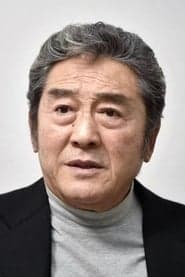
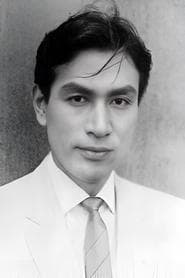
Director Yasuo Furuhata helmed this project with a clear vision for traditional Japanese sword-fighting cinema, what's known as chanbara. The film arrived in Japanese theaters on January 14, 1989, released by Toei Company, one of Japan's most prolific studios for samurai and action films. The screenplay came from Hiro Matsuda and Sadao Nakajima, writers who understood the rhythms of this particular genre—the way honor and brutality have to coexist in the same frame. The cast brought serious pedigree to the material: Ken Ogata anchors the film as one of the lead protectors, while Sonny Chiba, Hiroki Matsukata, Hiroyuki Nagato, and Tetsuro Tamba round out the ensemble of swordsmen. Chiba, in particular, was already a legend in action cinema by 1989, having built his reputation on visceral, physically demanding roles throughout the 1970s and 1980s. Masaru Sato composed the score—a veteran of Japanese film music who'd worked on countless genre pieces—while The Alfee, a Japanese rock band, performed the theme song "Faith of Love," giving the film a contemporary pop edge that contrasts with its period setting. The production design and fight choreography reflect the care Toei took with their samurai output during this era, even if the film's modest IMDb rating of 5.3 suggests it didn't achieve the critical consensus of their biggest hits.
What makes Shogun's Shadow stand out
Honestly, what's striking about Shogun's Shadow is how it refuses to sentimentalize its young protagonist. Takechiyo isn't a noble child destined for greatness—he's a liability, a target, a reason for men to die. The film's real focus lands on the samurai themselves, on how they respond when duty and survival pull in different directions. Sonny Chiba's performance carries a particular weight; he's not playing a hero in the conventional sense but a warrior worn down by constant vigilance and impossible odds. The action sequences themselves—and there are plenty of them—don't shy away from the messiness of sword combat. Blood sprays. Men scream. Choreography matters, sure, but Furuhata seems more interested in the exhaustion that comes with endless fighting than in balletic elegance. There's a scene midway through where the samurai realize they're outnumbered and outmaneuvered by forces they can't see coming—the paranoia sets in, and suddenly the film becomes less about individual sword skills and more about group psychology under extreme pressure. That's the kind of character work that elevates genre material, and it's woven throughout without ever stopping the action. The thing nobody mentions is how much of the film's tension comes not from spectacular set pieces but from the quiet moments between fights, where these men sit in darkened rooms and wonder who they can trust. It's a slower burn than modern action cinema trains us to expect, but it's also what makes the violence hit harder when it comes.
Where to stream Shogun's Shadow online
If you're looking to watch Shogun's Shadow, you can find it on Prime Video—the film's current streaming home. Movie OTT tracks where titles like this one are available across multiple platforms, so if you're trying to figure out where to catch up on 1980s Japanese action cinema, that's a good resource to bookmark. The "Where to Watch" widget at the top of this page shows you real-time availability, so you'll know exactly where to head without the guessing game. Prime Video's library of classic international action films has grown substantially over recent years, and Shogun's Shadow fits right into that catalog for anyone hunting for samurai films from the tail end of cinema's great chanbara era.
Frequently asked questions
Q: Who directed Shogun's Shadow?
Yasuo Furuhata directed the film, bringing his expertise in Japanese action cinema to this 1989 samurai epic. He crafted the narrative around the relentless protection of a young heir in a world where trust is a luxury nobody can afford.
Q: Where can I watch Shogun's Shadow?
Shogun's Shadow is currently available to stream on Prime Video. You can check the Where to Watch widget on this page for the most up-to-date platform availability.
Q: Is Shogun's Shadow based on a true story?
The film is a fictional chanbara narrative rather than an adaptation of a specific historical event, though it draws on the real feudal dynamics and succession conflicts that shaped Japanese history during the samurai era.
Q: What's the runtime of Shogun's Shadow?
The film runs 111 minutes, pacing its action sequences and character moments across a lean runtime that doesn't linger on exposition.
Q: Who stars in Shogun's Shadow?
The ensemble cast includes Ken Ogata, Sonny Chiba, Hiroki Matsukata, Hiroyuki Nagato, Tetsuro Tamba, Masaki Kyomoto, and Miyuki Kanō. Chiba's presence alone carries significant weight in the action genre.
Final thoughts on Shogun's Shadow
Shogun's Shadow won't win over everyone—the IMDb score makes that clear—but it's exactly the kind of film that rewards patient viewers who understand what chanbara cinema is trying to do. It's not aiming for spectacle or emotional manipulation. Instead, it offers a hard-edged look at loyalty, exhaustion, and the cost of duty. The action is real, the stakes feel genuine, and the performances ground the material in something approaching authenticity. If you're already into 1980s Japanese action cinema or you've been meaning to explore beyond the most famous samurai films, this one deserves a spot in your queue.