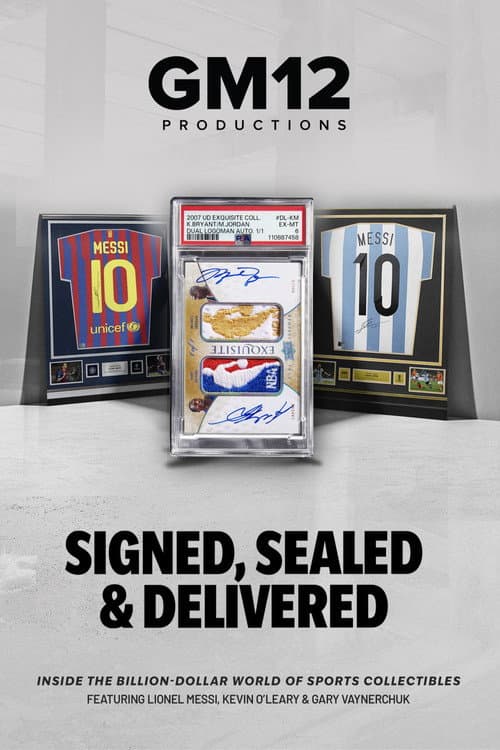
Signed, Sealed & Delivered: Inside the Billion-Dollar World of Sports Collectibles
A 2026 documentary that asks why a cardboard rectangle just sold for $12.9 million — and what that says about fandom, money, and how we assign value to the things we love.
The core premise: Nostalgia meets hedge funds
That $12.9 million dual-autograph Michael Jordan and Kobe Bryant card? That's real. It sold. And this 107-minute documentary doesn't treat it as a punchline — it treats it as evidence of a market that's stopped being a joke and started being a genuine asset class.
Signed, Sealed & Delivered opens by asking the question most people want answered immediately: How does a childhood hobby transform into a billion-dollar industry? The film's answer isn't simple, which is why it works. What was once kids trading cards at recess has become high-security vaults, authentication labs, hedge-fund portfolios, and celebrity investors bidding against each other at auction houses. The documentary follows rare trading cards, signed jerseys, and historic memorabilia as they move through the ecosystem — not just as sports artifacts, but as financial instruments with their own volatility, cultural weight, and emotional charge.
What strikes me most is how the film refuses to pick a side. It doesn't say "this is pure nostalgia" or "this is pure greed." It says both are true at the same time, and holds that tension without flinching.
Who's actually in this thing, and why it matters
Featured personalities:
- Lionel Messi — His memorabilia commands some of the highest prices on the current market; the film uses his presence to anchor a conversation about how global superstardom translates into collectible value.
- Kevin O'Leary — The investor brings a cold financial lens. He's interested in risk-adjusted returns, liquidity, and whether this market can sustain itself when a single scandal tanks an athlete's brand.
- Gary Vaynerchuk — Bullish on cards as an alternative asset class for years, he gets real screen time to make that case with specifics, not soundbites.
These three create genuine tension in the film. Vaynerchuk's optimism collides with O'Leary's skepticism. Messi's presence — quiet, valuable — keeps the whole thing grounded in the actual economics of sports celebrity. It's not a panel discussion. It's a collision of worldviews that actually matters.
The production, handled by GM12 Productions, secured what it calls exclusive access: behind-the-scenes footage and interviews that most journalists covering this beat have spent years trying to land. That credibility shows. This isn't promotional material pretending to be journalism. It's journalism that happens to feature people who benefit from the hobby's growth, which is more honest than most documentaries manage.
Why this landed now (and why the timing matters)
Released in 2026, Signed, Sealed & Delivered arrived at exactly the moment when the collectibles market started consolidating. According to CNBC's reporting on how Fanatics cornered the sports collectibles market, the structural shifts happening across the industry in 2026 are exactly the kind of seismic change this documentary was built to capture. Companies are consolidating. Authentication standards are tightening. Prices are either skyrocketing or crashing depending on the athlete.
The post-pandemic collectibles boom — when people stuck at home started dropping thousands on cards — has cooled. That's actually when documentaries about boom cycles become most interesting. The hype's settled. You can see what was real and what was speculation. Hard to say whether the film will get theatrical distribution (it hasn't, as far as I can find), but that's increasingly normal for documentaries. Streaming-first releases don't need box-office numbers to matter.
What they do need is an audience that actually cares about the subject. That's not a problem here.
Where you can actually watch it
Streaming availability: Signed, Sealed & Delivered is available on major OTT services with region-specific listings. Use Movie OTT's where-to-watch tracker for real-time platform availability in your country — and check back if you don't see it listed initially, since documentary releases tend to expand into new regions over the first few weeks. Platform availability shifts without much notice for titles like this one, so the tracker beats guessing.
What separates this from every other business documentary
Most documentaries about money are bloodless. Most documentaries about sports are nostalgic. This one does something harder: it treats the psychology of collecting as seriously as the economics.
Here's what I mean. The film doesn't just ask why someone paid $12.9 million for a card. It asks what that person felt when they won the bid. Whether that feeling is meaningfully different from what a nine-year-old feels pulling a rare card from a pack. Whether emotion and investment are the same thing or different things entirely. That's a tougher question than it sounds, and the documentary sits with it instead of rushing past.
Gary Vaynerchuk's segments are particularly sharp — he articulates the bull case with real data points, not just enthusiasm (though he's enthusiastic). Kevin O'Leary brings cold water. He talks about the risk of a single tweet tanking an entire collection. About what happens to your Mahomes rookie card if Mahomes gets injured tomorrow or becomes unpopular for reasons nobody can predict. The interplay between these perspectives gives the film genuine friction. You're not watching a promotional reel. You're watching people who understand this market disagree about its future.
Honestly, that's rare in sports documentaries.
The obvious questions answered
Should I watch this? Yes, if you've ever wondered whether sports cards are a legitimate investment or an elaborate nostalgia trap — and you're willing to accept that the answer might be "both." Yes, if you're curious about how markets actually form around cultural objects. Yes, if you want to understand why someone just paid more for a card than most people pay for a house.
Is it family-friendly? Yes. It's a documentary about collectibles, not a true-crime story. There's no graphic content. It's a business conversation.
How long is it? 107 minutes. One sitting. Built for focus.
When was it made? 2026. It's current. The market data in this film is still relevant.
Movie OTT tracks streaming platforms across regions, so if you're outside a country where it's currently listed, check back — international rollouts for documentaries like this typically expand steadily.
The thing nobody mentions about this market
What strikes me — and what the film captures well — is that the people treating cards as pure investment are actually the minority. Most collectors want the thing and the upside. They want to own a piece of their favorite athlete's legacy and have it appreciate. They want emotional satisfaction and financial validation. The film doesn't make them choose. It shows how those desires coexist, compete, and sometimes contradict each other in the same person.
That's human. That's what makes this documentary matter more than it probably should.
Who should watch this
Sports fans who've watched card values explode and wanted someone to actually explain what's driving the market. Finance-curious viewers who want to understand how speculation works when it's not about stocks. Collectors themselves — you'll find validation here, but also some uncomfortable questions. Skeptics will find ammunition too.
If you liked The Toys That Made Us, you'll probably connect with this. Both films treat cultural objects as more than just objects. Both ask why we assign value to seemingly arbitrary things and what that says about us.
Watch Signed, Sealed & Delivered if you want to understand not just sports collectibles, but how markets form around anything we collectively decide matters.