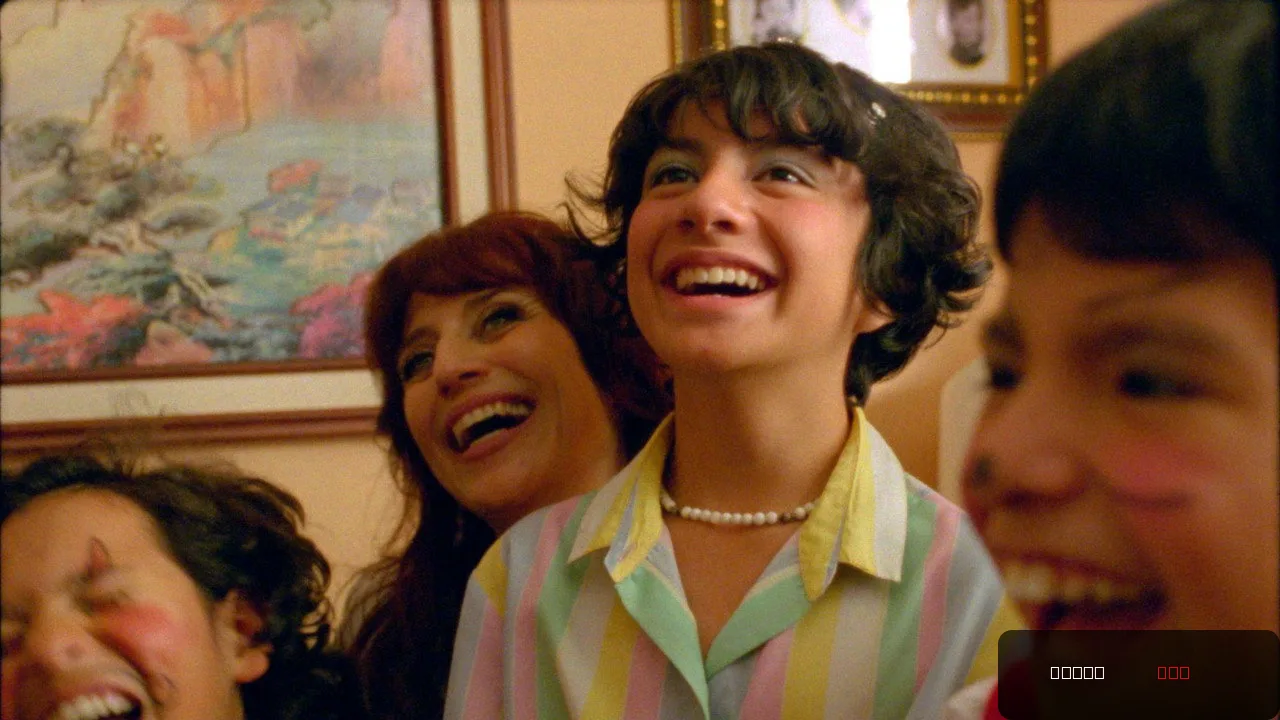
Six Months in a Pink and Blue Building
The film that premiered at Cannes in May 2026
Six Months in a Pink and Blue Building opened at Cannes Critics' Week on May 19, 2026, and hasn't left my head since. Here's what happens: Bruno turns eleven in early-1990s Mexico City. On the same day, two collisions occur—he recognizes that what he feels for his best friend Vladimir is more than friendship, and his family announces his father's HIV diagnosis. That's not a subplot twist. That's the entire engine. Writer-director Bruno Santamaría Razo refuses to let either thread feel secondary; they press against each other the way memories actually do, raw and simultaneous and impossible to untangle.
But there's a third layer. Thirty years later, an adult Bruno is on camera reconstructing these events, trying to articulate what an eleven-year-old could sense but couldn't name. It's a structure that could distance you from the pain. Instead, it does the opposite. Razo seems genuinely uncertain about his own recollections—not performing confusion, but actually sitting with the gap between childhood perception and adult understanding. That specificity matters.
The film is Razo's debut feature, and it arrives with serious festival momentum: both the Caméra d'Or nomination (best first film across all Cannes sections) and the Queer Palm. It's also the first Mexican feature to compete in Critics' Week since Blue Eyelids in 2007—nearly two decades.
Runtime: 105 minutes
Cast: Eduardo Ayala, Nara Carreira, Valentina Cohen, with Jade Reyes, Sofía Espinosa, and others
Genres: Drama, LGBTQ+, Coming-of-age
Why this debut hits differently: the formal choices
What strikes me most is how much the film trusts its young lead. Eduardo Ayala carries scenes that require him to register emotions he's not supposed to fully understand yet—that aching, specific state of knowing something's wrong without language for it. That's genuinely difficult to perform, and he handles it with restraint rather than precocity.
The 16mm cinematography is a statement. In a digital era, shooting on film for a debut feature about memory feels almost necessary—the grain softens edges that might otherwise feel too raw, and it gives the whole film a texture that's inseparable from its emotional content. The pinks and blues of the building itself bleed into every frame. Hard to say whether the title came first or the visual palette, but they're locked together now.
Here's the thing about the salsa framing: it's not a symbol bolted on from outside. The family, facing an HIV diagnosis at a moment in history when that diagnosis meant catastrophe and stigma, responds the way the film's metaphor suggests—they sing and dance their pain away, or try to. Salsa as emotional displacement. It feels like something Razo actually witnessed, which is probably because he did. The whole film carries that specificity.
Where to watch and how to find it
Distribution for international co-productions (this one spans Mexico, Brazil, and Denmark) can be fragmented. Right now, the film is available on major OTT services following its 2026 festival run, though availability varies by region—and continues to shift as deals finalize across territories.
The simplest way to find it in your area: check Movie OTT's where-to-watch widget, which updates in real time across Netflix, Prime Video, regional platforms, and others. No hunting across tabs.
French audiences get a theatrical window starting September 1, 2026, courtesy of Epicentre Films, before any French streaming release. Luxbox handles international sales, so keep an eye on their slate if you're tracking this title's release calendar.
Is this based on a true story?
Yes. Razo has said the film draws directly on his own childhood in Mexico City, including a period when a family member received what turned out to be a mistaken HIV diagnosis. The adult-Bruno framing device reflects that autobiographical process of reconstruction—sifting through what actually happened versus what memory insists happened. That distinction matters for the film's emotional texture.
Who should watch this
If you responded to Y Tu Mamá También or Aftersun, you'll find similar emotional territory here—queer coming-of-age, family grief, memory as an unreliable but necessary act. The early-'90s Mexico City setting feels lived-in and specific (not a postcard). The HIV storyline carries real historical weight, and the film doesn't soften it. It's not an easy watch. But it's a generous one.
Quick comparison guide: Start with Six Months if you want a debut that doesn't feel like a debut—if you want a filmmaker who knows exactly what they're doing with form and feeling before they've made a second feature. Then track Razo's next work. These are the kind of debuts that make you want to follow a whole career.
Don't miss the opening sequence. It contains everything.