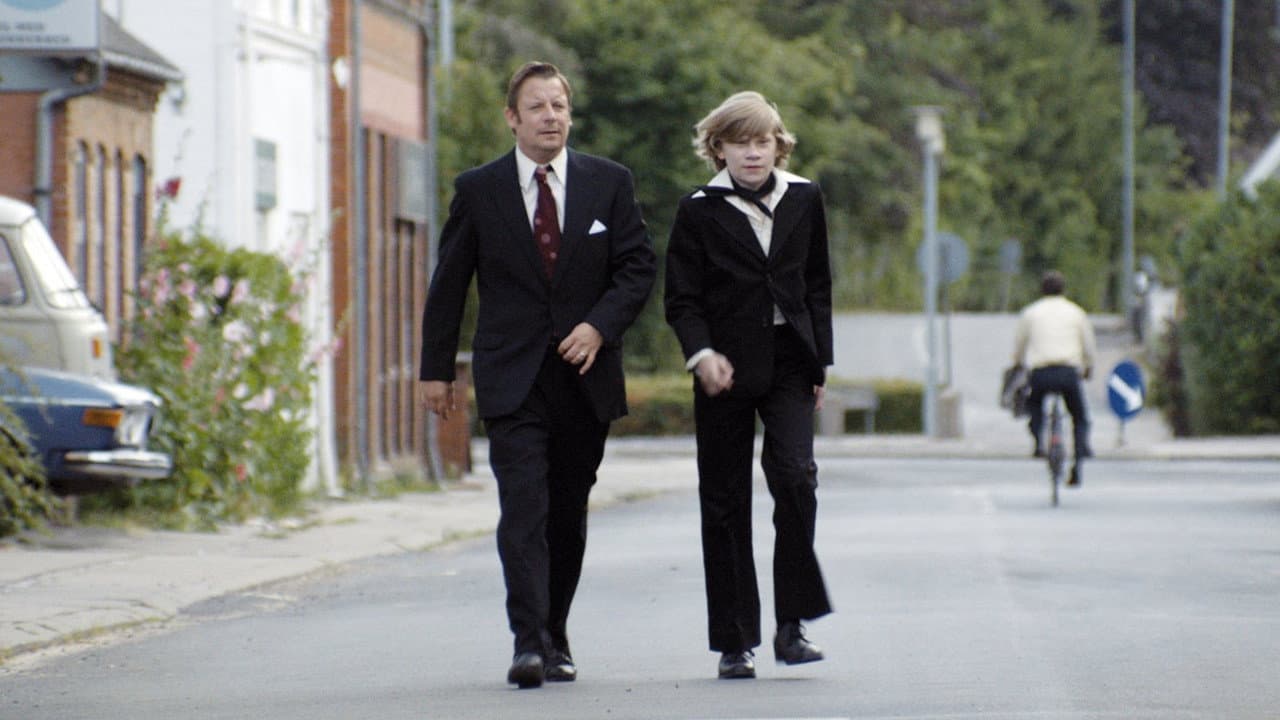








The story of Speed Walking: grief and growing up in 1976
Speed Walking follows Martin, a 14-year-old boy standing at one of life's most formal thresholds—his communion, that ceremonial passage from childhood into the adult world. It's 1976 in a small Danish town on the outskirts of everything, where music fills the air and hormones are just beginning to stir. But the film isn't really about the communion at all. Instead, it's about what happens when that carefully planned milestone gets obliterated by something nobody can control: his mother's sudden death. What unfolds is a portrait of grief that doesn't follow the neat emotional arcs we're taught to expect. Martin doesn't get a moment of closure or a tearful scene where he processes his loss with a caring adult. His father and older brother are drowning in their own sorrow, unable to reach him. He's alone with it.
Behind the making of Speed Walking: Danish cinema and quiet authenticity
Speed Walking is a Nordisk Film Denmark and FilmFyn production, two of Scandinavia's most respected production houses. Released in 2014, the film carries a runtime of 108 minutes—long enough to breathe, to sit in the discomfort of its protagonist's world without rushing toward resolution. The film earned a 6.4/10 rating on IMDb, a score that reflects its deliberately unsentimental approach; this isn't a movie designed to make you feel better about loss, but rather to make you feel its weight. Danish cinema has long excelled at this kind of unflinching social realism—the kind that doesn't manipulate your emotions but instead lets you observe them from an uncomfortable distance. The production choices here are deliberately restrained. There's no swelling orchestral score to tell you how to feel, no dramatic lighting that signals "this is the sad part now." Instead, the film trusts its setting, its young lead, and the specificity of 1970s small-town Denmark to carry the emotional work.
What makes Speed Walking stand out: the performance and the silence
What's striking is how the film uses silence and awkwardness as its primary tools. Martin doesn't get big monologues about his pain. Instead, we watch him navigate relationships that are suddenly, irreversibly broken—his friendship with Kim, his romance with Kristine. These aren't relationships that end because of dramatic confrontation; they end because Martin has entered a space his peers can't follow him into. He's aging into adulthood through the wrong door, and nobody knows how to meet him there. The performances anchor this without ever feeling theatrical. There's a particular scene where Martin sits at a family gathering, surrounded by adults who are trying to maintain normalcy while everything has fundamentally shifted—that's when the film's thesis becomes clear. You can't really comfort someone who's grieving. You can only witness it. The film doesn't try to tie this up neatly. It ends with Martin in "a mixture of drunken happiness and immense sadness," which is perhaps the most honest description of early adulthood ever committed to screen. That's not a character flaw to overcome; that's just what it feels like to grow up when the world hasn't waited for you to be ready.
Where to stream Speed Walking online
Speed Walking is available on major OTT services, and Movie OTT tracks current streaming availability across platforms so you can find it wherever you subscribe. The film's quiet, understated approach means it rewards the kind of focused viewing you get at home—no distractions, no need to catch dialogue over theater noise. If you're browsing for something that doesn't demand a lot of plot machinery but instead asks you to sit with complex emotional states, Movie OTT's streaming guides can help you find it right now. Check the Where to Watch widget at the top of this page for the most up-to-date platform availability.
Frequently asked questions
Q: What year is Speed Walking set in?
Speed Walking takes place in 1976 Denmark, a specific historical moment that shapes the film's atmosphere, the music, and the cultural context of Martin's coming-of-age ritual. The year grounds the story in a particular era without making the film feel like a period piece—it just feels like home.
Q: Is Speed Walking based on a true story?
While the film isn't a direct adaptation of a specific true story, it draws on the universal experience of losing a parent during adolescence. The specificity of the 1976 Danish setting and the communion ritual suggest the filmmakers were working from lived experience or close observation of how grief actually moves through families and small communities.
Q: Who directed Speed Walking?
Speed Walking is a Nordisk Film Denmark and FilmFyn production, representing some of Scandinavia's most accomplished filmmaking talent. The film's restrained style and attention to emotional authenticity reflect the Danish approach to cinema that prioritizes observation over manipulation.
Q: How long is Speed Walking?
The film runs 108 minutes, which gives it enough room to linger in scenes without rushing toward plot resolution. That runtime is crucial to its effect—Speed Walking isn't a quick emotional hit. It's designed to sit with you.
Q: What's the IMDb rating for Speed Walking?
Speed Walking holds a 6.4/10 rating on IMDb. That score reflects the film's deliberate, unsentimental approach—it's not trying to be universally beloved, but rather to be honest about how grief actually works and how it reshapes the people around it.
Final thoughts on Speed Walking
Speed Walking won't appeal to everyone. It's a film that moves slowly, that trusts silence, that doesn't offer easy catharsis. But if you're looking for a film that understands adolescence as something more than romantic confusion and social drama—if you want to watch a young person navigate real loss without the safety net of adults who know how to help—this is the film. It's a small story about a small town that somehow captures something universal about the cruelty of timing. Watch it when you're ready to sit with discomfort. Don't expect to feel better. Expect to understand something you didn't before.