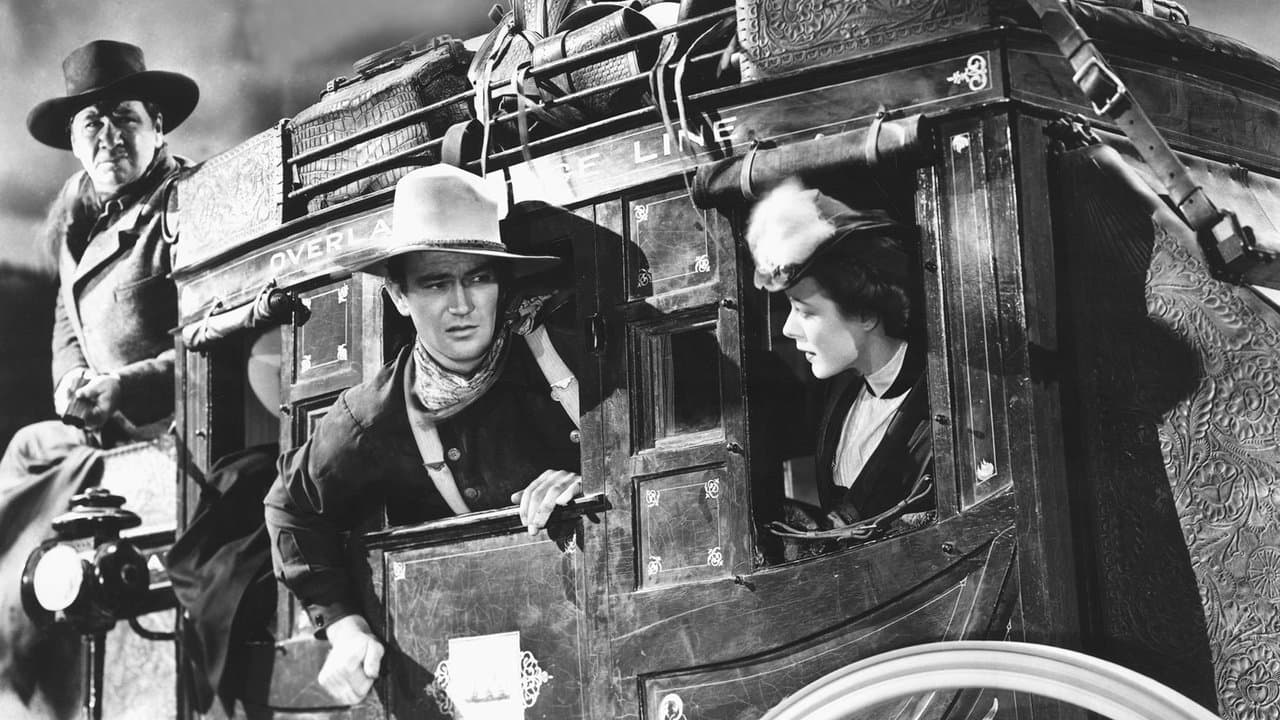
The story of Stagecoach unfolds across 96 minutes of pure tension
Stagecoach opens with a simple premise that becomes anything but simple: a stagecoach bound for Lordsburg carries nine passengers through Apache territory during the height of Geronimo's raids. The threat isn't just the landscape or the threat of attack—it's the people themselves. A fallen woman, a gambler, a whiskey salesman, a banker, a cavalry officer, a pregnant woman, a sheriff, a doctor, and a fugitive. Each boards with their own secrets, their own shame, their own reasons for needing to reach that distant town. What unfolds is less a traditional Western shootout and more a psychological journey where isolation forces these strangers to confront not just external danger, but the prejudices they carry within themselves. The journey becomes a crucible. By the time the wheels stop turning, nothing's quite the same.
Behind the making of Stagecoach reveals a pivotal moment in cinema history
John Ford directed this film at a time when Westerns were often dismissed as B-picture fodder—entertaining enough, sure, but not serious cinema. Working from a screenplay by Dudley Nichols (adapted from Ernest Haycox's 1937 short story "The Stage to Lordsburg"), Ford assembled a cast that mixed established stars with character actors hungry to prove themselves. Claire Trevor carried the weight of playing Dallas, a woman society had already condemned. John Wayne—then still finding his footing as a leading man—anchored the film with an intensity that would define his career. The supporting ensemble, including John Carradine, Thomas Mitchell, Andy Devine, Donald Meek, and Louise Platt, created a microcosm so believable you felt the dust in your throat.
Produced by Walter Wanger Productions with cinematography by Bert Glennon and a score by Boris Morros, the film became a box office success that proved audiences craved something deeper than six-guns and saloon brawls. It didn't just perform—it won critical acclaim, landing on the radar of major award bodies and establishing Ford as more than a genre director. The film's IMDb rating of 7.6 out of 10 reflects its enduring appeal, though what's more telling is how it's aged: unlike many 1939 films that feel locked in their era, Stagecoach still breathes.
What makes Stagecoach stand out is how Ford trusts his characters over spectacle
Here's what I keep coming back to: there's a scene early on where the passengers are introduced, and you can feel Ford's camera taking its time, letting you see not just their faces but their reactions to each other. The way Dallas is treated by the "respectable" women. The way the gambler (John Wayne) observes everything with quiet amusement. That's Ford's genius—he doesn't tell you these people are hypocrites or that society is cruel. He shows you. He lets the tension build not from Apache arrows but from the collision of egos, shame, and unexamined cruelty.
What's striking is how the film refuses to let anyone off the hook, including the audience. The banker isn't just a villain—he's terrified. The respectable women aren't just snobs—they're frightened and clinging to the only status they have. Even the drunk doctor (Thomas Mitchell, in a performance that won him an Oscar) isn't played for easy laughs but as a man whose failures have hollowed him out. The ensemble work here is genuinely masterful, each actor finding the humanity in characters who could've been types. Ford doesn't sentimentalize anyone, but he doesn't dismiss them either. That's a rare balance.
The cinematography deserves its own mention. Bert Glennon frames Monument Valley in a way that's both beautiful and isolating—the landscape becomes a character itself, indifferent to human drama. When danger finally arrives, it doesn't feel like a relief. It feels inevitable, and somehow smaller than the conflicts already simmering inside the coach.
Where to stream Stagecoach online is easier than ever
Stagecoach is currently available on major OTT services, and you can check the Where to Watch widget at the top of this page for the most up-to-date streaming availability in your region. The good news? This isn't a film that's locked behind paywalls or vanished into obscurity. Movie OTT tracks where classic films like this one are currently streaming, so you can find it without hunting through five different apps. Whether you're watching on a platform you already subscribe to or discovering it for the first time, the film translates beautifully to smaller screens—though I won't pretend a theater wouldn't be better. The intimacy of the story actually works in the film's favor when you're watching from your couch; you can really sit with these characters' discomfort.
Frequently asked questions
Q: Who directed Stagecoach and what's his legacy?
John Ford directed the film, and Stagecoach became a turning point in his career—proof that Westerns could be serious art. Ford would go on to become one of cinema's greatest directors, but this 1939 film was crucial in establishing that the genre had depths most filmmakers hadn't even attempted to explore.
Q: Is Stagecoach based on a true story?
No, it's based on "The Stage to Lordsburg," a 1937 short story by Ernest Haycox. While the setting and the threat of Geronimo are historically rooted, the specific characters and their journey are fictional—which actually gives Ford more freedom to explore character and social dynamics without being bound by historical fact.
Q: What's the deal with the ensemble cast—why so many characters?
The nine passengers represent different social classes and moral positions, which is exactly the point. Ford uses the confined space of the stagecoach to force these people into confrontation with each other and with their own biases. It's not a gimmick; it's the entire structure of the film.
Q: Did Stagecoach win any major awards?
Yes. Thomas Mitchell won the Academy Award for Best Supporting Actor for his role as the doctor, and the film received several nominations. More importantly, it won over critics and audiences in ways that proved Westerns deserved serious consideration as an art form.
Q: How long is Stagecoach, and is it slow?
It's 96 minutes, which means it moves. Ford doesn't waste time, but he also doesn't rush. The pacing feels deliberate rather than slow—every scene earns its place. If you're expecting constant action, you'll be disappointed. If you want character work and tension that builds from human conflict, you're in for something special.
Final thoughts on Stagecoach
Stagecoach isn't just a great Western—it's a great film, period. Watch it if you care about character, if you're interested in how cinema can explore social prejudice without preaching, or if you simply want to see master filmmaking from an era when directors understood that restraint could be more powerful than spectacle. It's 1939, but it doesn't feel like it. That's the real test of a classic.