What Stardust is about
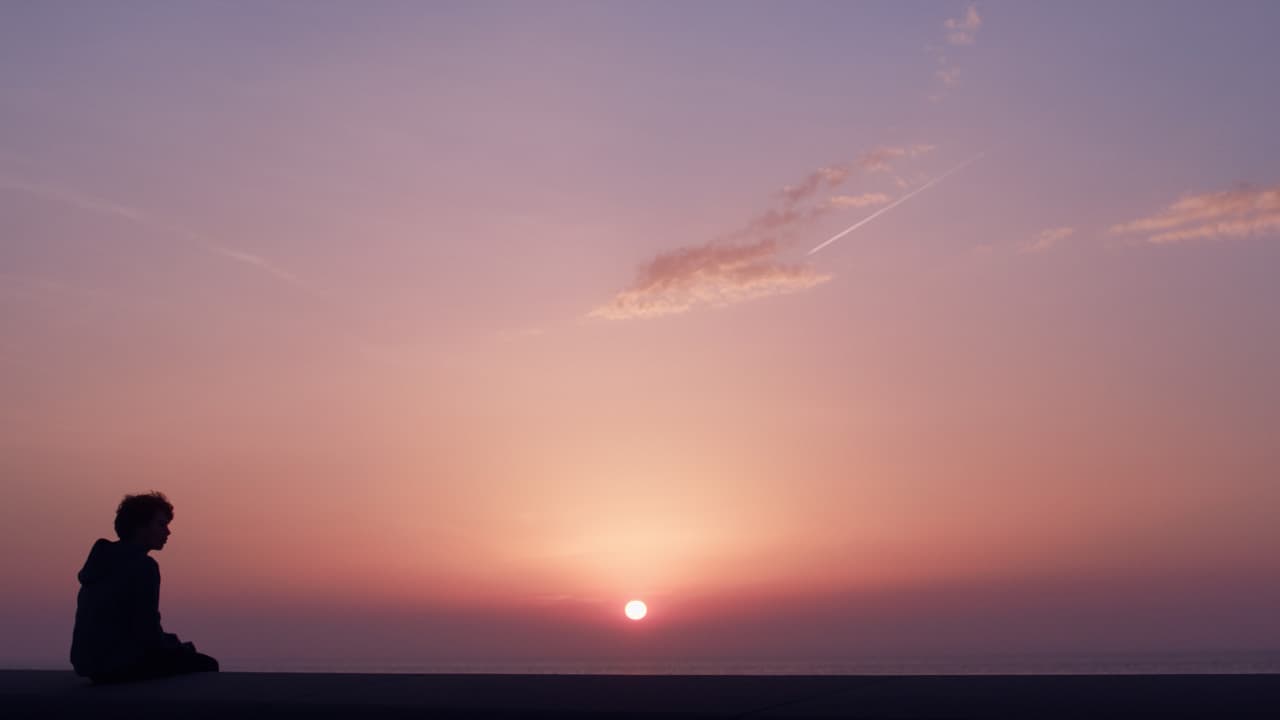
Stardust is a 2026 short drama that plants its emotional stakes in the first minute and doesn't let go. A boy — quiet, withdrawn, carrying something he hasn't named yet — is brought to the seaside by his father, who has arrived with a new girlfriend in tow. That's the whole setup, and it's enough. The film asks a question that's genuinely hard: what happens when someone else's grief brushes up against your own, and you want nothing to do with them? The seaside setting isn't decorative here — the open water, the salt air, the sense of things stretching beyond what you can see — it does real narrative work, framing a small, interior story against something vast and indifferent. Running just 11 minutes, Stardust doesn't waste a single one.
How Stardust came together at LUCA School of Arts and Narafi
Stardust is a co-production between LUCA School of Arts and Narafi, two Belgian institutions with a long track record of nurturing short-form filmmaking at the student and emerging-professional level. LUCA School of Arts, based in Brussels and Ghent, has produced a steady stream of festival-circuit shorts over the years, and Narafi — its film and photography department — is where much of that work originates. Short films from this pipeline tend to be lean and formally precise, built around a single emotional idea rather than a sprawling narrative architecture. That discipline shows in Stardust.
The 2026 release date places it in a crowded moment for short drama. Worth noting for context: the similarly titled We Are Stardust (2026), a Norwegian-Danish documentary about jazz musician Jon Larsen's obsessive hunt for micrometeorites in urban dust, has been making festival rounds and drawing attention — Cineuropa described it as an engaging portrait of scientific curiosity. The name overlap is coincidental, but it's the kind of thing that can muddy search results and streaming discovery. The 2007 fantasy film Stardust, directed by Matthew Vaughn and based on Neil Gaiman's novel, adds another layer of title confusion — IMDb's entry for the 2007 film is what most people hit when they search the name, given that film's $38.3 million US gross and 128-minute runtime. This 2026 short is a different animal entirely: 11 minutes, no stars, no fantasy kingdoms. Just a boy and a beach and a stranger he didn't ask for.
As of publication, the film carries an unscored IMDb rating — not unusual for a short that hasn't yet accumulated enough votes to register. Awards history, if any, hasn't been formally documented in major trade coverage. Movie OTT tracks emerging short-form titles across streaming platforms and will update this page as festival recognition or distribution news surfaces.
Why Stardust works as a study in quiet emotional conflict
What's striking is how much the film achieves through restraint. The premise — a grieving child, a father who has moved on too soon, an interloper who means well — could easily tip into melodrama or, worse, easy resolution. Stardust, from what the production context suggests, isn't interested in either. The boy's withdrawal isn't presented as a problem to be solved within the runtime. It's a condition. A state of being. And the new girlfriend's presence doesn't fix it so much as force it into the open, the way a tide pulls something loose from the sand that you'd rather stay buried.
The 11-minute format is genuinely hard to execute well — harder, I'd argue, than a feature, because there's no room to recover from a wrong note. Every scene has to carry weight. Short dramas from student and emerging-filmmaker pipelines like LUCA/Narafi often succeed precisely because the filmmakers haven't yet learned to pad. The economy is built in.
Thematically, the film sits in a tradition of European short drama that trusts silence. Think of the way grief gets handled in Scandinavian short cinema — not announced, not explained, just present in the frame. Stardust, set at the seaside, uses geography the same way: the horizon line keeps reminding you that the characters' feelings are small against the world, which is either comforting or devastating depending on where you are in your own life. Hard to say if that duality is fully intentional, but it lands either way. Movie OTT editorial notes that short dramas with this kind of tonal precision tend to find their audience slowly, through word of mouth and curated streaming placement, rather than through splashy releases.
Where to stream Stardust online
Stardust is currently available on major OTT services. The Where-to-Watch widget at the top of this page lists every platform currently carrying the film — that's the fastest way to check which service has it in your region, since short-form titles can shift availability more quickly than features. Short dramas from European film schools don't always land on the biggest platforms simultaneously, so regional availability can vary. Movie OTT aggregates streaming data across services and refreshes availability regularly, so if the film has moved platforms since this page was published, the widget will reflect the current state. If you're browsing on mobile, the widget loads above the fold — you won't have to scroll far.
Frequently asked questions
Q: Where can I watch Stardust (2026) online?
Stardust is currently streaming on major OTT services. Check the Where-to-Watch widget at the top of this page for the most current platform availability in your region, as short-film streaming rights can shift.
Q: How long is Stardust (2026)?
Stardust runs 11 minutes. It's a short-form drama, not a feature — ideal for a single sitting, though the emotional weight tends to linger longer than the runtime suggests.
Q: Who produced Stardust (2026)?
The film is a co-production between LUCA School of Arts and Narafi, both Belgian institutions with established track records in short-form and student filmmaking. Neither a Hollywood studio nor a streaming-native production, it comes from an art-school pipeline known for formally precise, emotionally grounded work.
Q: Is Stardust (2026) related to the 2007 fantasy film or the 2026 documentary We Are Stardust?
No — the three titles share a name but nothing else. The 2007 Stardust, directed by Matthew Vaughn, is a UK-US fantasy based on Neil Gaiman's novel. We Are Stardust (2026) is a Norwegian-Danish documentary about micrometeorite hunting. This 2026 Stardust is an 11-minute Belgian drama about grief and family. Separate films entirely.
Q: What is Stardust (2026) rated, and is it appropriate for children?
No official MPAA or equivalent rating has been confirmed for this short. The subject matter — a child processing grief while his father introduces a new partner — is emotionally heavy but not graphic. Parental discretion is advisable for younger viewers. Movie OTT will update this page if a formal content rating is assigned.
Final thoughts on Stardust (2026)
Stardust is the kind of short film that earns its runtime twice over. Eleven minutes. A boy, a beach, a grief he can't share with someone he didn't choose. That's it — and that's enough. For viewers who find most short drama either too slight or too self-consciously artful, this one lands somewhere more honest. It doesn't resolve cleanly. It doesn't need to. If you're looking for a quick but genuinely affecting watch, Stardust belongs on your list. Check current streaming availability via the widget above, or browse short drama recommendations across platforms at Movie OTT.