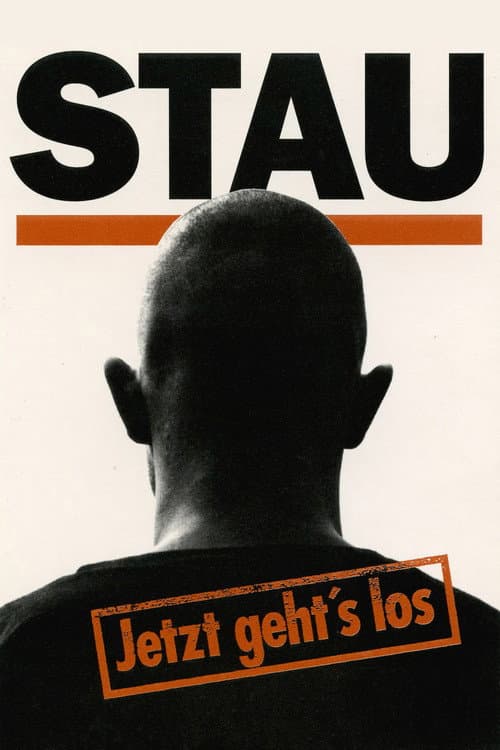
The World of Stau – Jetzt geht's los: Concrete Blocks and Collapsing Certainties
Stau – Jetzt geht's los captures something most documentaries shy away from: the raw, unguarded moment when an entire world stops making sense. Set in Halle-Neustadt, one of East Germany's flagship socialist housing projects, the film follows a group of young people who are, quite literally, going nowhere. The concrete blocks that once promised utopian order now feel like monuments to a failed experiment. What's striking is how the film doesn't judge them—it just watches as they drift between these brutalist towers, caught between the rubble of the GDR and a unified Germany they don't quite belong to. No neat narrative arc. No redemptive turn. Just people trying to figure out who they are when everything they knew has evaporated overnight.
Behind the Making of Stau – Jetzt geht's los: Thomas Heise's Controversial Documentary
Director Thomas Heise made this film at a crucial moment in German history. The GDR had collapsed just two years earlier, in 1990, and the social fabric of Eastern communities was unraveling faster than anyone could process. Produced by Ö-Filmproduktion, Stau – Jetzt geht's los premiered at the Duisburger Filmwoche in 1992, where it won the Documentary Film Prize. But here's the thing—the award came with a backhanded kind of praise. The festival's laudation essentially predicted that the film would provoke disagreement, and Heise seemed fine with that. The 84-minute runtime is deliberately lean, refusing the kind of explanatory voiceover that might make viewers feel comfortable. Heise's approach was to let the subjects speak for themselves, which they do—sometimes uncomfortably. The film doesn't shy away from capturing the xenophobic attitudes that were spreading through Saxony-Anhalt at the time, even though the region had almost no immigrant population to speak of. It's a documentary that treats its subjects with neither pity nor condescension, which is exactly what made it so divisive.
What Makes Stau – Jetzt geht's los Stand Out: Unflinching Social Observation
There's a particular kind of honesty at work here that you don't see often in documentary filmmaking, especially not from that era. Rather than constructing a narrative that explains away the social dissolution happening in post-GDR East Germany, Heise simply documents it—the aimlessness, the fear masquerading as ideology, the way young people with no jobs and no prospects start reaching for any worldview that feels solid, even if that worldview is rooted in suspicion of the unfamiliar. The film works because it refuses to offer easy answers or moral certainty. You're watching real people grapple with real despair, and their responses—some of them ugly, some of them desperate, some of them just confused—are presented without editorializing. I keep coming back to how the film captures that particular moment when ideology collapses but nothing coherent rises to replace it. What you get instead is a vacuum, and nature abhors a vacuum. The performances, if you can call them that—these are documentary subjects, not actors—feel raw because they are raw. These aren't people performing for a camera; they're people who've already stopped performing for anyone.
Where to Stream Stau – Jetzt geht's los Online
Stau – Jetzt geht's los is available on major OTT services, and you can check the Where to Watch widget at the top of this page for current availability in your region. Streaming rights shift regularly, so Movie OTT keeps an up-to-date tracker across all platforms—it's worth checking there if your usual service doesn't have it yet. The film's documentary status and its specific historical focus mean it's not always front-and-center on mainstream platforms, but it does circulate through specialty streaming channels and film-focused services. Given that this is a 1992 German-language documentary with an IMDb rating of 4.4 out of 10—which reflects its divisiveness rather than its quality—it's the kind of film that rewards active searching rather than passive browsing.
Frequently asked questions
Q: Who directed Stau – Jetzt geht's los?
Thomas Heise directed this 1992 documentary. He won the Documentary Film Prize at the Duisburger Filmwoche for the film, though the award came with a caveat that the work would likely provoke disagreement among viewers.
Q: What awards did Stau – Jetzt geht's los win?
The film won the Documentary Film Prize at the 1992 Duisburger Filmwoche. It's a significant recognition, though the festival's laudation notably predicted the film would be controversial.
Q: Is Stau – Jetzt geht's los based on a true story?
It's a documentary, so it's entirely based on real events and real people. The film captures the lives of actual young people living in Halle-Neustadt in the immediate aftermath of the GDR's collapse.
Q: How long is Stau – Jetzt geht's los?
The film runs 84 minutes, a deliberately compact runtime that Heise uses to maintain an observational, unadorned approach without explanatory narration.
Q: Why is Stau – Jetzt geht's los controversial?
The film documents xenophobic attitudes among young East Germans in the early 1990s without condemnation or explanation, which was—and remains—uncomfortable viewing. It refuses to offer moral certainty or easy narratives about the post-GDR transition.
Final Thoughts on Stau – Jetzt geht's los: A Difficult but Essential Watch
This isn't a feel-good documentary. It's not meant to be. Stau – Jetzt geht's los is the kind of film that stays with you precisely because it refuses to resolve the tensions it observes. If you're interested in how ideology collapses, how fear fills the void, or how young people navigate the wreckage of failed systems, this is essential viewing. It's also a film that rewards repeat watching—the kind of work you might come back to years later and see something new in. Just don't expect comfort. That's not what Heise is offering, and honestly, that's what makes it matter.