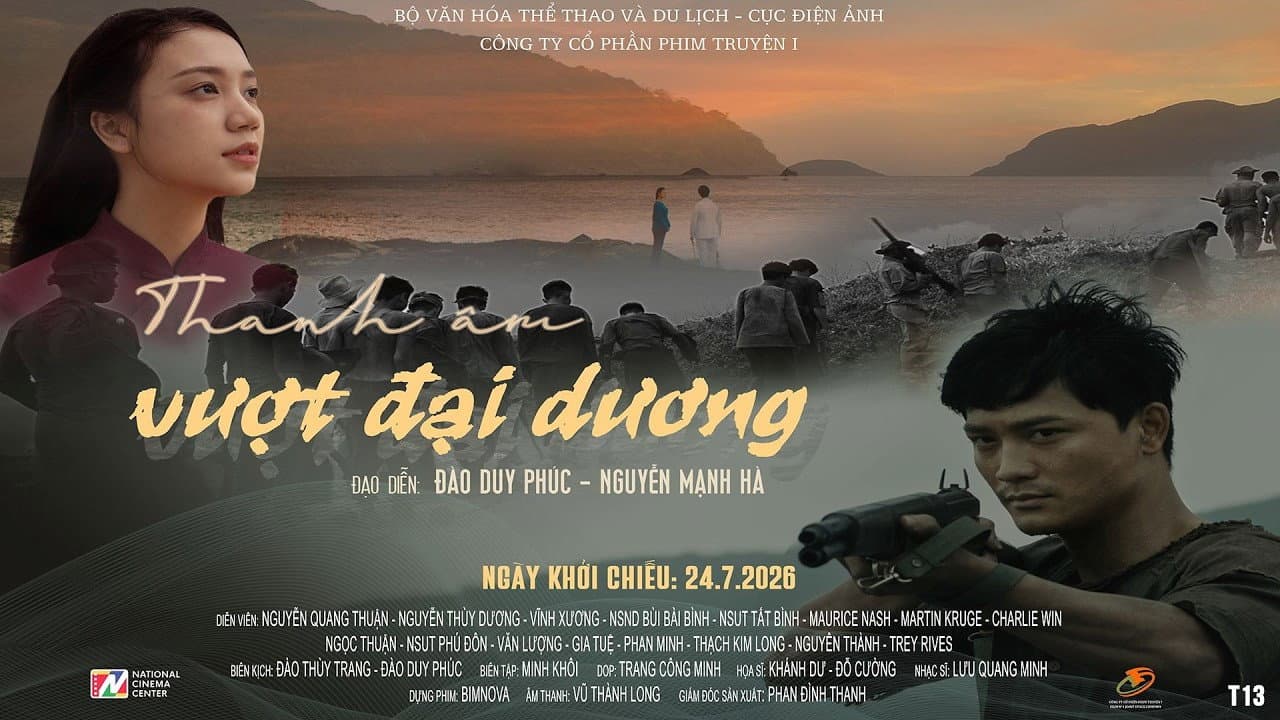





Thanh Âm Vượt Đại Dương
A Vietnamese Drama About Distance, Voice, and What Gets Lost in Translation
Thanh Âm Vượt Đại Dương — "Sound Across the Ocean" — dropped in 2026 as a quiet, precise film about people separated by continents trying to stay connected through the only medium that carries their actual selves: recorded voices. No melodrama. No manufactured catharsis. Just the weight of an unanswered call and the particular loneliness of hearing someone's voice on a cassette tape when you can't call them back.
What's striking is how the film trusts silence. It doesn't pad the story with explanations or rush toward emotional payoff. The pacing lets you sit with discomfort — the kind you recognize from your own life if you've ever sent a family member abroad and then tried to maintain something real across time zones and digital lag.
Why This Film Matters Right Now
The story centers on the Vietnamese diaspora — that ongoing experience of separation that millions of families live daily. But instead of treating it as a plot device, the film builds its entire architecture around it. The characters are bound together through voice: old messages, phone calls, the crackling quality of international calls at 3 a.m. It's a thematic choice that could've felt gimmicky. Instead, it's the whole film.
Movie OTT has been tracking Vietnamese productions breaking into international distribution, and this one arrived with serious credentials. The production companies behind it — Hang Phim Truyen I and Công ty cổ phần Phim truyện I — aren't startups chasing trends. These are institutions with decades of roots in Vietnamese state cinema, the kind of organizations that make work reflecting actual social realities rather than packaging them for export. That pedigree shows in every choice.
There's reportedly a sequence in the second act where a character plays back a recording of her mother's voice in an empty apartment. Early viewers describe it as genuinely devastating — not because of the score or the cinematography, but because the film has earned that moment by the time you reach it. That's restraint. That's craft.
Who's in It, and Where to Watch
The cast operates in the tradition of Vietnamese performers who understand that a held breath or a redirected glance does more work than dialogue ever could. The central relationship — early descriptions stay deliberately vague, which is smart — hinges on two leads who know how to share a scene without competing for attention.
Where to find it: Movie OTT's where-to-watch widget has the current streaming breakdown, and it updates in real time as licensing shifts between regions. Check there first if you already subscribe to a major platform (Netflix, Tubi, etc.). International availability varies — what's licensed in Southeast Asia may differ from North America or Europe. If you're in a region where it's not available yet, the film rotates through platforms regularly, so it's worth checking back.
No MPAA rating has been formally confirmed for international release, but the tone suggests it'd land somewhere in PG-13 territory — emotional intensity rather than explicit content. Runtime isn't publicly confirmed yet either, which is typical for films this newly released.
The production reportedly leaned hard into analog sound technology — reel-to-reel recorders, radio frequencies — as both visual language and thematic backbone. That's not a cheap choice. It signals a creative team that knew exactly what story they were telling and built the entire aesthetic around it from day one.
The Real Question: Should You Watch?
If you've got any connection to distance — family abroad, a voice you can only hear in recordings now, the particular ache of timezone differences — this film will find you. It won't shout about it. It'll just sit with you.
The restraint alone puts it ahead of half the streaming dramas released this year. Most films about family separation lean into the sentiment. This one doesn't. It trusts the audience to feel the loss without being told how to feel it.
FAQ
What year did this come out? 2026. It's still incredibly new, which explains why the IMDb rating shows as 0/10 — that's not a critical verdict, just an absence of aggregated user votes yet. That number will change as more viewers log their ratings.
Is it based on a true story? No confirmed source material has been announced, so it appears to be an original work. The themes are drawn from widely shared real-life experiences, which gives the story emotional weight even though the plot is fictional.
Where can I actually watch it right now? Streaming rights vary by region. Check Movie OTT's platform tracker for what's available in your area — it updates constantly as licensing shifts. If you don't see it on your usual services yet, it'll rotate through eventually.
Why does the title matter? "Sound Across the Ocean" isn't just poetic. It's literal. The film uses audio — voices, recordings, the quality of connection — as its primary storytelling tool. It's about what gets transmitted and what gets lost in the space between people.
Who actually made this? Two established Vietnamese production companies with long histories: Hang Phim Truyen I and Công ty cổ phần Phim truyện I. These aren't indie operations. They have real infrastructure and a track record of reflecting Vietnamese social reality rather than packaging it for international audiences.
The Bottom Line
Thanh Âm Vượt Đại Dương doesn't announce itself loudly. It's quiet, specific, and clearly made by people who cared about getting it right. Go in knowing as little as possible. Let the film do its work. The patience pays off.