The story of The Act of Killing
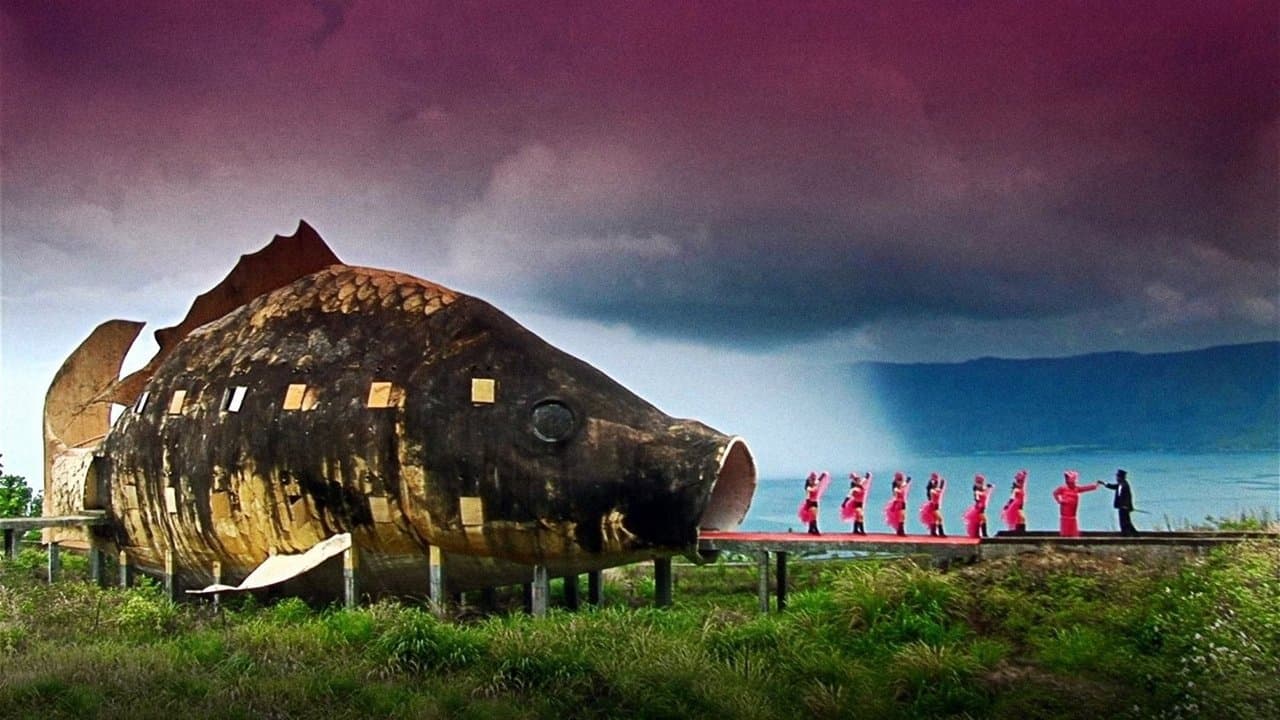
The Act of Killing is a documentary unlike anything most viewers will encounter. Instead of the traditional interview-and-archive approach, director Joshua Oppenheimer made a radical choice: he asked the men who actually carried out Indonesia's 1965–66 mass killings—alleged communists and political opponents of the New Order regime—to stage recreations of their murders. Not in a courtroom. Not in an archive. On film sets, in costumes, performing their atrocities like they're actors in a movie. The film follows Anwar Congo, one of the executioners, as he and his associates move through various film genres—gangster noir, musical, Western—all while describing, in their own words, what it felt like to kill. The line between performance and confession blurs so completely that you stop knowing what you're watching. A confession? A justification? A cry for help? That ambiguity is the entire point.
Behind the making of The Act of Killing
Oppenheimer spent years in Indonesia researching the 1965–66 killings, during which an estimated 500,000 to over 1 million people were murdered. What makes this project extraordinary is that the perpetrators never faced justice—many are still alive, still powerful, woven into the fabric of Indonesian society as gangsters and political figures. The film was produced by Final Cut for Real, Piraya Film, Novaya Zemlya, and Spring Films, with Christine Cynn and an anonymous Indonesian co-director working alongside Oppenheimer. The production was deliberately conducted in Medan, North Sumatra, where Congo and his network operated. Running 117 minutes, the documentary premiered in 2012 and went on to earn widespread critical acclaim. At 7.67 on IMDb, it sits among the highest-rated documentaries ever made. The film earned a nomination for Best Documentary Feature at the Academy Awards and won numerous international film festival prizes, including recognition at Berlin and Toronto. What's striking is that despite its subject matter—or perhaps because of it—the film found distribution across major streaming platforms, making this piece of difficult history accessible to global audiences in ways that traditional documentaries rarely achieve.
What makes The Act of Killing stand out
Most documentaries about genocide operate at a distance. They show us victims, survivors, and the wreckage of history. The Act of Killing does something far more disturbing: it forces us to sit inside the mind of the killer. The reenactments aren't graphic in a sensational way—they're almost theatrical, which somehow makes them worse. When Anwar Congo dances in a musical number about his killings, or when he and his friends stage a Western-style execution, there's a cognitive dissonance that feels like watching someone's conscience trying to confess while their ego refuses to admit guilt. What's remarkable is how the camera—and Congo's own presence—seems to crack that facade. By the film's end, Congo is visibly shaken, even traumatized, not by what he's done but by having to confront it through performance. That psychological journey is what separates this from standard true-crime content. It's not about sensationalism; it's about the architecture of denial and how it collapses when a killer is forced to see himself through an audience's eyes. Viewers consistently describe the experience as one of the most honest explorations of human psychology they've encountered in any medium—not pleasant, but absolutely necessary.
Where to stream The Act of Killing online
The Act of Killing is available across major OTT platforms, and you can check the "Where to Watch" widget at the top of this page to see which service currently carries it in your region. Streaming availability does shift—platforms rotate titles regularly—so Movie OTT keeps that information updated so you don't have to hunt across five different apps. Since this is a 2012 documentary that's become a canonical work in the genre, it tends to have fairly stable placement on prestige streaming services. If you're planning a documentary binge or want to revisit challenging cinema, it's worth checking availability now rather than assuming it'll be there next month.
Frequently asked questions
Q: Is The Act of Killing based on a true story?
Yes, entirely. The film documents real killings that occurred during Indonesia's 1965–66 anti-communist purge, and the men reenacting them are actual perpetrators who were never prosecuted. The reenactments are staged recreations, but the events they're depicting actually happened.
Q: Who directed The Act of Killing?
Joshua Oppenheimer directed the film, with Christine Cynn and an anonymous Indonesian co-director. The anonymity of the Indonesian co-director was a safety measure, given the sensitivity of the subject matter and the fact that the perpetrators remain powerful figures in Indonesian society.
Q: How long is The Act of Killing?
The documentary runs 117 minutes, which gives it enough time to develop the psychological complexity of its subjects and avoid feeling rushed despite the heavy material.
Q: What happened to Anwar Congo after the film?
Congo's fate after filming remains somewhat private, though his visible emotional breakdown during the production suggests the experience had a genuine impact on him. The film doesn't provide a neat resolution to his story, which is part of what makes it so unsettling.
Q: Why haven't these killers been prosecuted?
Indonesia never conducted war crimes trials for the 1965–66 killings. The perpetrators integrated into society, became gangsters and political operators, and the government never pursued accountability—a reality the film documents with chilling matter-of-factness.
Final thoughts on The Act of Killing
This isn't a film you watch for entertainment or even for conventional catharsis. You watch The Act of Killing because it asks questions about complicity, performance, and the human capacity to rationalize the unthinkable. It's a masterwork of documentary cinema precisely because it refuses easy answers. If you're interested in political documentaries, genocide studies, or the psychology of perpetrators, this is essential viewing. It's difficult. It's unforgettable. And it's one of the most important films of the 21st century so far.