

The Amityville Horror (2005): Why This Remake Still Works
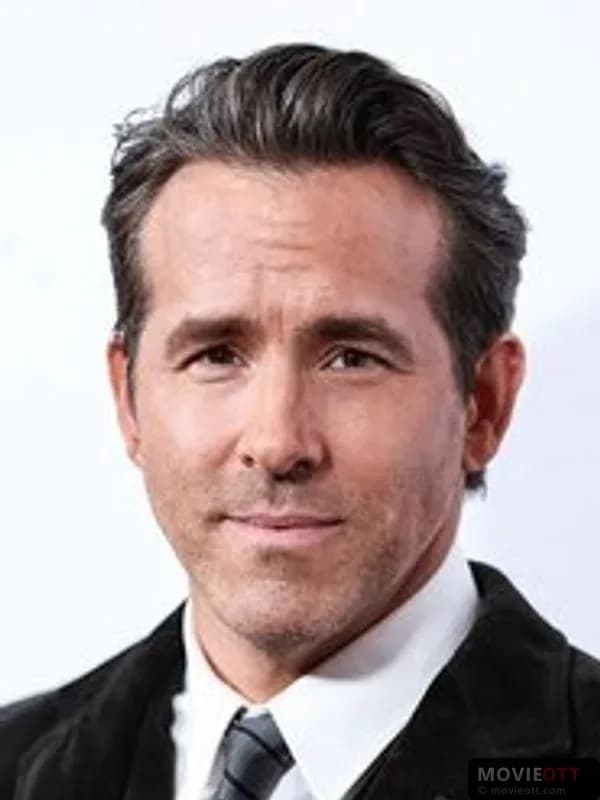
April 15, 2005. Ryan Reynolds, Melissa George, and a Dutch Colonial house that refuses to let its occupants leave. The Amityville Horror isn't the kind of film critics championed (it landed a 24 on Metacritic), but it's the kind people actually watch — and rewatching it now reveals something the initial reviews missed: this is a film about a man unraveling, and Reynolds commits to every degrading step of that descent.
The premise is simple. George and Kathy Lutz buy 112 Ocean Avenue in Amityville, New York — a stunning house with a brutal history. In 1974, Ronald DeFeo Jr. murdered six family members inside those walls. The Lutz family, lured by an impossibly low price, moves in with their three children. They last 28 days before fleeing in the middle of the night. The 2005 film asks the obvious question: What happened in those 28 days?
What the house actually does to George Lutz
Most haunted-house films follow a formula: slow burn, then jump scares, then chaos. This one doesn't. Instead, director Andrew Douglas watches George Lutz deteriorate the way a time-lapse shows a flower dying — you notice the wilting only when you step back. He stops sleeping. He becomes obsessed with chopping wood. He turns hostile at dinner. The thing nobody mentions is that the paranormal horror here is almost secondary to the psychological one. It's not the house that scares you. It's watching a good man — tired, stressed, trying to keep his blended family together — become someone his wife barely recognizes.
Reynolds had been in comedies that year (Just Friends dropped the same month). Casting him as the deteriorating center of a horror film was a genuine risk. What's striking is his restraint. He doesn't play George as a man possessed by demonic forces. He plays him as a man breaking under pressure — and the house is just the pressure that finally cracks him. By the film's midsection, you're watching a stepfather who's working too hard, sleeping too little, and slowly surrendering to something he can't name. The house wants them dead, yes. But George is already doing half the work himself.
Melissa George anchors the film as Kathy, the woman who has to keep believing in her husband even as the evidence piles up. She's not hysterical. She's trapped — which is worse. The best scenes aren't the supernatural moments. They're the family dinners where the tension is purely human, and you can't quite tell if the house is making things worse or just revealing what was already fractured.
How this got made, and why it made money
Michael Bay's Platinum Dunes was on a horror-remake spree in the mid-2000s. They'd already revived The Texas Chainsaw Massacre (2003) and were building a formula: recognizable title, modest budget, elevated production values, tight runtime. This film clocks in at 89 minutes — no bloat, no filler. The screenplay came from Scott Kosar, who'd already proven he could handle the remake space. And Andrew Douglas, a British commercials director, brought something unexpected: a willingness to let silence do the work.
The film opened to $23.4 million domestically in its first weekend and eventually grossed over $65 million in North America alone on a reported budget of around $19 million. That's not just respectable. That's a home run by any measure — and it proves audiences connected with something critics didn't quite recognize. The MPAA slapped it with an R rating for violence, disturbing images, language, brief sexuality, and drug use. It earns that rating without ever feeling gratuitous.
The casting choices matter. Philip Baker Hall appears as a priest whose encounter with the house — specifically, the moment holy water boils in his hands — is one of the film's most quietly unsettling sequences. And the film marks the feature debut of Chloë Grace Moretz, who was around eight years old at the time. She plays Chelsea, the youngest Lutz child. Her role is small, but there's something genuinely eerie about her performance that makes you watch her scenes twice.
Why the pacing matters more than the scares
Most horror films from this era lean hard into jump scares and gore. This one doesn't (at least not in the first two acts). Douglas shoots the house as a character — wide angles that make the rooms feel wrong, a persistent sense that the geometry doesn't quite add up. You're waiting for something to happen, but what's actually happening is slower: a family coming apart.
The third act abandons this restraint and leans into more conventional horror territory — demonic imagery, chasing, visceral threats. Some viewers feel the film loses its nerve there. Maybe they're right. But the first 60 minutes are genuinely well-crafted, and that's worth your time alone. It's the kind of film that works on its own terms if you meet it halfway.
Horror remakes from the mid-2000s often get dismissed as a batch. Movie OTT tracks these films across platforms and decades, and what becomes clear is that this one deserves reconsideration. Not as a masterpiece, but as a lean, competent film that does what it promises and occasionally does it very well.
Where to watch — and who should
The Amityville Horror is currently streaming on Prime Video. If you've got an active subscription, there's no friction — just queue it up. No ads, no rental fee. It's one of the more accessible horror titles in Prime's library.
Watch this if: You liked Insidious or The Ring but want something that prioritizes atmosphere over spectacle. You enjoyed Sinister but found it exhausting — this one's more measured. You're curious about early-2000s horror remakes and want to see what the good ones actually looked like before the trend got exhausted. You want to see Ryan Reynolds in a role that shows genuine dramatic range.
Skip it if: You need constant scares or gore. Jump scares bore you. You're looking for something experimental or iconoclastic. (Watch Hereditary or The Wailing instead.) You need a film that fully commits to its premise — this one wavers in the final act.
The film is family-friendly in one sense — no sexual content, minimal language — but it's rated R for good reason. The psychological weight and paranormal imagery aren't suitable for kids, even if there's no explicit violence on screen.
Frequently asked questions
Is this based on a true story? Sort of. The film adapts Jay Anson's book, which was based on the Lutz family's reported experiences at 112 Ocean Avenue. The DeFeo murders (1974) are historical fact. The haunting itself? That's been disputed for decades. But the house exists, the murders happened, and something drove the Lutz family out.
Who directed it, and what else have they done? Andrew Douglas, a British filmmaker who came primarily from commercials and documentary work. The Amityville Horror was his feature directorial debut. The film was produced by Platinum Dunes and written by Scott Kosar. Douglas later directed Sinister (2012), which critics appreciated far more, but this one deserves more credit than it gets.
Where can I watch it? Prime Video, as mentioned above. Check Movie OTT's where-to-watch widget for current streaming availability across all platforms — licensing shifts, and the widget updates in real time.
Is it a remake or a sequel? Remake of the 1979 film (James Brolin, Margot Kidder). Technically it's the ninth film in the broader Amityville franchise, but you don't need to watch anything else first. It stands alone.
How old was Chloë Grace Moretz? Around seven or eight during filming. This was her feature debut — a small role that launched what became a significant career in horror and genre film.
The bottom line: The Amityville Horror (2005) is a 89-minute film that knows exactly what it is. Not a masterpiece. Not a disaster. A lean, well-shot haunted-house story that trusts atmosphere over noise and lets its best actor — Ryan Reynolds — do something most people forget he's capable of. Watch it on a weeknight when you've got time to let it breathe. It's the kind of film that sneaks up on you.