The story of The Autobiography of Miss Jane Pittman
The Autobiography of Miss Jane Pittman opens in February 1962, when a New York journalist arrives in Bayonne, Louisiana, to meet Jane Pittman—a woman who's just turned 110 years old. What follows isn't a straightforward interview. Instead, Jane becomes a storyteller, walking her visitor (and us) through the decades of her life, beginning with her earliest memories before slavery ended. The film doesn't just dwell in the past, though. Between these chapters of Jane's extraordinary history, we see the present-day civil rights struggles unfolding in Bayonne itself, where a young activist named Jimmy is pushing for change. It's a structure that feels almost novelistic—layering past and present, personal memory and collective struggle, in a way that few television dramas had attempted before 1974.
Behind the making of The Autobiography of Miss Jane Pittman
The Autobiography of Miss Jane Pittman was adapted from Ernest J. Gaines' acclaimed novel of the same name and produced by Tomorrow Entertainment for CBS. The film aired on Thursday, January 31, 1974, and it marked a significant moment in American television history. At its heart was Cicely Tyson, an actress who'd been steadily building her reputation but hadn't yet had a role of this magnitude—one that would require her to carry an entire narrative across a full 112 minutes. The production team made the bold choice to cast Tyson in the dual role of both young Jane and the elderly Jane reflecting on her life, a decision that demanded not just acting range but a kind of spiritual depth. The film's success on CBS—broadcast in primetime to a national audience—proved that television audiences were hungry for serious, substantive drama centered on Black American experiences and voices. That hunger didn't translate immediately into industry recognition across all circles, but it did something arguably more important: it changed what people believed television could do.
What makes The Autobiography of Miss Jane Pittman stand out
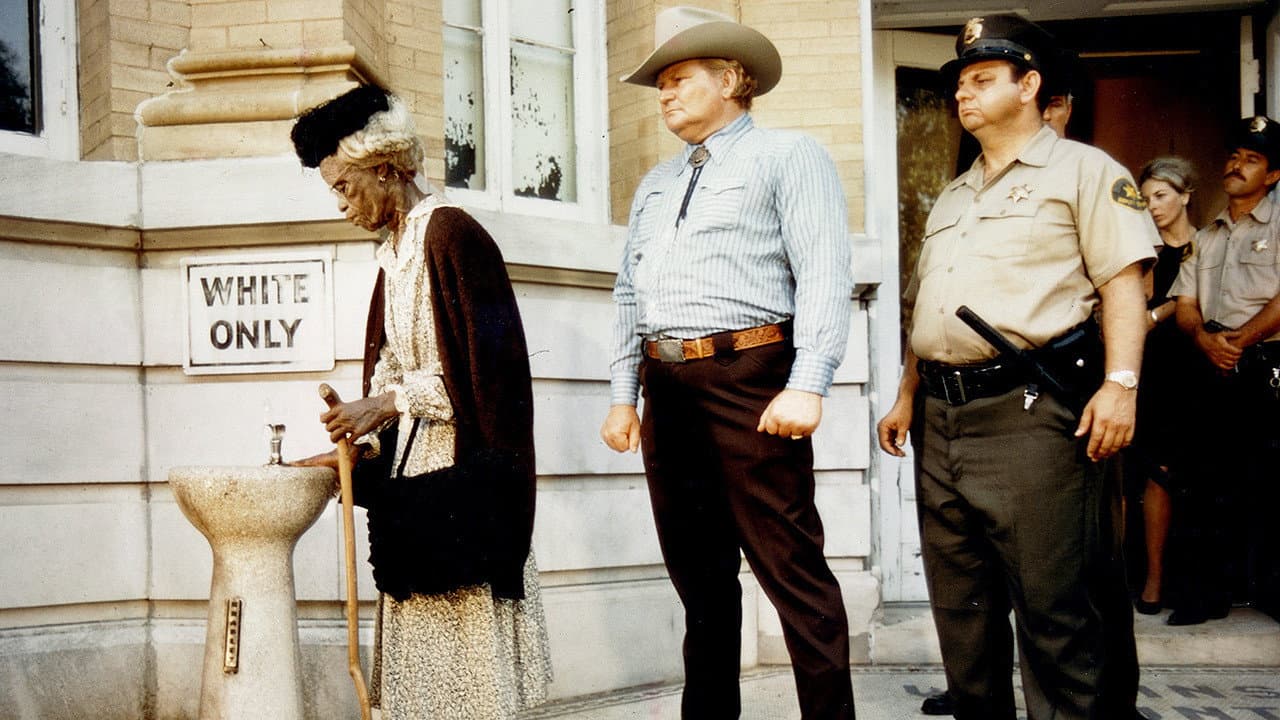
What's striking about this film is how it refuses to simplify either Jane's character or the historical moment she inhabits. She's not a symbol or a lesson—she's a woman with contradictions, humor, stubbornness, and an unshakeable will to survive. Tyson's performance captures this with remarkable subtlety. Watch the scene where elderly Jane finally takes a stand at a segregated water fountain; there's no grand speechifying, just a quiet act of dignity that says everything. The thing that makes the film endure is its refusal to sentimentalize suffering. Yes, Jane's lived through unimaginable hardship—slavery, loss, systemic racism—but the film doesn't ask us to pity her. Instead, it invites us to witness her resilience as something earned, hard-won, and real. The interweaving of her personal story with the contemporary civil rights movement in Bayonne creates a kind of dialogue across time, suggesting that the struggles Jane witnessed as a young woman are still unfolding in 1962. It's a structure that feels almost novelistic, reflecting Gaines' source material while translating it into visual language. The cinematography and pacing give the film a contemplative quality—there's space to sit with moments, to let them breathe—that stands in sharp contrast to the more frenetic television dramas of the era.
Where to stream The Autobiography of Miss Jane Pittman online
The Autobiography of Miss Jane Pittman is available across major OTT services, making it more accessible than ever for viewers discovering it for the first time or revisiting it after decades. You can check the Where to Watch widget at the top of this page to see which platforms currently have it in your region. Movie OTT tracks streaming availability across services in real time, so you'll always know where to find it. The film's availability on contemporary streaming platforms feels fitting—a 1974 television broadcast now living on the same digital infrastructure as today's prestige dramas, a reminder that great storytelling doesn't age out, it just finds new audiences.
Frequently asked questions
Q: Who starred in The Autobiography of Miss Jane Pittman?
Cicely Tyson delivered a landmark performance in the title role, playing both young and elderly Jane Pittman. Her work in this film became one of the defining performances of her career and helped establish her as a leading dramatic actress in American television.
Q: Is The Autobiography of Miss Jane Pittman based on a true story?
The film is based on Ernest J. Gaines' 1971 novel of the same name, which is a work of fiction. However, Gaines drew inspiration from real historical events and the lived experiences of Black Americans across generations, giving the narrative a powerful sense of authenticity and historical grounding.
Q: When did The Autobiography of Miss Jane Pittman air on television?
The film premiered on CBS on Thursday, January 31, 1974, as a made-for-television movie. It was broadcast in primetime and reached a national audience, making it a significant cultural moment in television history.
Q: How long is The Autobiography of Miss Jane Pittman?
The film has a runtime of 112 minutes, giving it enough time to develop its narrative across Jane's lifetime and the parallel civil rights storyline without feeling rushed.
Q: What production company made The Autobiography of Miss Jane Pittman?
The film was produced by Tomorrow Entertainment for broadcast on CBS, representing an important moment when television networks were investing in serious dramatic adaptations of literary works.
Final thoughts on The Autobiography of Miss Jane Pittman
If you haven't seen The Autobiography of Miss Jane Pittman, it's worth seeking out—not as a historical artifact, though it is that, but as a work of genuine dramatic power. Tyson's performance alone justifies the time investment. More than that, though, the film asks questions about memory, resilience, and the cost of survival that still matter now. It's a film that trusts its audience to sit with complexity, to accept that Jane is neither a victim nor a hero but something more interesting: a human being who lived through extraordinary times and carried that weight into her later years. That's rare in any era of television. It's especially rare from 1974.