The story of The Chocolate War
The Chocolate War isn't your typical coming-of-age story — it's something far darker and more complicated. Set within the rigid walls of Trinity School, an elite Catholic institution, the film follows a young student who refuses to participate in the school's annual chocolate sale fundraiser. On the surface, that sounds almost quaint. But in the hands of director Keith Gordon, what emerges is a portrait of institutional corruption, where a seemingly innocent sales drive becomes a tool for maintaining absolute power over the student body. The headmaster runs his domain like a kingdom, and anyone who steps out of line gets crushed. When our protagonist dares to say no, he discovers just how far the school will go to enforce obedience.
The film doesn't shy away from showing you the machinery of control. There's the chocolate sale itself, yes, but there's also the underlying system of hierarchy, intimidation, and psychological warfare that keeps students in line. What's striking is how the narrative refuses easy answers — it doesn't present rebellion as automatically heroic or capitulation as simply cowardly. Instead, it shows you the real cost of standing alone against an entrenched power structure. The bullying, the isolation, the way peers turn against you when you become inconvenient. That's where the real war happens.
Behind the making of The Chocolate War
The Chocolate War marked Keith Gordon's feature directorial debut, a significant moment in his career that came after he'd already established himself as a writer. Producer Jonathan D. Krane championed the project after being impressed by Gordon's earlier work on the film Static, and he recognized something in Gordon's sensibility that felt right for adapting Robert Cormier's 1974 novel. The source material was already beloved in literary circles — a book that had sparked real conversations about institutional power and adolescent resistance — so there was real pressure to get this right.
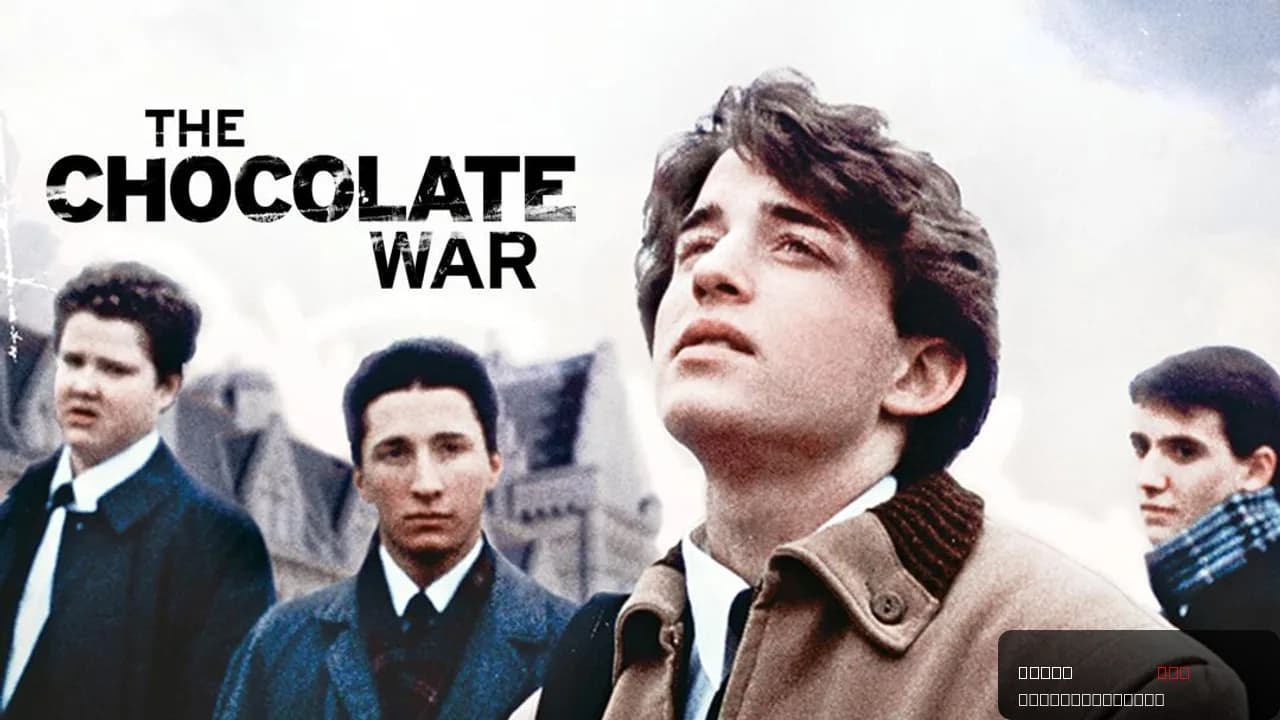
Gordon assembled a strong ensemble cast. John Glover commands the screen as the sadistic headmaster, channeling an unsettling authority that makes you believe his control over the school is absolute. Ilan Mitchell-Smith carries the film as the protagonist, with supporting turns from Wallace Langham, Doug Hutchison, Corey Gunnestad, Brent David Fraser, and Robert Davenport rounding out the Trinity community. The film clocks in at 104 minutes, lean enough to maintain tension without overstaying its welcome. While it didn't become a massive box-office phenomenon, the film found its audience among those who appreciated its uncompromising approach to institutional critique — and it remains a key text in Gordon's career, establishing him as a director unafraid to tackle morally complex material.
What makes The Chocolate War stand out as a drama
What's remarkable about The Chocolate War is how it refuses the comfort of sentiment. You won't find a triumphant moment where the protagonist's courage inspires everyone around him. Instead, Gordon presents a world where resistance often leads to isolation, where standing up for principle can leave you more vulnerable than before. That's not a flaw — it's the film's greatest strength. I keep coming back to how unflinching it is about the psychology of mob mentality and peer pressure, especially among teenagers who are still figuring out who they are.
The performances anchor everything. Glover's headmaster isn't a cartoon villain; he's a man who genuinely believes his iron-fisted control serves a higher purpose, which somehow makes him more terrifying. Mitchell-Smith's character carries the burden of doubt throughout — he's not certain of his own motivations, and that uncertainty feels real in a way that a more confident protagonist wouldn't. The supporting cast members embody the various ways students respond to institutional pressure: some become enforcers, some become victims, some try to navigate the middle ground. Gordon's direction emphasizes the claustrophobia of the school environment, using tight framing and cold lighting to reinforce the sense of being trapped within a system that won't tolerate deviation.
The film operates as both a specific story about one school and a broader meditation on how power structures maintain themselves. It's asking uncomfortable questions about complicity, about whether silence equals consent, about what it costs to be the one person who says no. That's not comfortable viewing, and it's not meant to be.
Where to stream The Chocolate War online
If you're looking to revisit this 1988 drama or experience it for the first time, The Chocolate War is currently available on Prime Video. You can check the Where to Watch widget at the top of this page for real-time availability across all streaming platforms, but Prime Video is your primary option right now. Movie OTT tracks current streaming availability across multiple services, so if you're the type who likes to know exactly where all your favorite films are living at any given moment, that's the resource to bookmark. Streaming catalogs shift constantly, so it's worth confirming availability before settling in — but when you do find it on Prime, you've got access to Gordon's uncompromising debut whenever you're ready to sit with it.
Frequently asked questions
Q: Is The Chocolate War based on a true story?
No, it's based on Robert Cormier's 1974 novel of the same name, which is a work of fiction. However, Cormier drew on his own experiences attending a Catholic boys' school, which gives the story an authenticity that resonates even though the specific plot is invented.
Q: Who directed The Chocolate War?
Keith Gordon directed The Chocolate War as his feature film debut. Gordon had previously worked as a writer and actor, but this 1988 film marked his first time stepping behind the camera as a director.
Q: What's the runtime of The Chocolate War?
The film runs 104 minutes, which keeps the story moving without sacrificing the psychological depth Gordon brings to the material.
Q: Where can I watch The Chocolate War?
The Chocolate War is currently streaming on Prime Video. Movie OTT helps you track where films are available across different platforms, so you can find exactly where to watch it at any given time.
Q: What's the IMDb rating for The Chocolate War?
The film holds a 5.8 out of 10 rating on IMDb, which reflects its divisive nature — some viewers appreciate its refusal to offer easy answers, while others find its bleakness difficult to engage with.
Final thoughts on The Chocolate War
The Chocolate War isn't a film for everyone. It's deliberately uncomfortable, morally murky, and resistant to the kind of cathartic resolution that makes audiences leave the theater feeling good. But that's precisely why it matters. Keith Gordon's directorial debut refuses to sanitize its story or offer false hope — it simply shows you a world where power corrupts absolutely and resistance carries real consequences. If you're drawn to dramas that challenge you rather than comfort you, this is absolutely worth your time. Don't expect easy answers. Do expect a film that lingers.