








The Story of The Deaths of Ian Stone
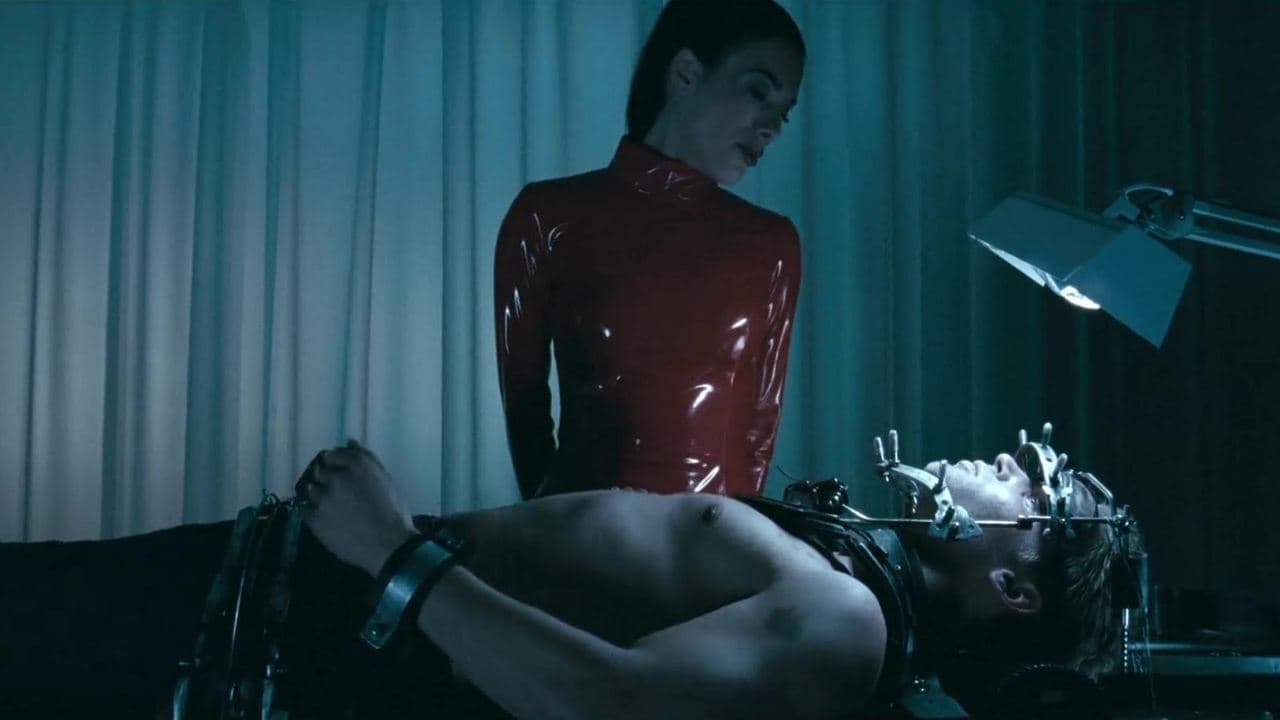
The Deaths of Ian Stone follows a deceptively simple yet deeply unsettling premise: what if you died every single day, but woke up each morning to live again—only to be hunted down and murdered once more? The film opens on an ordinary man living what appears to be a normal life, until horrifying pursuers track him down and kill him in brutal fashion. He wakes. Different apartment, different job, different relationships—but the same relentless killers are coming for him again. This isn't a time-loop narrative where the protagonist learns and adapts; it's something far more claustrophobic. Each iteration strips away the comfort of familiarity, leaving him increasingly desperate and unmoored from any sense of reality or purpose.
The tagline—"Live everyday like it's your last"—takes on a cruel irony when you're literally living every day knowing it will be your last. What begins as a mystery (Who are these killers? Why him? What's happening?) gradually becomes a descent into psychological horror, where the real terror isn't the murders themselves, but the dawning realization that escape may be impossible.
Behind the Making of The Deaths of Ian Stone
The Deaths of Ian Stone emerged from the creative minds at Odyssey Entertainment and benefited from support by the Isle of Man Film Commission, which helped finance this ambitious indie horror project. The film's production design and creature effects came courtesy of Stan Winston Productions and SWFX—both heavy hitters in practical effects work—lending the pursuer designs a visceral, tactile quality that CGI alone couldn't have achieved in 2008. That commitment to practical effects gives the film a grounded, almost documentary-like texture, even as the premise spirals into the surreal.
With a runtime of 87 minutes, the film doesn't overstay its welcome; it's lean and punchy, designed to unsettle rather than exhaust. The 2008 release date places it squarely in the post-Saw landscape of horror cinema, when audiences were hungry for high-concept genre fare that played with narrative structure. While it didn't become a major box-office player, the film found its audience through home video and streaming—a common trajectory for genre films that prioritize inventiveness over star power. On IMDb, it holds a 5.585 rating, reflecting the kind of polarized reception genre pictures often receive: some viewers find the concept brilliant and the execution admirably committed, while others find the repetitive structure exhausting or the resolution unsatisfying.
What Makes The Deaths of Ian Stone Stand Out
Honestly, what's striking about The Deaths of Ian Stone is how committed it is to its premise. It doesn't flinch from the repetition—that's not a bug, it's the whole point. Most filmmakers would rush to explain what's happening or offer an escape route by the second act. Here, the mystery deepens without resolution, and the protagonist's mounting desperation becomes the emotional core. The performances anchor this spiral into chaos; the lead carries the film almost entirely, and watching someone slowly unravel across multiple "deaths" requires a kind of raw vulnerability that's harder to pull off than pure shock-horror acting.
The film also taps into something genuinely unsettling about the human condition: the fear that our lives don't matter, that we're trapped in patterns we can't break, that meaning itself might be an illusion. It's existential horror wearing a slasher mask. The creature design—those relentless pursuers—works precisely because they're not explained. They don't negotiate, don't monologue, don't have sympathetic backstories. They just kill, and kill again, and again. That's the nightmare: not a villain with motivations you can understand, but an inexplicable force of nature. When you finally see one of them up close, courtesy of Stan Winston's effects team, it lands harder because you've been dreading it for the entire runtime.
Where to Stream The Deaths of Ian Stone Online
Finding The Deaths of Ian Stone is easier now than ever, thanks to the proliferation of streaming platforms. The film is currently available on major OTT services—you can check the "Where to Watch" widget at the top of this page to see which platforms have it in your region right now. Streaming availability shifts frequently, so Movie OTT tracks current listings across Netflix, Prime Video, and other major services to help you find exactly where to watch without the guesswork. Since it's a 2008 independent release, it tends to rotate on and off various catalogs, but it's rarely hard to locate. Whether you're in the mood for it on a Friday night or adding it to a horror marathon, the widget will show you your options instantly.
Frequently asked questions
Q: Is The Deaths of Ian Stone based on a true story?
No, it's an original concept created specifically for the film. The premise is entirely fictional, though it draws on philosophical and existential anxieties that feel universal.
Q: Who directed The Deaths of Ian Stone?
The film was directed by Niels Mueller, a filmmaker known for exploring dark psychological territory and unconventional narrative structures in his work.
Q: How long is The Deaths of Ian Stone?
The film runs 87 minutes, making it a tight, focused experience that doesn't linger longer than necessary—part of what makes the repetitive structure so effective without becoming tedious.
Q: What's the deal with the ending of The Deaths of Ian Stone?
Without spoiling it, the ending is deliberately ambiguous and doesn't offer the cathartic resolution many viewers expect. It's the kind of finale that sparks debate about what's really happening and what it all means.
Q: Is The Deaths of Ian Stone actually scary, or is it more of a mind-bender?
It's both. The creature effects deliver genuine scares, but the real horror is psychological—watching someone trapped in an incomprehensible cycle. If you're looking for jump-scares, you'll find some; if you want something that lingers in your head afterward, you'll get that too.
Final Thoughts on The Deaths of Ian Stone
The Deaths of Ian Stone won't appeal to everyone—and that's fine. It's a film that demands patience with its premise and comfort with ambiguity. But if you're the kind of viewer who gravitates toward horror that messes with your head more than your nerves, who appreciates practical effects and committed performances over spectacle, it's absolutely worth 87 minutes of your time. It's a film that respects its audience's intelligence enough to leave questions unanswered. In a genre often crowded with easy answers and tidy resolutions, there's something refreshing about that refusal to explain itself away.