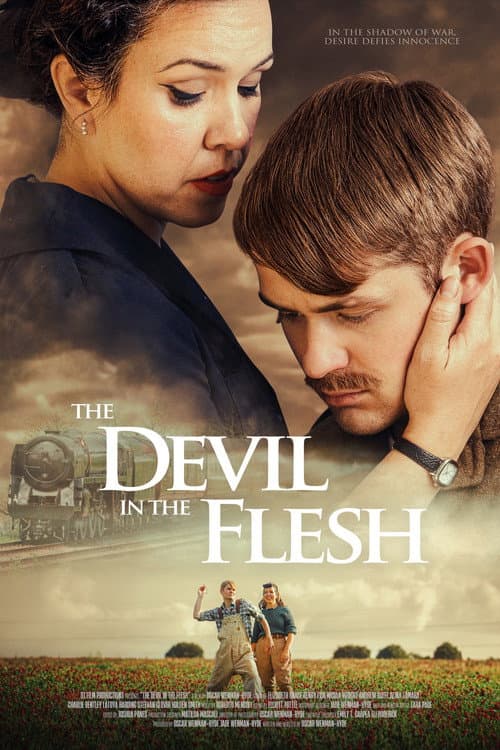







The Devil in the Flesh (2026): A Wartime Affair That Refuses Easy Judgment
The basics: A 73-minute British drama directed by Oscar Wenman-Hyde. Stars Nicola Wright and Andrew Rolfe. Based on Raymond Radiguet's 1923 novel. Currently streaming on major OTT platforms.
What happens, and why it matters
A woman's husband goes to war. She doesn't wait at home. Instead, she volunteers for the land army—muddy fields, manual labour, the kind of physical work that keeps you occupied from dawn until you're too tired to think. Except thinking never quite stops. Proximity does things. Loneliness does things. And then there's the teenage boy who's somehow always there, and suddenly she's not volunteering to stay busy anymore. She's volunteering to stay close.
The affair that follows isn't presented as a scandal waiting to be exposed. It's presented as inevitable—the sort of thing that feels, to the people inside it, like the only logical choice they could possibly make. That's harder to pull off than melodrama. Melodrama forgives you. Inevitability doesn't.
What strikes me is that the film takes its time getting there. There's no breathless seduction scene in the first twenty minutes. Just glances. Proximity. The particular way loneliness can open you up to someone who shouldn't be standing quite so close. Wenman-Hyde's screenplay, drawing directly from Radiguet's sober, almost clinical prose style, understands that the transgression isn't in the act—it's in the choice to keep choosing it.
The source material and why 1923 still stings
Radiguet wrote Le Diable au corps when he was barely twenty years old. The novel caused a genuine scandal when it was published in the immediate aftermath of World War I, partly because publishers were aggressive about promotion, but mostly because readers recognized the truth underneath: Radiguet had lived this. He'd had an affair with a married woman during the war. The book was semi-autobiographical in ways that made respectable critics deeply uncomfortable.
Nearly a century later, the story hasn't softened. What's changed is the context. Wenman-Hyde's 2026 adaptation drops the original's French setting and transplants everything into Britain—specifically, into the land army, the civilian agricultural workforce that kept farms running while men were at the front. Smart move. It preserves the emotional architecture of Radiguet's novel while grounding it in specifically British social history. The muddy fields aren't just backdrop. They're the point. There's something almost obscene about desire blooming in soil and sweat, in work that's supposed to be about duty and endurance.
The 1986 Italian adaptation by Marco Bellocchio remains the film most people reference when they discuss Le Diable au corps on screen. It's the version critics still argue about. This 2026 version isn't trying to compete with that legacy. It's just trying to get the tone right—and getting the tone right, with material this loaded, is nearly everything.
Why Nicola Wright and Andrew Rolfe matter here
Casting this story requires two specific things: an actress who can play a woman making a choice without apology, and an actor who can be simultaneously naive and knowing. Innocent and complicit. Neither role allows for the usual emotional shortcuts.
Wright's character isn't a villain seducing a boy. She's not a victim either—she's a woman who knows what she's doing and does it anyway. That's a harder part than either of those extremes because there's nowhere to hide. Early responses suggest Wright plays it with genuine restraint, which means you're always aware of her intelligence, her deliberation, the moment-to-moment calculation underneath. She's not swept away. She's deciding.
Rolfe has the trickier job. He has to hold two contradictory things at once—he's drawn in without being passive, naive without being stupid. The dynamic between them works best in the quieter moments, the ones that don't announce themselves. A glance held a beat too long. A hand that doesn't pull away. Those are the scenes that earn the film its place in the long history of Le Diable au corps adaptations—and there have been several, because this story keeps finding new reasons to matter.
The land army setting gives the whole thing physical texture you don't get in drawing-room drama. There's something almost perverse about desire unfolding against the backdrop of wartime agricultural necessity. Mud. Exhaustion. The brutal practicality of keeping people fed while the men are dying. And then, within that, this small, urgent, impossible thing between two people who shouldn't be looking at each other the way they do.
Where to watch it (and how long it'll take)
The Devil in the Flesh is streaming on major OTT platforms right now. The where-to-watch widget at Movie OTT pulls live availability data—so if you want to know whether it's on Netflix, Prime Video, or somewhere else, check there first. Streaming rights shift constantly, and the widget updates automatically. No point chasing a platform that dropped it last week.
At 73 minutes, it's a lean commitment. Most contemporary streaming dramas run twenty minutes longer. Whether that brevity works for or against the film is something you'll have to decide for yourself—some viewers will feel it's tight and purposeful, others will wish it had more room to breathe.
Who should actually watch this
You should watch it if you're the kind of person who can sit with moral discomfort for an hour and change. If you enjoy literary adaptations that don't pretend their source material is less provocative than it actually is. If you can give 73 minutes to something that probably won't let you off easy—that won't let you decide whether the woman in the story is right or wrong, whether the boy is victim or participant.
If you're into restrained British drama, wartime period pieces, or Radiguet's novel itself, you'll find the most to engage with. Even if you've seen the Bellocchio version, this one's worth watching—not as a replacement, but as a different answer to the same impossible question: what do we owe people when desire and circumstance collide?
Movie OTT continues tracking critical coverage as reviews roll in. Worth bookmarking if you want to follow the conversation as it develops. The film won't win you over with spectacle or easy answers. But it might stick with you longer than you expect.