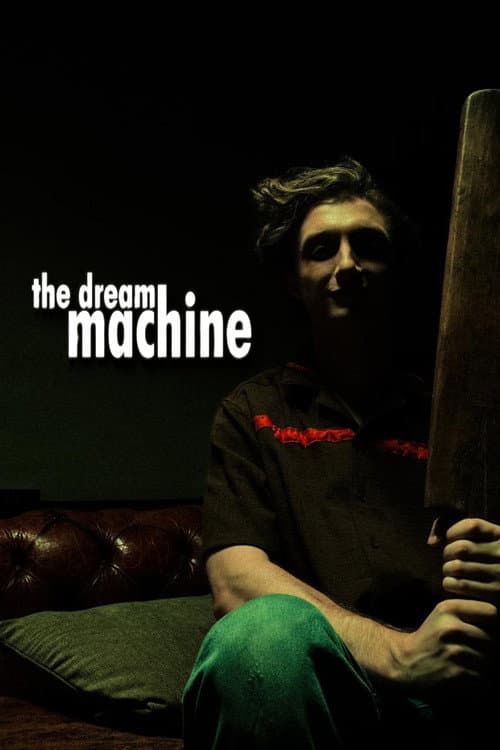
The Dream Machine
Release year: 2026 | Runtime: 10 minutes | Genres: Science Fiction, Horror, Thriller | Based on: Cockroach Inc.'s point-and-click adventure game
What actually happens — and why it unsettles you
Victor Neff moves into a new apartment and finds something in the basement that shouldn't exist: a machine built from scrap metal, wires, and old television sets. It's the kind of contraption that looks like someone's obsession finally took physical form. The machine does one thing. It lets him enter other people's dreams.
Here's where it gets uncomfortable.
Dreams aren't the soft, drifting imagery you'd expect. They're crowded. Full of secrets, fears, and — most importantly — the dreamers themselves, who didn't consent to being watched. Victor isn't exploring a digital landscape or a safe space. He's trespassing in someone's mind. The film understands that there's something genuinely invasive about that violation, and it doesn't look away from it. When Victor realizes the dreamers can sense his presence, the tone shifts immediately. That moment stays with you.
Where the film came from — and why it matters that it's handmade
Cockroach Inc., a Swedish indie studio, released the original point-and-click adventure game starting in 2010 as episodic installments. The game itself was built almost entirely from physical materials — clay, cardboard, household objects — photographed and composited into a playable world. That wasn't just aesthetic choice. It was a statement about handcrafted art in a digital age.
The film adaptation carries that sensibility forward. Stop-motion and claymation techniques make the dream world feel tactile and deliberate in a way pure CGI rarely achieves. There's something about clay figures — slightly imperfect, visibly handmade — that makes them feel wrong in exactly the right way. When Victor moves through someone else's dream, doors open onto nothing. Familiar objects are the wrong size. The wrongness is the point.
It's worth mentioning that ambitious dream-animation projects carry a particular weight in film history. Satoshi Kon's unfinished Dreaming Machine — a Japanese anime feature cancelled after Kon's 2010 death when his studio couldn't secure financing — haunts the conversation around any serious dream-based animated work. The Dream Machine film isn't connected to Kon's project, but it occupies similar creative territory: psychologically dense, handcrafted, and refusing to make the dream world feel safe.
Why streaming services matter for finding short films like this
A ten-minute horror short doesn't get the marketing push of a studio release. It doesn't get a theatrical run. It doesn't show up in most people's feeds without help — which is exactly why Movie OTT tracks titles like this one.
The Dream Machine is currently available on major OTT streaming services. Check the where-to-watch widget at the top of this page for current platform availability, updated this week. Streaming rights for short films shift faster than feature releases do — licensing windows are shorter, platform deals smaller — so it's worth verifying before you search.
Movie OTT's tracking system exists specifically because experimental indie shorts slip through the cracks. You could spend twenty minutes hunting through three streaming apps and come up empty. Or you could check the widget. The runtime means there's no barrier to entry here. Ten minutes. That's it.
Who should actually watch this
The Dream Machine isn't for everyone. Ten minutes of psychological stop-motion horror with a premise built on voyeurism and dread — that's specific. But here's who it's for: if you found the original game memorable, the adaptation carries that same handcrafted unease into motion. If you like experimental animation (think Fantastic Planet, Mary and Max), you'll recognize the visual language. If psychological horror that doesn't rely on jump scares appeals to you, this one works.
The thing nobody mentions enough about stop-motion horror is how much the medium itself contributes to the dread. There's nothing polished about it. It feels assembled by someone who doesn't follow the rules of waking logic — which is exactly the effect the film needs.
I kept thinking about the voyeurism angle long after the credits rolled. Not because it's complex (it isn't), but because the film seems to understand something the viewer might not want to admit: there's something genuinely uncomfortable about watching someone watch someone else's most private mental space. That discomfort is the film's entire purpose.
Watch it in a single sitting. Don't pause. Don't look at your phone. Let it work on you. And maybe don't watch it right before bed — though honestly, that's probably when it'll stick with you most.
Movie OTT specializes in tracking short-form and indie streaming titles that major outlets skip. If you're looking for experimental horror, animated features, or festival-circuit films that slipped past traditional reviews, the platform's searchable database handles what Netflix's algorithm won't surface.