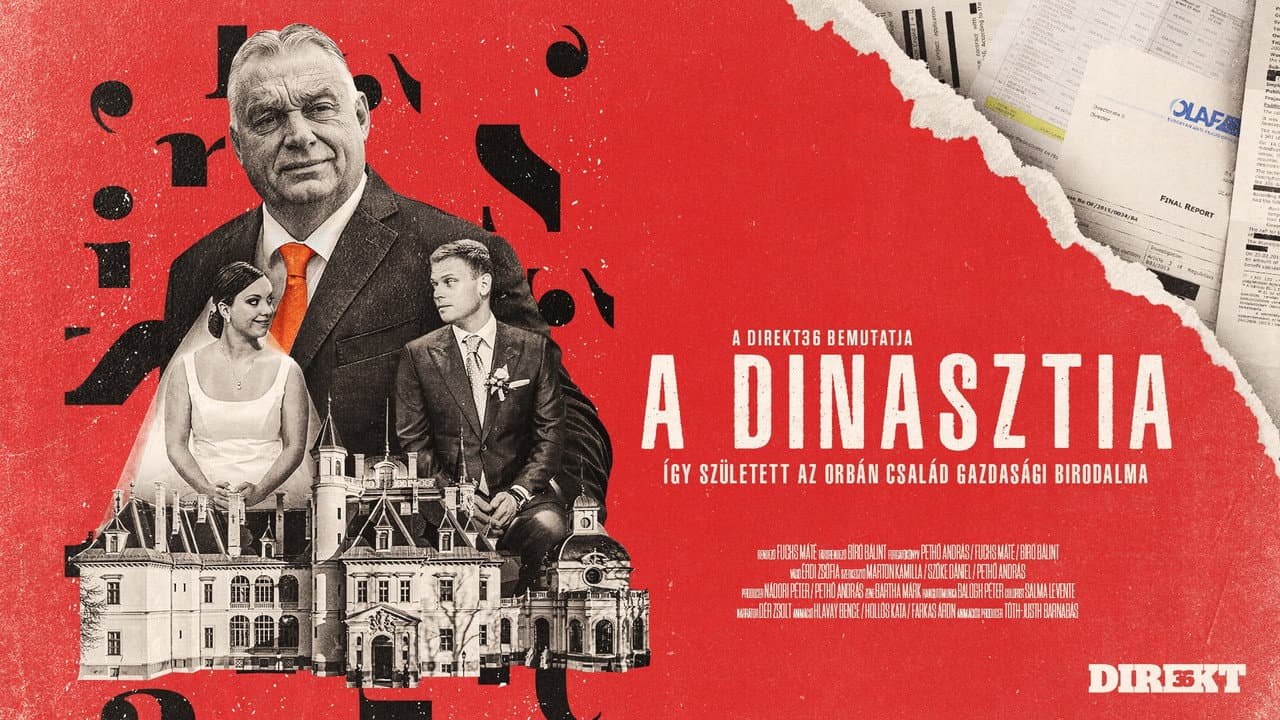
The story of The Dynasty unfolds like a financial thriller
The Dynasty is a 57-minute documentary that traces the business dealings of Viktor Orbán's family over several decades, painting a portrait of wealth accumulation that's deeply intertwined with political power. Rather than a conventional biography, this is an investigation — methodical, uncomfortable, and grounded in months of reporting. The film centers on István Tiborcz, Orbán's son-in-law, and his daughter Ráhel Orbán, tracking how their business ventures flourished while the Prime Minister held office. Hidden camera footage provides a window into the lifestyle these dealings funded, revealing the gap between public service and private luxury that often goes unexamined in political documentaries. What's striking is how the film doesn't just list transactions or shell companies — it builds a narrative that connects the dots between political decisions and family wealth.
Behind the making of The Dynasty: A year of investigation
The Dynasty comes from Direkt36, Hungary's leading investigative journalism center, which spent nearly a year researching and filming before its February 7, 2025 release. This wasn't a rushed project. The production involved hidden camera work, document analysis, and the kind of shoe-leather reporting that documentary audiences don't always see — it's the unglamorous backbone of accountability journalism. The film's 7.75 IMDb rating reflects a strong critical consensus, though reception has naturally split along political lines in Hungary itself (the country where Orbán served as Prime Minister). Direkt36's track record of rigorous investigation gave the project credibility before it even premiered, though that credibility has been both celebrated and contested depending on one's view of Orbán's governance. The investigative center's decision to release this as a documentary rather than a written report signals how visual evidence — those hidden cameras, the footage of homes and offices — carries weight that text sometimes can't match. According to reporting on the film's impact, the documentary generated significant conversation about transparency and political accountability across European media outlets.
Why The Dynasty cuts through the noise about corruption
There's something about a hidden camera that makes abstract financial crime suddenly concrete. You're not reading about shell companies or offshore accounts — you're watching rooms where those decisions were made, seeing the homes they bought, witnessing the world they built. The film's strength lies in this specificity. Rather than making sweeping accusations, it documents patterns: business wins that coincided with Orbán's political moves, ventures that seemed designed to benefit family members, the kind of interlocking relationships that aren't necessarily illegal but that raise uncomfortable questions about conflict of interest and the nature of power. I keep coming back to how the documentary manages to be both damning and measured — it doesn't oversell, doesn't use manipulative music or dramatic pauses to pump up outrage. The facts are presented, the evidence is shown, and the audience is trusted to draw conclusions. Critics have praised this restraint. The film also benefits from its focus on specific people and specific deals rather than attempting to map every transaction, which keeps it digestible and human rather than drowning viewers in financial jargon. It's investigative journalism that remembers it's also storytelling.
Where to stream The Dynasty online
The Dynasty is currently available on major OTT services — you can check the Where to Watch widget at the top of this page for real-time availability on your preferred platform. Streaming availability can shift, so Movie OTT tracks which services carry this title at any given moment, which is especially useful for documentaries that sometimes rotate between platforms more frequently than narrative films do. Since this is a recent 2025 release from a European investigative outlet, availability may vary by region, so the widget will show you what's accessible where you are. If you're outside Hungary or don't have access through the major services listed, checking back regularly is worth it — documentaries of this importance tend to expand their distribution as they gain international attention.
Frequently asked questions
Q: Is The Dynasty based on a true story?
Yes. The Dynasty documents real business dealings and financial relationships involving Viktor Orbán's family members over several decades. The film uses investigative journalism, hidden camera footage, and documentary evidence rather than dramatization or reenactment.
Q: Who directed The Dynasty?
The Dynasty was produced by Direkt36, Hungary's investigative journalism center. It was released on February 7, 2025, after nearly a year of investigation and filming.
Q: How long is The Dynasty?
The documentary runs 57 minutes, making it a focused, concentrated investigation rather than an expansive multi-hour deep dive. This length works in its favor — it maintains momentum without padding.
Q: What is the IMDb rating for The Dynasty?
The Dynasty holds a 7.75 out of 10 rating on IMDb, reflecting solid critical and audience reception, though responses have varied depending on viewers' political perspectives.
Q: Who is István Tiborcz?
István Tiborcz is Viktor Orbán's son-in-law and a central figure in The Dynasty. The documentary traces his business ventures and the wealth accumulated through deals that occurred during Orbán's time as Prime Minister, using hidden camera footage to reveal the lifestyle these dealings funded.
Final thoughts on The Dynasty
If you're interested in how power and money intersect, or if you follow European politics and want to understand the machinery beneath Hungary's political landscape, The Dynasty is essential viewing. It's not comfortable — documentaries about corruption rarely are — but it's the kind of film that reminds you why investigative journalism matters. The hidden camera work alone justifies watching. It's a 57-minute commitment that pays dividends in understanding not just one family's financial story, but how political systems can be shaped by private interests. This is documentary work that refuses to look away.