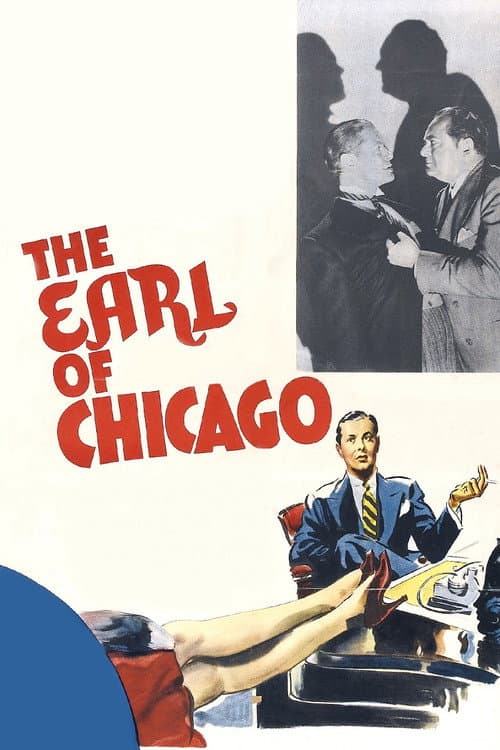
The story of The Earl of Chicago
What happens when a hardened criminal gets handed a title? That's the central question driving The Earl of Chicago, a 1940 drama that takes its absurd premise seriously enough to make it work. The film follows a slick Chicago bootlegger—a man who's built his fortune on illegal whiskey and street smarts—who suddenly learns he's inherited an English earldom. With his lawyer in tow, he makes the Atlantic crossing to claim his estate as the Earl of Gorley, leaving behind everything he knows in America's underworld. The tagline asks it plainly: "Can a Lord of England be a Czar of the underworld?" It's a setup ripe for culture-clash comedy, but the film doesn't just play it for laughs. There's real tension in watching a man of the streets navigate a world of butlers, protocol, and generations of inherited privilege.
Behind the making of The Earl of Chicago
The Earl of Chicago arrived in January 1940 as Metro-Goldwyn-Mayer's opening salvo for the new decade—the first MGM picture released in the 1940s, a distinction that gave the studio considerable promotional weight at the time. Directed by Richard Thorpe, who'd become a reliable hand at MGM's output, the film brought together a cast of seasoned character actors and leading men who understood how to balance drama with the lighter touches the material demanded. Robert Montgomery carried the lead role with the kind of charisma that made him a draw for audiences; Edward Arnold, Reginald Owen, and Edmund Gwenn rounded out the ensemble, each bringing the kind of veteran credibility that elevated even a premise this outlandish. The production itself was mounted during 1939, when MGM's resources and star power were at their height—the studio wasn't about to skimp on a picture meant to launch a new decade. While the film didn't become a box-office juggernaut in the way some MGM prestige pictures did, it found its audience among viewers who appreciated the blend of screwball energy and dramatic stakes. Movie OTT now helps viewers track where this classic is streaming, making it easier to revisit this snapshot of Hollywood's golden age without the hunt.
What makes The Earl of Chicago stand out
Honestly, what's striking is how the film refuses to let its protagonist off easy. This isn't a story where the bootlegger learns to appreciate fine wine and suddenly becomes a gentleman—there's friction throughout, real conflict between who this man is and who he's supposed to become. Montgomery's performance walks a tightrope; he's charming enough that we root for him, but never so refined that we forget his origins. The supporting cast, particularly Owen and Gwenn as members of the English gentry, play it straight rather than winking at the camera, which grounds the whole enterprise in something resembling actual stakes. What's striking is how the film refuses to let its protagonist off easy. There's a scene early on where the bootlegger's American brashness crashes headlong into English decorum, and the collision isn't played entirely for laughs—there's something genuinely uncomfortable about it, something that speaks to class and belonging in ways the film doesn't need to spell out. The thing nobody mentions is that this picture works as both a comedy and a character study, which is harder to pull off than it sounds. The 87-minute runtime means there's no fat, no padding; every scene either advances the plot or reveals something about who these people are. Movie OTT's streaming guides often highlight the technical achievements of classic Hollywood, and The Earl of Chicago is worth watching just to see how efficiently Thorpe and his cinematographer craft visual comedy without relying on slapstick or broad gestures.
How to watch The Earl of Chicago online
The Earl of Chicago is available on major OTT services, and the "Where to Watch" widget at the top of this page will show you exactly which platforms currently have it in your region. Streaming availability shifts regularly—a title might be on one service one month and rotate to another the next—so checking that widget before you click play saves frustration. If you're a classic Hollywood fan, tracking down this 1940 gem is well worth the effort. Movie OTT tracks current streaming availability across all the major platforms, so you won't waste time searching only to find it's not where you expected.
Frequently asked questions
Q: Who directed The Earl of Chicago?
Richard Thorpe directed the film. Thorpe was a prolific MGM director who helmed everything from musicals to dramas, bringing his efficient style to this 1940 production.
Q: What year was The Earl of Chicago released?
The film was released in January 1940, making it the first MGM picture of the 1940s. It was made during 1939 but hit theaters at the start of the new decade.
Q: How long is The Earl of Chicago?
The film runs 87 minutes, a lean runtime typical of Golden Age Hollywood that keeps the story moving without unnecessary digressions.
Q: Who stars in The Earl of Chicago?
Robert Montgomery carries the lead role as the bootlegger-turned-earl, with Edward Arnold, Reginald Owen, and Edmund Gwenn in key supporting roles. The ensemble cast brings considerable experience to their parts.
Q: Is The Earl of Chicago based on a true story?
No, the film is an original screenplay premise—a fictional fish-out-of-water tale rather than an adaptation of real events. The "bootlegger inherits a title" setup is pure Hollywood invention.
Final thoughts on The Earl of Chicago
If you're in the mood for a piece of Golden Age Hollywood that doesn't take itself too seriously but also doesn't insult your intelligence, The Earl of Chicago deserves your time. It's not a masterpiece, but it's exactly what it sets out to be: a well-crafted, entertaining drama that understands how to milk comedy from contradiction without sacrificing character. The IMDb rating of 6.3/10 might seem modest, but that's partly because modern audiences expect different things from their entertainment. Watch it for what it is—a snapshot of 1940 MGM craftsmanship—and you'll find it holds up. Sentence fragments. Real entertainment.