The Story of The French Revolution and Its Historical Scope
The French Revolution tells the story of how a nation teetering on financial collapse became the crucible for ideas that would reshape Western democracy itself. The narrative begins in 1789 when King Louis XVI, desperate to address France's mounting debt, convenes the Estates General—a gathering of representatives from the clergy, nobility, and commoners. What starts as a bureaucratic attempt to solve an accounting problem spirals into something far more radical. The film follows the transformation from that initial assembly through the storming of the Bastille, the Declaration of the Rights of Man, the royal family's forced march from Versailles, and finally into the Terror itself—that period between 1793 and 1794 when the Revolution consumed its own architects. Across two parts totaling 335 minutes, the miniseries doesn't shy away from showing both the revolutionary fervor and the paranoia, betrayal, and violence that followed.
Behind the Making of The French Revolution and Its International Production
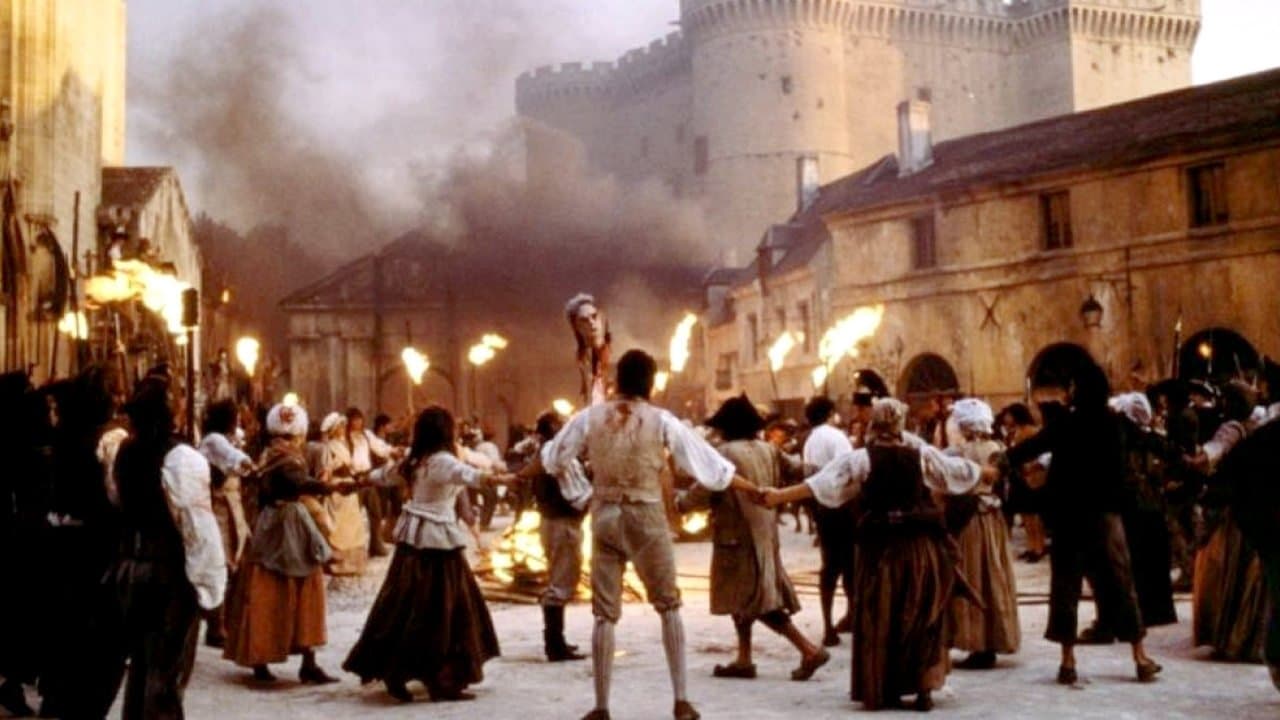
This isn't some made-for-TV quickie. The French Revolution was a major international co-production involving Films A2 and Laura Films from France, Les Films Ariane, Antea Cinematografica, and Alliance Films—a consortium of European producers who clearly understood they were tackling something that demanded resources and ambition. The runtime alone tells you something: 335 minutes means this was conceived as a genuine historical document, not a condensed version. That commitment to scale and detail was intentional. The production design had to recreate not just the grand halls of Versailles but the cramped streets of Paris, the provincial towns where revolutionary fervor spread, and the prisons where the Terror's victims awaited execution. There's no cutting corners on a project this size, which is why the craftsmanship—from costumes to set dressing to the choreography of crowd scenes—feels authentic rather than stagey. The film arrived at a moment when European television was beginning to treat historical drama with the seriousness of cinema, and this production exemplifies that shift.
What Makes The French Revolution Stand Out as Historical Drama
Here's what's striking about this film: it doesn't reduce the Revolution to a simple narrative of good versus evil. That's the trap most historical dramas fall into—you get the noble revolutionaries versus the corrupt monarchy, and everyone knows where to stand. But The French Revolution understands that the people who stormed the Bastille believed they were fighting for liberty, and so did the people who voted to execute the king, and so did the people who eventually turned on Robespierre. It's that moral complexity—the way idealism curdles into ideology, and ideology into terror—that gives the film its weight. The performances anchor this nuance. Without star names (which actually works in the film's favor, keeping the focus on the historical moment rather than celebrity), the cast inhabits their roles with the kind of specificity that comes from understanding these weren't archetypes but actual people navigating impossible choices. Watch the scenes where delegates debate the nature of representation: you'll see genuine intellectual conviction clashing with self-interest, and the camera doesn't judge. It just observes. That restraint—the refusal to moralize—is what separates this from the typical historical pageant. The thing nobody mentions is how well the film captures the speed of change. In 1789, nobody imagined the king would die on the scaffold. By 1793, it seemed inevitable. The miniseries traces that psychological shift across a population, showing how fear, hope, and propaganda rewire people's sense of what's possible.
Where to Stream The French Revolution Online
The French Revolution is available across major OTT services, and Movie OTT tracks current availability in real time so you can find it wherever you subscribe. Since this is a 335-minute commitment, knowing exactly where it's streaming—and whether you can watch both parts back-to-back or need to plan your viewing—matters. The Where to Watch widget at the top of this page shows you every platform currently carrying the title, updated daily. Given the length, you might want to check availability on a service that supports offline downloads, so you're not dependent on a stable connection for five-plus hours of viewing. Movie OTT's streaming aggregator tool makes it simple to compare which services have it and whether it's included in your existing subscription or requires an additional rental.
Frequently asked questions
Q: Is The French Revolution based on a true story?
Yes—it's a historical drama chronicling actual events from 1789 to 1794. The film follows real figures like Louis XVI, Marie Antoinette, Robespierre, and Danton, though it dramatizes conversations and compresses timelines for narrative purposes.
Q: How long is The French Revolution and can I watch it in parts?
The film runs 335 minutes total, split into two parts—Part One covers 1789 to August 1792, and Part Two carries the story through the end of the Terror in 1794. You can watch each part separately, making it easier to pace your viewing.
Q: Who directed The French Revolution?
The film was a major European co-production involving multiple production companies (Films A2, Laura Films, Les Films Ariane, Antea Cinematografica, and Alliance Films), representing a significant investment in bringing this historical period to screen.
Q: What's the IMDb rating for The French Revolution?
The film holds a 7.5/10 rating on IMDb, reflecting appreciation for its ambitious scope and historical detail, though its length and pacing aren't for everyone.
Q: Does The French Revolution show the violence of the Terror?
Yes, the second part covers the Reign of Terror (1793-1794) directly, including executions and the paranoia of the period. It's not gratuitous, but it doesn't look away from the Revolution's darker chapters.
Final Thoughts on The French Revolution as Essential Historical Cinema
If you're willing to invest the time, The French Revolution rewards patience. It's not a film you watch while scrolling your phone—it demands attention, and it gives back understanding. You'll finish it with a clearer sense of why the French Revolution matters, not as an abstract historical event but as a moment when ordinary people believed they could remake society from first principles. That belief led to both the Declaration of the Rights of Man and the guillotine. Understanding both sides of that equation is what makes this miniseries essential viewing for anyone interested in how political change actually happens.