The Haunting of Pennhurst: Disabled Performers Reclaim a Site of Institutional Abuse
A 2026 documentary where the victims of a notorious institution become its storytellers — and turn a haunted house into an act of resistance.
Pennhurst State School and Hospital closed in 1987 after decades of documented abuse. Now disabled performers are reopening its doors on their own terms, running a haunted attraction at the site and using the genre itself — all the theatrical gore and staged terror — to reframe what happened there. It's strange. Powerful. And it shouldn't work, but apparently it does.
The Haunting of Pennhurst, which premiered at the 2026 Tribeca Festival, isn't a memorial or a trauma narrative handed to outside observers. It's a working haunted house run by the people most directly connected to the institution's legacy — and a documentary about what that act of reclamation actually means. 81 minutes. Co-directed by Nathan Stenberg, Mike Attie, and Katarina Poljak. Featuring Autumn Werner, Emily Wonder, Rodney Hulsey, Chris Valle, Dan Cody, Eddie Buck, and Joey Vanderloop.
Why This Haunted House Is Not What You'd Expect
What strikes me is how thoroughly the film refuses the standard disability documentary playbook. No inspirational arc. No outside narrator explaining what you're seeing. The performers here are the authors, and the haunted house format gives them something genuinely subversive — a structure built on fear, theatricality, and control, deployed against the very institution that inflicted fear on people without consent or irony.
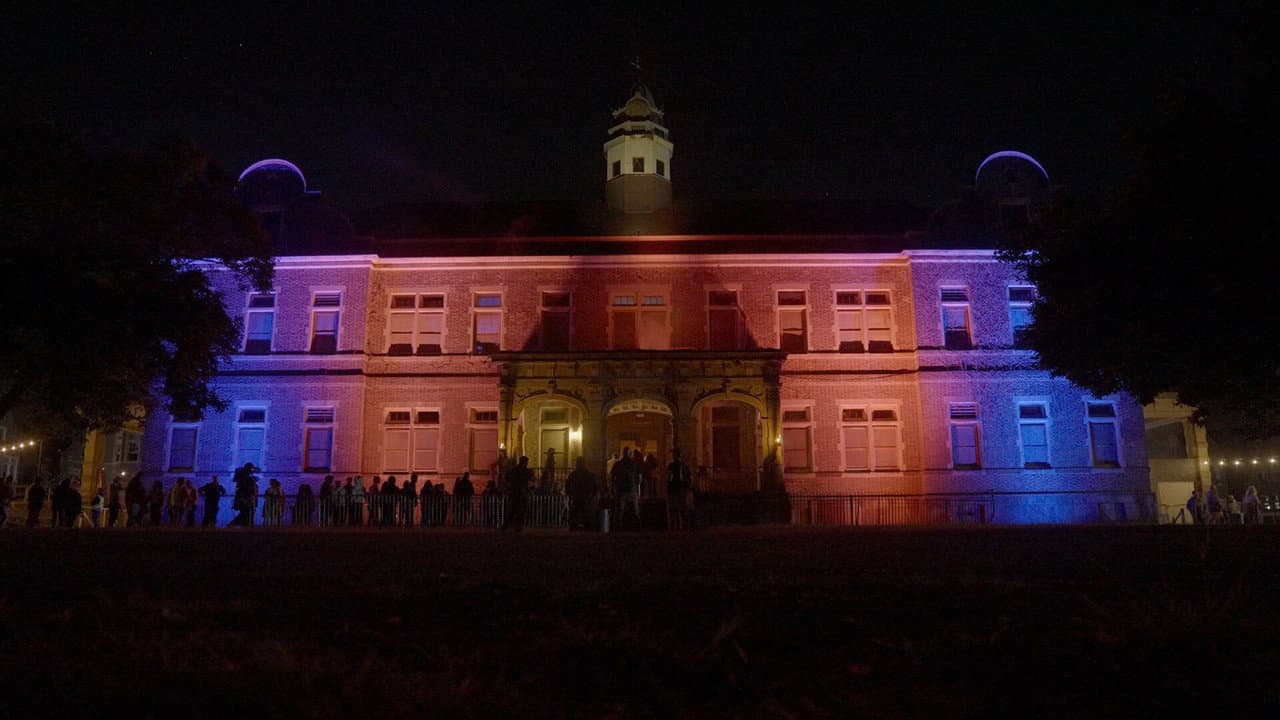
Pennhurst was real. Spring City, Pennsylvania. Overcrowding, neglect, conditions so bad a federal court ruled them unconstitutional. The haunted attraction operating there now — Pennhurst Asylum — is also real. Run by disabled artists. That tension between historical horror and performance horror is where the documentary lives. It doesn't smooth over the contradiction. It sits in it.
The cinematography reportedly moves between archival institutional footage and the vivid, theatrical staging of the haunted attraction itself — a juxtaposition that doesn't need explaining. You feel it. There's apparently a sequence where the line between the historical record and the live performance blurs almost completely, and that's when the film gets genuinely unsettling and honest.
The Three Directors and How They Divided the Work
You'd think a three-director setup would fracture a project like this. Too many visions pulling in different directions. But Stenberg, Attie, and Poljak seem to have figured out what each brings — historical rigor, character warmth, formal invention — and let those strengths do the work rather than fight for dominance.
The result is a 81-minute piece that doesn't feel padded or scattered. The archival context is handled with real discipline. The character work stays warm without tipping into sentimentality. That's a genuinely difficult balance to hold, especially with material this heavy and performers this thoughtful.
Autumn Werner and Emily Wonder come across as people who've been having this argument with the world for years and finally found the perfect venue for it. Not a stage. A haunted house.
Where to Watch and What's Available Now
The Haunting of Pennhurst is currently streaming on major platforms following its Tribeca premiere run. The exact services carrying it shift as distribution deals evolve, so the most reliable way to find it is Movie OTT's where-to-watch tracker, which pulls live data and updates when availability changes — especially useful for festival documentaries, which often move between services or drop into limited windows.
Here's the thing about this title: it's not a mainstream multiplex release. The audience for it is real and specific — people interested in disability narratives, horror-adjacent documentaries, and the actual history of Pennhurst. That means it'll likely find a committed streaming home rather than bounce between platforms. Check the tracker to see where it's available this week.
If you've got a Movie OTT account, you can set it to notify you when the film lands on your preferred service — saves you the manual hunting.
Who Should Actually Watch This
Not comfortable viewing. The film isn't trying to be comfortable, and it doesn't soften the institutional history to make room for spectacle. It works for:
- Horror fans curious about the actual story behind a famous haunted attraction
- Disability advocates who want their community centered rather than observed
- Documentary viewers who like their history told by the people who lived it, in unexpected formal packages
If you watched something like Crip Camp or The Bleeding Edge and found yourself wanting more space for the subjects' own narrative authority — not just their testimony, but their creativity — this one's made for you.
It's also worth noting: the Tribeca slot signals serious curatorial attention. The Escape From Tribeca program (where it screened) doesn't program documentaries by accident. That's the festival saying this work matters.
Frequently Asked Questions
Q: Is The Haunting of Pennhurst a true story?
Yes — entirely. Pennhurst was a real institution operating from the 1900s until 1987. The haunted attraction is also real, run by disabled performers at the original site.
Q: How long is it?
81 minutes. It doesn't overstay its welcome.
Q: Who directed it?
Nathan Stenberg, Mike Attie, and Katarina Poljak co-directed. The three-person team divides responsibilities in a way that serves the material rather than fragmenting it.
Q: Where can I stream it?
Check Movie OTT for the current breakdown across platforms. Streaming rights shift, and the tracker updates in real time as availability changes.
Q: When did it premiere?
2026 Tribeca Festival, as part of the Escape From Tribeca program — a section that focuses on genre-inflected and experiential documentary work.
Q: Who are the performers?
Autumn Werner, Emily Wonder, Rodney Hulsey, Chris Valle, Dan Cody, Eddie Buck, and Joey Vanderloop. All are disabled artists involved in running Pennhurst Asylum.
The Haunting of Pennhurst does something most documentaries don't: it trusts its subjects completely. No voiceover to explain their choices. No sympathetic music to guide your feelings. Just disabled people taking back a place that tried to erase them, and using horror — the genre, the aesthetics, the control — to tell their own story on their own terms.
That's worth watching.