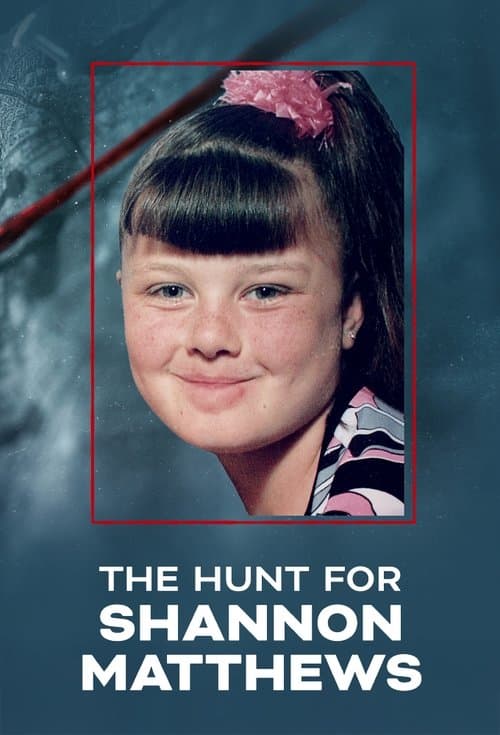
The story of The Hunt For Shannon Matthews
In 2008, nine-year-old Shannon Matthews vanished from her home in Dewsbury, West Yorkshire, sparking one of the most intense missing-child investigations in modern British history. The Hunt For Shannon Matthews doesn't just retell the facts of her disappearance—it examines how a case became a defining cultural moment, one that still shapes conversations about media responsibility, community, and the corrosive power of suspicion. The documentary brings together voices from the center of the storm: detectives working the case, journalists covering it, neighbors caught in its wake, and people whose lives were forever altered by what happened next. What emerges isn't a simple true-crime narrative. It's something messier, more human, and far more unsettling.
Behind the making of The Hunt For Shannon Matthews
Produced by Firecrest Films, The Hunt For Shannon Matthews arrives in 2025 as a two-part series that runs 90 minutes total—a deliberate length that allows the filmmakers to resist the sensationalism that originally surrounded the case. Rather than racing toward resolution or dwelling on the most lurid details, the documentary takes time to sit with the ordinary people whose lives intersected with extraordinary circumstances. The production team interviewed dozens of participants: the detectives who spent months searching, the journalists who filed daily updates, the neighbors who became suspects in the court of public opinion, and those closest to Shannon herself. This isn't a project built on archival footage alone. It's constructed from fresh testimony, contemporary reflection, and the kind of access that only comes when subjects feel safe enough to speak candidly years after the fact. The filmmakers' restraint in not sensationalizing the material—a real challenge when the subject matter involves a missing child—sets this apart from the standard true-crime playbook. Firecrest Films has crafted something that feels more like a social autopsy than a crime procedural.
What makes The Hunt For Shannon Matthews stand out
What's striking is how the documentary resists the impulse to provide easy answers or clear villains. The case itself was resolved—Shannon was found, and convictions were secured—but the documentary doesn't treat those facts as the end of the story. Instead, it examines the psychological and social machinery that kicked into gear the moment she went missing: how media coverage escalated, how neighbors began suspecting one another, how the search for truth became tangled in the search for someone to blame. The performances, if you can call them that, come from the ordinary witnesses who carry the weight of their own recollections. A detective describing the pressure of the investigation. A journalist reflecting on their coverage choices. A neighbor still processing what it felt like to be looked at with suspicion. These aren't actors—they're people grappling with memory and meaning. The documentary's IMDb rating of 6.5/10 suggests it's not universally embraced, which itself is interesting. It won't satisfy viewers looking for a tidy crime-solving narrative or shocking revelations. What it does offer is something more uncomfortable: a mirror held up to how we consume stories about missing children, how media shapes perception, and how communities can turn on themselves. I keep coming back to the moments where someone admits they got it wrong—got it wrong about a neighbor, about the facts, about what they thought they knew. That vulnerability is rare in documentaries of this kind.
How to watch The Hunt For Shannon Matthews online
The Hunt For Shannon Matthews is currently available across major OTT services, and you can check Movie OTT for a complete, up-to-date list of where it's streaming in your region. Availability shifts frequently depending on licensing agreements, so the Where-to-Watch widget at the top of this page will show you exactly which platforms have it right now. Whether you're subscribed to the usual suspects or looking for a specific service, Movie OTT tracks current streaming availability so you don't waste time searching. The 90-minute runtime means you can watch both parts in a single sitting or spread them across a couple of evenings—though once you start, you'll likely find it hard to stop.
Frequently asked questions
Q: Is The Hunt For Shannon Matthews based on a true story?
Yes, it's a documentary about the real 2008 disappearance of Shannon Matthews from West Yorkshire, England. The series uses testimony from people directly involved in the case—detectives, journalists, neighbors, and others—to examine what happened and how the investigation unfolded.
Q: Who produced The Hunt For Shannon Matthews?
The documentary was produced by Firecrest Films and released in 2025. It's structured as a two-part series with a total runtime of 90 minutes.
Q: What is the IMDb rating for The Hunt For Shannon Matthews?
The documentary has an IMDb rating of 6.5/10, suggesting mixed viewer reception. Some audiences find it a powerful examination of media and community, while others may find it lacks the narrative momentum of traditional true-crime documentaries.
Q: Can I watch The Hunt For Shannon Matthews on Netflix or Prime Video?
The documentary is available on major OTT services, though specific platform availability varies by region and can change. Use the Where-to-Watch widget on this page to see exactly where you can stream it right now.
Q: What genres does The Hunt For Shannon Matthews fall into?
It's classified as both a documentary and a crime series, though it's less focused on crime-solving and more interested in how media coverage, community suspicion, and public scrutiny shaped the case.
Final thoughts on The Hunt For Shannon Matthews
The Hunt For Shannon Matthews isn't a comfortable watch—and that's precisely why it matters. It refuses to let viewers off the hook with a neat narrative arc or a sense of closure. Instead, it asks harder questions about responsibility, truth, and how we talk about missing children in an age of instant media and social judgment. If you're drawn to documentaries that challenge rather than comfort, that examine systems rather than just crimes, this deserves your time. It's a case study in how a community can fracture under pressure, and how that fracturing can outlast the original tragedy itself.