The story of The Iron Petticoat
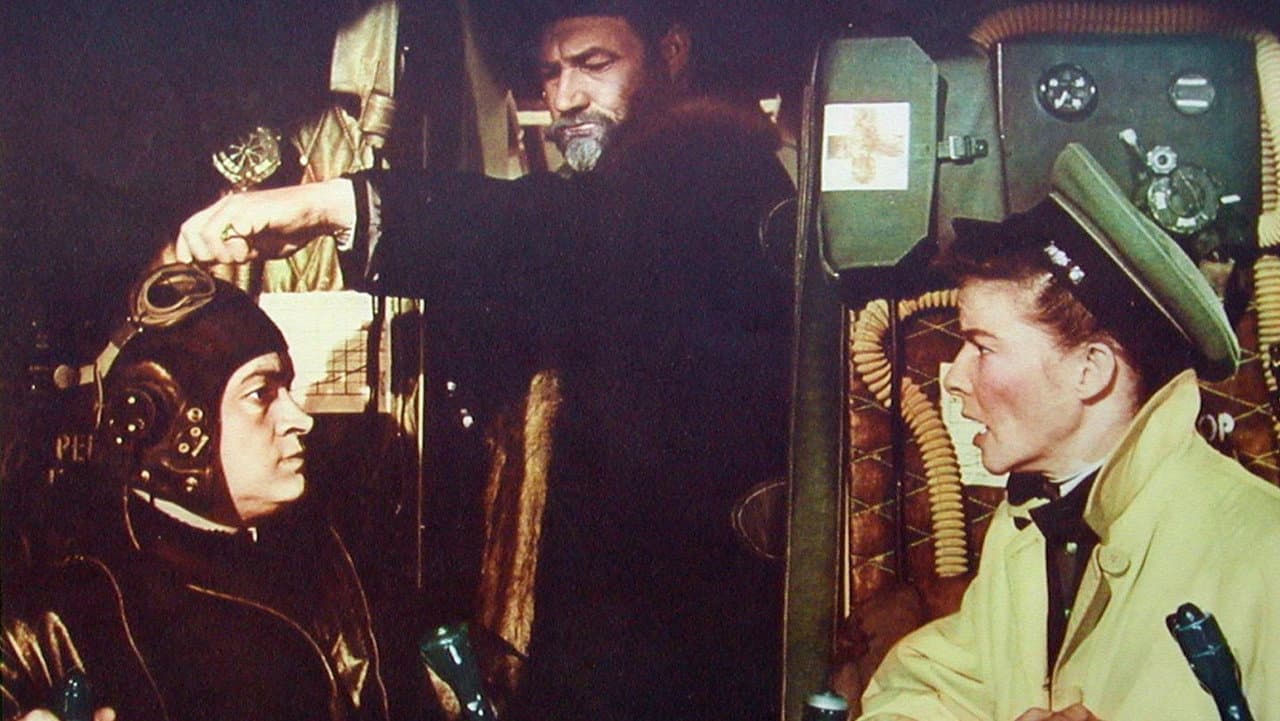
The Iron Petticoat opens with a premise that sounds almost too neat for its own good: Captain Vinka Kovalenko, a Soviet pilot, defects—but not for the reasons you'd expect. She's not fleeing political oppression or ideological conversion. She's escaping discrimination. As a woman in the Russian military, she's had enough of being sidelined, overlooked, and undervalued. When she lands in London, American Captain Chuck Lockwood is tasked with a mission that sounds like a postwar fantasy: convince her that capitalism, free markets, and Western life are superior to communism. The catch? Vinka's got her own agenda, pushing back hard on every pitch, defending Soviet ideology while Chuck fumbles through his sales pitch. What neither of them expects—what the script seems almost embarrassed to deliver—is that they'll fall for each other. But there's a problem. The KGB doesn't take kindly to defectors, especially ones running loose in London with access to classified information. Romance blooms while danger closes in.
Behind the making of The Iron Petticoat
The Iron Petticoat was a British production assembled by some heavyweight names: Romulus Films, Hope Enterprises, London Films Productions, and Remus came together to bring this Cold War comedy to life. Ralph Thomas directed, and the screenplay came from Ben Hecht—a legendary writer whose earlier work on Comrade X (1940) had already explored similar ideological sparring between Americans and Russians. Hecht's involvement was meant to signal prestige; instead, it became the source of contentious behind-the-scenes drama that would haunt the film's legacy. The chemistry on screen came from two titans of cinema: Bob Hope, the veteran comedian and star of his own production company, and Katharine Hepburn, the fiercely independent four-time Academy Award winner. Hope and Hepburn brought different energies to the picture—his rapid-fire comedic timing against her sharp, intelligent delivery. The 87-minute runtime keeps things moving, though the production itself became a cautionary tale. The screenplay disputes and creative friction that surrounded Hecht's work became so significant that Hope himself would eventually suppress the film, keeping it from wide distribution for years. It's a reminder that not every star-studded collaboration results in a harmonious shoot, even when the talent is undeniable.
What makes The Iron Petticoat stand out
What's striking about The Iron Petticoat is how it tries to thread an impossible needle: being both a romantic comedy and a political satire during one of the tensest periods of the 20th century. The film doesn't shy away from the ideological argument at its core—Vinka and Chuck aren't just bickering for laughs, they're genuinely sparring over systems of government, personal freedom, and women's rights (a topic that feels surprisingly progressive for 1956, even if it's filtered through a romantic lens). Hepburn's performance anchors the whole thing; she's sharp-tongued and uncompromising, refusing to be softened by charm alone. Hope, meanwhile, leans into his everyman persona—the American trying to explain capitalism to someone who's genuinely skeptical, which creates an odd tension between comedy and something closer to actual debate. The thing nobody mentions is that the film's central conflict—a woman leaving her country because she's tired of being diminished—carries real weight beneath the jokes and musical numbers. There's a melancholy underneath the romance, a recognition that ideology and gender politics don't resolve just because two people fall in love. The IMDb rating of 5.783/10 reflects mixed critical reception, but that score doesn't quite capture what the film was attempting. It's uneven, sure. The tone wobbles. But there's something genuinely interesting happening when you get past the surface charm.
Where to stream The Iron Petticoat online
The Iron Petticoat is available on major OTT services, and Movie OTT tracks exactly where you can watch it right now. Rather than hunting across multiple platforms yourself, the "Where to Watch" widget at the top of this page shows you current availability—whether it's streaming on subscription services or available for rental. Availability shifts seasonally, so what's on one platform today might move tomorrow, but Movie OTT keeps that information fresh. If you're a fan of classic Hollywood comedies or Cold War-era cinema, it's worth checking which service has it in your region. The 87-minute runtime makes it a manageable watch, even if you're not sure whether you'll stick with it—though the Hope-Hepburn dynamic might surprise you into staying through to the end.
Frequently asked questions
Q: Who directed The Iron Petticoat?
Ralph Thomas directed the film. Thomas was a prolific British director known for comedy and drama, and he brought a light touch to this ideological romantic comedy, keeping the pace brisk across its 87-minute runtime.
Q: Is The Iron Petticoat based on a true story?
No, it's a fictional screenplay written by Ben Hecht, the legendary Hollywood writer. While it uses the real historical context of Cold War tensions and Soviet-American relations as its backdrop, the story of Captain Vinka Kovalenko and Captain Chuck Lockwood is entirely invented for the screen.
Q: Why did Bob Hope suppress The Iron Petticoat?
Hope became unhappy with the film due to disputes over the screenplay and creative direction. The contentious history behind Ben Hecht's work on the script led to Hope eventually keeping the film from wide distribution, which is why it's remained relatively obscure despite its star power.
Q: What's the runtime of The Iron Petticoat?
The film runs 87 minutes, making it a brisk Cold War comedy that doesn't overstay its welcome.
Q: How does The Iron Petticoat compare to other Cold War comedies?
Ben Hecht had previously worked on Comrade X (1940), which covered similar ideological ground between Americans and Russians. The Iron Petticoat takes that formula and adds a romantic angle with a female defector at its center, shifting the dynamic in ways that feel fresher than straightforward anti-communist propaganda.
Final thoughts on The Iron Petticoat
The Iron Petticoat isn't a perfect film—the tonal shifts can feel jarring, the romance sometimes overwhelms the satire, and the production's troubled history casts a shadow over the final product. But it's a fascinating artifact of 1950s cinema, a moment when Hollywood was still figuring out how to make comedy from Cold War anxiety. Hope and Hepburn give you reasons to keep watching. The ideological sparring feels genuine in ways that surprise you. If you're curious about how classic Hollywood tackled politics, or if you're a completist tracking both leads' filmographies, it's worth your time. Don't expect a masterpiece. Do expect something strange, uneven, and occasionally smart—a film that wanted to say more than it quite managed, but tried anyway.