What The Last Picture Shows is about
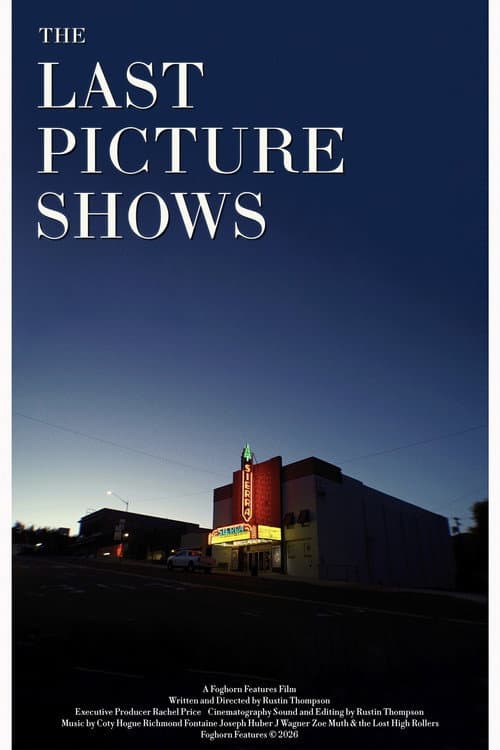
The Last Picture Shows sets out with a deceptively simple premise: filmmaker Rustin Thompson gets in a car and drives. Ten states, 10,825 miles, 123 theaters. What he finds along the way ranges from genuinely heartbreaking — cinemas left to rot in the middle of nowhere, marquees still half-lit for films that closed decades ago — to unexpectedly hopeful, those rare movie houses still drawing crowds because someone, somewhere, refused to let them die. Thompson doesn't just document the physical spaces; he threads excerpts from Peter Bogdanovich's 1971 film The Last Picture Show throughout the journey, using that story of a dying Texas town as a kind of recurring ghost, a reminder that this particular loss isn't new. It's been happening for a long time. We just stopped noticing.
How The Last Picture Shows came together — production and festival recognition
Produced under the Foghorn Features banner, The Last Picture Shows is firmly a passion-project documentary in the best sense — no studio safety net, no algorithmic mandate, just a filmmaker with a van and a thesis. Thompson has described the film as "an elegy for small-town cinemas" and "an affectionate and wistful ode to movie houses and palaces around America," which tells you a lot about the tone he was going for. Not polemical. Not a screed. Something closer to a long, melancholy letter.
The film premiered at the Santa Barbara International Film Festival, which gave it immediate credibility on the nonfiction circuit. From there it traveled to the Flathead Lake International Cinemafest, where it earned a Best Documentary nomination, and the Oxford Film Festival, which gave it an Honorable Mention. Perhaps the most telling placement: it was selected as the Closing Night film at the Spokane International Film Festival — the kind of slot reserved for films that organizers believe will send an audience home with something to talk about over dinner.
No major aggregator scores from Rotten Tomatoes or Metacritic are available yet, which isn't unusual for a festival-circuit documentary of this scale. The IMDb page is still populating. Hard to say if wider critical consensus will shift the conversation once the film reaches broader audiences, but the early festival response suggests it's connecting with exactly the crowd it was made for. Runtime clocks in at 78 minutes — lean, purposeful, no filler.
Why The Last Picture Shows earns its place in the documentary canon
Honestly, the thing nobody mentions enough about films like this is how easy it would be to get the tone wrong. A lesser director makes this mournful to the point of self-pity, or swings the other way and forces optimism onto a story that doesn't quite earn it. Thompson doesn't do either. PopHorror praises the film's "absolutely stunning" cinematography and calls it a darker, reflective counterpart to Easy Rider — which is a sharp comparison, actually, because both films use the American road as a mirror for something the country is losing without fully admitting it.
Spoiler Free Reviews characterizes it as a "sweet, dedicated look at what is gone and what remains, hanging on by a thread," and that phrase — hanging on by a thread — captures something real about the film's emotional register. There's a sequence midway through where Thompson lingers on a theater that's been converted into a church, the old projection booth still visible above the pews. It doesn't editorialize. It just lets you sit with it.
The interviews woven throughout — historians, theater owners, enthusiasts who've dedicated years to preserving these spaces — give the film factual density without turning it into a lecture. And the Last Picture Show excerpts work better than they have any right to. Bogdanovich's black-and-white images of a Texas town shuttering its one movie house feel less like a citation and more like a conversation across fifty years. What's striking is how contemporary that 1971 film still feels when you're watching it cut against footage of a 2024 parking lot where a theater used to be.
Where to stream The Last Picture Shows online
The Last Picture Shows is currently available on major OTT services — check the Where-to-Watch widget at the top of this page for a live, up-to-date list of every platform carrying the film right now. Streaming availability for festival documentaries can shift quickly, so real-time tracking matters. Movie OTT monitors availability across major platforms continuously, so if the film moves to a new service or rotates off one, the widget will reflect that before most other sources catch up.
For viewers outside the United States, Movie OTT also tracks regional availability — streaming rights for documentaries like this one can vary significantly by territory, and it's worth checking before you assume a platform in your country carries it. The film's 78-minute runtime makes it an easy single-sitting watch, which is worth factoring in when you're deciding whether to queue it up on a weeknight.
Frequently asked questions
Q: Who directed The Last Picture Shows?
The Last Picture Shows was directed by Rustin Thompson, who also served as the film's primary on-screen traveler, driving 10,825 miles across ten states to document surviving and abandoned movie theaters. Thompson is the filmmaker behind the Foghorn Features production.
Q: Where can I watch The Last Picture Shows?
The Last Picture Shows is available on major OTT services. The Where-to-Watch widget at the top of this page on Movie OTT shows every platform currently streaming the film, updated in real time so you're not chasing outdated information.
Q: Is The Last Picture Shows connected to the 1971 film The Last Picture Show?
Yes — deliberately so. Thompson intersperses excerpts from Peter Bogdanovich's 1971 classic The Last Picture Show throughout his documentary, using that film's story of a dying small town as a thematic frame for the broader decline of small-town theatrical exhibition. The two titles are distinct works, but the documentary treats Bogdanovich's film as an ongoing dialogue.
Q: How long is The Last Picture Shows?
The documentary runs 78 minutes. It's a tight, focused runtime that suits the film's road-trip structure — enough time to build emotional weight without overstaying its welcome.
Q: Has The Last Picture Shows won any awards?
The film earned a Best Documentary nomination at the Flathead Lake International Cinemafest and an Honorable Mention at the Oxford Film Festival. It was also selected as the Closing Night film at the Spokane International Film Festival. No major awards wins are documented yet, though the festival circuit reception has been consistently strong.
Who should watch The Last Picture Shows
The Last Picture Shows is built for anyone who's ever felt something sitting in a half-empty theater in a small town — that particular mix of gratitude and dread, knowing something is ending. Film history buffs will find plenty to engage with, but this isn't an academic exercise. It's a road movie that happens to be a documentary. Cinephiles, preservationists, and anyone who grew up somewhere that no longer has a movie theater will find it lands harder than expected. Movie OTT's streaming tracker makes it easy to find wherever you watch — don't sleep on this one.