









The Story of The Law: Three Days That Changed France
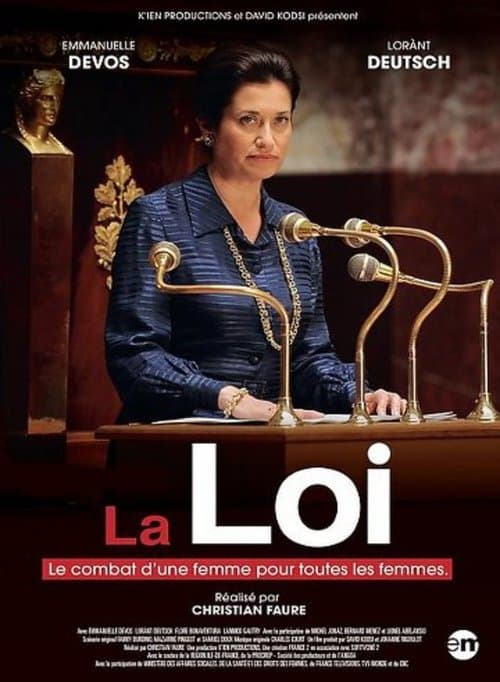
The Law reconstructs a moment when democracy itself felt fragile. Director Christian Faure's 2014 television film focuses on three days in late autumn 1974, when the French National Assembly debated a bill to legalize "voluntary termination of pregnancy." At the center stands a single woman: Simone Veil, the Minister of Health under President Valéry Giscard d'Estaing. What makes this historical snapshot so electric isn't just the legislative stakes—it's that Veil arrives at this fight already bearing the weight of survival. A Holocaust survivor and a Jew in a chamber that wouldn't always treat her with respect, she's about to face insults, violence directed at her family, political betrayal, and the kind of solitude that comes when you're the only voice arguing for something a nation isn't ready to hear. The film doesn't shy away from showing how personal that battle became.
Production, Cast, and the Making of The Law
The Law emerged from a collaboration between La Région Île-de-France, K'Ien Productions, and France Télévisions, positioning it squarely within the French public broadcasting tradition of serious historical drama. The 87-minute runtime is lean—no bloat, no unnecessary subplots—which keeps the pressure on throughout. Emmanuelle Devos carries the entire film as Veil, and it's a role that demands both quiet dignity and explosive conviction. Devos, known for her work in films like The Other Son, brings a particular kind of intelligence to the part: she doesn't play Veil as a martyr or an icon, but as a woman doing her job despite the world trying to make it impossible. The production design captures the austere, smoke-filled chambers of the Assembly with documentary precision, and the dialogue crackles with the kind of period-specific rhetoric that makes you feel like you're actually there, listening to these arguments unfold in real time. While The Law didn't generate major box-office numbers—it's a television film, after all—it found an audience among viewers who cared about historical accuracy and performance-driven storytelling. On Movie OTT, you can track where this title streams across multiple platforms, making it easier to find quality international dramas like this one.
What Makes The Law Stand Out: Performance and Historical Clarity
What's striking about The Law is how it refuses to simplify the politics. This isn't a film where everyone except Veil is a cartoon villain. The opposition to her bill comes from genuine ideological conviction, religious belief, and fear—and the film lets those positions breathe, even as it shows them to be wrong. That complexity is what separates it from propaganda. Devos's performance is the anchor. She doesn't overact, doesn't milk scenes for sympathy. Instead, she shows Veil as someone who's learned, through unimaginable trauma, to keep moving forward. There's a moment where an Assembly member directly attacks her Jewishness, and Devos's face barely changes—that restraint, that refusal to give her attackers the satisfaction of seeing her break, is more powerful than any outburst could be. The film also captures something historians often miss: the loneliness of being right too early. Veil's allies are scattered. Her government colleagues are nervous. She's fighting not just the Assembly but the political calculation of men who'd rather she lose gracefully than win messily. Critics and Movie OTT viewers who appreciate historical drama have recognized that Faure's direction never condescends to either the past or the audience. He trusts you to understand the stakes without spelling them out. The cinematography is deliberately flat, almost documentary-like—it's about the words, the faces, the tension in the room, not about making history look pretty.
Where to Stream The Law Online
The Law is available on major OTT services, and the "Where to Watch" widget at the top of this page will show you exactly which platforms currently carry it in your region. Streaming availability changes frequently, so checking that widget before you click is the smartest move. Since this is a French-language television film, you'll want to make sure your chosen platform offers subtitles in your preferred language—most do, but it's worth confirming. The 87-minute runtime makes it perfect for a single evening, and there's no need to commit to a series; you get a complete, satisfying story in one sitting.
Frequently asked questions
Q: Is The Law based on a true story?
Yes. The film dramatizes the real historical events of autumn 1974, when Simone Veil introduced her bill to legalize abortion in the French National Assembly. The three-day debate actually happened, though Faure has compressed and dramatized some details for cinematic effect.
Q: Who directed The Law?
Christian Faure directed this 2014 television film. He's known for his work in French historical drama and brings a documentary-like precision to the material.
Q: Who plays Simone Veil in The Law?
Emmanuelle Devos, a respected French actress, delivers the lead performance. She's also appeared in films like The Other Son and brings considerable depth to the role of the embattled health minister.
Q: What's the runtime of The Law?
The film runs 87 minutes, making it a tight, focused drama that doesn't waste a moment.
Q: Why is The Law historically important?
The 1974 legalization of abortion in France was a watershed moment for reproductive rights in Europe. Simone Veil's role in pushing that legislation through a hostile Assembly makes her one of the most significant political figures of the postwar period, and this film captures that struggle with unusual honesty.
Final Thoughts on The Law
If you're looking for historical drama that doesn't condescend to its audience, The Law is essential viewing. It's a film about politics, yes—but it's really about courage under pressure, about a woman who'd survived the worst humanity could offer refusing to back down when her country needed her most. Devos is magnificent. The writing crackles. And there's something deeply moving about watching someone do the right thing when doing it costs her everything. Don't miss it.