The story of The Lovers of Montparnasse unfolds in bohemian Paris
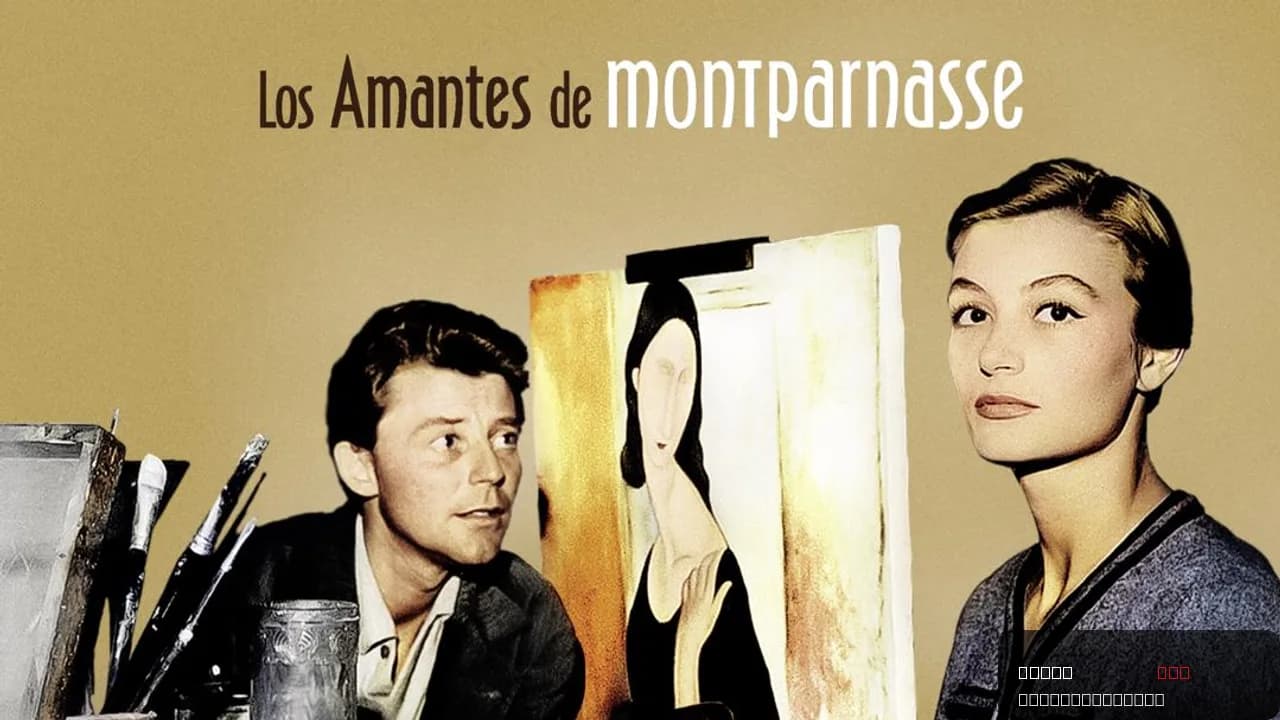
The Lovers of Montparnasse is a 1958 French-Italian drama that traces the final chapter of Italian painter Amedeo Modigliani's life, set against the gritty, romantic backdrop of Paris's Montparnasse district. Director Jacques Becker crafts a film rooted in the artist's real relationships with two women—Beatrice Hastings and Jeanne Hébuterne—who became both muses and lovers during his most turbulent years. The narrative doesn't present a straightforward biography but rather a character study of a man caught between creative ambition and personal ruin, watching his talent flourish even as his circumstances crumble. What makes this approach compelling is that Becker resists the temptation to mythologize; instead, he shows Modigliani (played by Gérard Philipe) as complicated, sometimes selfish, driven by demons both artistic and chemical. Running 104 minutes, the film moves with the deliberate pace of someone observing a slow tragedy, letting scenes breathe rather than rushing toward melodrama.
Behind the making of The Lovers of Montparnasse and its cast
Jacques Becker, already an established figure in French cinema, brought both rigor and empathy to this project, co-writing the screenplay alongside Armand Salacrou. The film reunited Becker with Gérard Philipe, one of France's most magnetic leading men, whose career was marked by intensity and range—he'd already proven himself in classics like Fanfan la Tulipe and Le Diable au Corps. Alongside Philipe, the cast included Lilli Palmer as Beatrice Hastings, bringing a steely, intelligent presence to her role as a woman caught between devotion and self-preservation. Lea Padovani, Anouk Aimée (who'd go on to major international success), and the striking Lila Kedrova rounded out an ensemble that felt authentically drawn from the period. The production itself was a French-Italian co-production, reflecting the era's collaborative European cinema—a time when filmmakers could move fluidly across borders and secure funding through multiple national industries. While the film didn't become a box office juggernaut, it earned respect in festival circuits and among critics who recognized Becker's unflinching approach to the artist's decline. Movie OTT tracks where this title streams today, making it easier to discover films like this that might otherwise slip through the cracks of mainstream attention.
What makes The Lovers of Montparnasse stand out as a portrait of artistic desperation
There's something genuinely unsettling about watching Philipe's Modigliani move through these scenes—he's charming, yes, but also volatile, self-destructive, and utterly unable to step back from the abyss. The film doesn't ask us to forgive him or even particularly like him; it asks us to understand the machinery of his self-sabotage. What's striking is how Becker frames the creative act itself. We see Modigliani working, painting with feverish energy, and the camera doesn't look away from the contradiction: his art is becoming more refined, more valuable, even as his body and finances deteriorate. Philipe captures this duality with a kind of exhausted defiance—he knows he's dying, and he paints anyway. The performances around him anchor the emotional weight. Palmer's Beatrice isn't a saint or a victim; she's a woman making hard calculations about survival, about whether love is worth poverty. Anouk Aimée, in her younger years here, brings a different energy—youth, hope, a kind of tragic naiveté about what loving an artist actually costs. The film's visual language—shot in black and white, with careful attention to the cramped studios and cafés of Montparnasse—creates an atmosphere of suffocation. You're never comfortable watching this. That's the point. Hard to say if contemporary audiences find that appealing, but critics who've revisited it appreciate Becker's refusal to sentimentalize bohemia.
Where to stream The Lovers of Montparnasse online
The Lovers of Montparnasse is currently available on Disney+, which may surprise viewers expecting only family-friendly content on that platform—the service has been quietly building a robust catalog of international and arthouse cinema. If you're hunting for older European dramas, Disney+ has become an unexpected home for titles like this one. For current availability across all platforms in your region, check the "Where to Watch" widget at the top of this page. Movie OTT keeps those listings updated in real time, so you'll know instantly whether it's streaming, renting, or purchasing on your preferred service. The 104-minute runtime makes it manageable for a single sitting, though you might find yourself wanting to pause and sit with certain scenes.
Frequently asked questions
Q: Is The Lovers of Montparnasse based on a true story?
Yes. The film draws from the real final years of Italian artist Amedeo Modigliani, who lived in poverty in Paris's Montparnasse district and died in 1920. While Becker takes dramatic liberties, the core relationships with Beatrice Hastings and Jeanne Hébuterne, his actual lovers and muses, are historically grounded.
Q: Who directed The Lovers of Montparnasse?
Jacques Becker directed and co-wrote the film with Armand Salacrou. Becker was a respected French filmmaker known for his character-driven narratives and careful mise-en-scène.
Q: What's the runtime of The Lovers of Montparnasse?
The film runs 104 minutes, a length that allows Becker to develop his characters and the atmosphere of 1920s Montparnasse without feeling rushed or overstuffed.
Q: Who stars in The Lovers of Montparnasse?
Gérard Philipe leads the cast as Modigliani, with Lilli Palmer as Beatrice Hastings. The ensemble also features Lea Padovani, Anouk Aimée, and Lila Kedrova among others, creating a rich ensemble of period performances.
Q: Where can I watch The Lovers of Montparnasse?
The film is currently streaming on Disney+. For other platforms and rental options in your region, refer to the streaming widget at the top of this page—Movie OTT aggregates all available options so you don't have to hunt across multiple services.
Final thoughts on The Lovers of Montparnasse
This isn't an easy film, and it's not designed to be. What Becker achieves here is something rarer than a straightforward biography: he creates a mood, a texture, a sense of what it felt like to be brilliant and doomed in a specific time and place. Philipe's performance lingers. The black-and-white cinematography haunts you. It's a film about the cost of beauty—not just the financial kind, but the spiritual toll of creating something that matters while your life falls apart. If you're drawn to character-driven European cinema, to stories that don't wrap up neatly, this deserves your time. Don't expect uplift. Do expect insight.