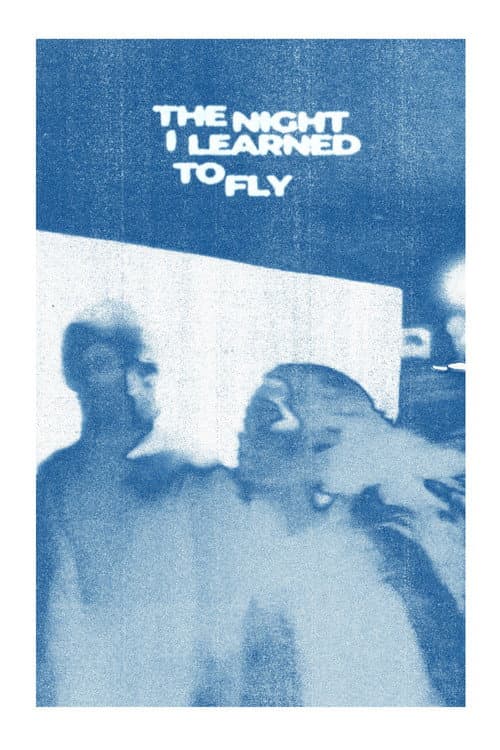


The Night I Learned To Fly
A surreal midnight search for identity and recognition
The Night I Learned To Fly follows two characters on a single strange night — Lúcio and his mask, Sun and his hunger to be seen — as they navigate a world that won't stay still between real and imaginary. It's a 2026 fantasy short from Portugal's Universidade Lusófona, and it's deliberately unhurried. Not a film that hands you answers. But worth watching if you've ever felt trapped between who you are and who you're trying to become.
Here's what you actually need to know: It's available on major OTT platforms (check the where-to-watch widget above for current links), it's unrated on IMDb (0/10 means not enough votes yet, not a bad score), and it runs under 30 minutes — the kind of thing you can finish in one sitting if the premise hooks you.
What actually happens in the film
A man called Lúcio moves through a liminal space with a mask that feels less like a costume piece and more like a companion — maybe an anchor, maybe a burden, maybe something he's negotiating with rather than simply wearing. Somewhere in that same world, Sun is doing something similar: searching, but not for a place or an object. Sun wants to be seen. Wants acknowledgment. The film's tagline — "I see you" — isn't a throwaway; it's the emotional core.
What's striking is that these two storylines don't crash into each other. They run parallel. Two separate hungers. Two separate nights that might be the same night. That's a more sophisticated narrative choice than most films bother with, regardless of budget — the refusal to resolve everything into a clean collision where character A solves character B's problem.
The surrealist imagery does heavy lifting here. A single visual (Lúcio negotiating with his mask, not wearing it) accomplishes what lesser films need pages of dialogue to explain. If you've watched experimental shorts from European film schools before, you know the language already. If you haven't, this is a low-stakes entry point.
Why this matters in 2026 fantasy cinema
Fantasy films don't have to be big — they don't have to be loud. There's a whole register of interior, image-driven work that gets overlooked because the conversation stays stuck on Marvel and high-concept spectacle. Movie OTT has been tracking exactly this wave: micro-budget, high-concept fantasy emerging from film schools across Portugal, Spain, and beyond.
What I keep coming back to is how much emotional weight the film carries without inflating itself. It trusts you to do interpretive work. There's no villain, no quest object, no three-act structure that snaps into place at the end. Just two people — or one person and one person's reflection, hard to say — looking for something they can't quite name.
The pacing won't work for everyone. If you want plot momentum and clear stakes, you'll bounce off this one immediately. But if you've ever watched a surrealist short and felt it was too thin, too conceptual, The Night I Learned To Fly has more emotional weight underneath. The film uses its limited runtime to actually feel something.
Where to watch and how to find it
The Night I Learned To Fly is currently available on major streaming platforms. Check Movie OTT's where-to-watch widget at the top of this page — it tracks availability in real time across services, so you're not hunting manually for a title that's already rotated off. Availability shifts without notice, so it's worth verifying before you settle in.
For a 2026 Portuguese fantasy short from an academic production, the fact that it's landed on recognizable streaming infrastructure is notable. It signals the film found an audience beyond the festival circuit. Universidade Lusófona's film program has become a genuine incubator for this kind of work — ambitious, genre-inflected, not designed for wide commercial appeal but finding it anyway.
The film doesn't require a big screen. A laptop is fine. Headphones are better. The sound design matters.
Is it actually worth your time?
Yes — if you know what you're getting into.
This isn't a film that resolves. It's not a film that explains itself. It won't feel finished in the way you're probably used to. But if you're drawn to interior fantasy — the kind that trusts its audience, that moves at its own pace, that treats surrealism as emotional language rather than visual decoration — this is exactly the kind of thing you've been looking for.
Think of it this way: if you've ever watched something like The Secret of Kells or Mulholland Drive and wished there was more of that sensibility in contemporary short form, this lands in that neighborhood. Not identical, but speaking the same language.
TL;DR: A surreal, patient fantasy short about identity and recognition. Made in Portugal in 2026. Available on major streaming platforms now. 20–30 minutes. Go in without expecting neat answers. You'll either connect with it or you won't — there's not much middle ground.
FAQ
Where can I actually watch this?
Check the where-to-watch widget at the top of this page. It'll show you every platform currently carrying it, with direct links. Availability changes, so verify before you start.
Who made it?
Universidade Lusófona de Humanidades e Tecnologias in Lisbon. It's a 2026 production from their film program, which has become increasingly recognized for ambitious Portuguese genre work.
What's the tagline mean?
"I see you." It's connected directly to Sun's storyline — a character desperate for recognition, moving through a surreal world looking for someone to actually see them. It lands differently once you've watched it.
Is there a cast list?
Not widely publicized at this stage. It's emerging-filmmaker work from a university program, not a studio production with a marketing blitz behind it. The film speaks through image and performance more than star power anyway.
Why is the IMDb rating 0/10?
Because it doesn't have enough user votes yet to generate a score. This is standard for recent shorts and festival work that haven't had mass exposure. It doesn't mean the film is bad — just that nobody's voted on it yet.
How long is it?
Under 30 minutes. Tight. You can finish it in one sitting without commitment fatigue.
Is it appropriate for kids?
It's not violent or explicit, but it's not made for children. The pacing and surreal logic will lose younger viewers. Teens and up, probably — depending on their tolerance for ambiguity.