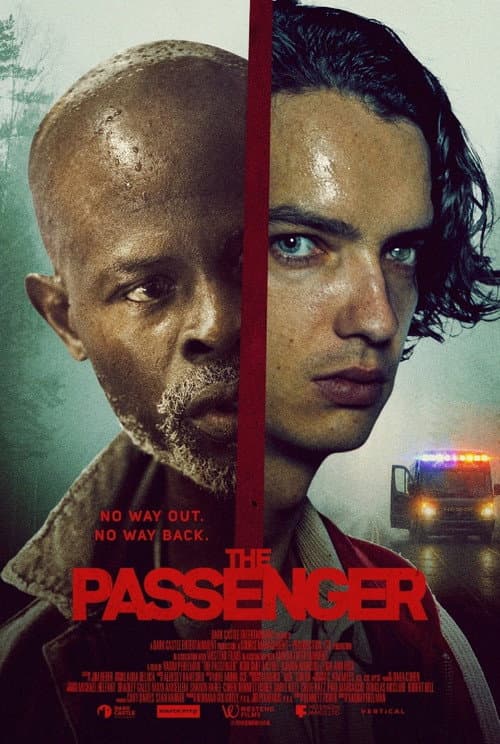
The Passenger
Skip the confusion: Here's which 2026 film we're talking about
Before you hunt for this one, know this — there are two movies called Passenger that came out in 2026, and they're nothing alike. The film covered here is a 93-minute thriller about Hassan, a Somali-American airport shuttle driver in Minneapolis who picks up the wrong passenger. The other one — the supernatural horror with Jacob Scipio, directed by André Øvredal, distributed by Paramount — that's a completely different animal. People have mixed up the reviews online. Don't be that person.
What actually happens in The Passenger
Hassan's broke. Like, grinding-through-airport-shuttle-shifts broke. When Lloyd — a stranded twenty-something at the terminal — offers to pay cash for a drive to Chicago, it feels like a break. Quick money. Easy job.
Except Lloyd isn't what he says he is.
The film doesn't waste time. Hassan starts noticing the small things — answers that don't quite land, reactions that feel off. Then it hits him: his passenger is dangerous, and he can't just pull over and leave without potentially putting other people at risk. What started as a paid gig turns into a trap that tightens across 93 minutes of close-quarters dread.
The setup does the job with real efficiency. No bloated exposition. No winking at the camera. Just a situation that gets worse because Hassan's situation — desperate for money, low on options — makes the obvious escape routes impossible.
Why this thriller works better than the premise sounds
Here's what's striking: the film doesn't lean on action beats or spy craft or any of the usual thriller shortcuts. Hassan isn't a trained operative. He's not secretly competent. He's a driver who needs the fare, and that economic reality — that he literally can't afford to do the smart thing — is baked into every decision he makes once things go wrong.
The tension is claustrophobic. You're locked in a vehicle with two people who can't be honest with each other, and the script forces both of them to talk around what's actually happening. That's harder to pull off than it sounds. When you've got 93 minutes and nowhere to cut to, the performances have to carry weight that a bigger film could distribute across setpieces and location changes. Here, they do.
What I kept coming back to is how much the film trusts the first half — the building dread, the careful verbal sparring — over conventional thriller mechanics. The second half does slip into more familiar beats (it's genuinely hard to avoid genre conventions once the premise is locked in), but by then the film has earned enough goodwill that the predictability doesn't wreck the whole thing.
Where to stream it (and why the where matters)
The Passenger is currently available on major streaming services. The exact platform depends on your region and what your subscriptions cover — and it changes. Movie OTT's where-to-watch widget updates in real time as licensing deals shift, which beats any static list that'll be outdated in six weeks.
Here's the practical move: check the widget at the top of this page. If you're already subscribed to one of the major services (Netflix, Hulu, Prime, etc.), there's a solid chance it's sitting there. Ninety-three minutes is a low-commitment ask for a weeknight watch — you can finish it and move on, or it'll stick with you. Either way, it won't swallow your whole evening.
The production behind it
The Passenger comes from a combination of indie muscle: Dark Castle Entertainment (the label behind House on Haunted Hill and a catalog of genre films built to surprise), Amasia Entertainment, and Van Evera. That's the kind of production stack that tends to give filmmakers more creative leeway than a straight studio picture — which, for better or worse, can mean a rougher film, but also one that doesn't sand down its edges to fit a marketing template.
The director credit isn't widely publicized in available press, which is unusual but not unheard of for mid-budget indie thrillers. What matters more: the film centers a Somali-American protagonist navigating economic precarity in a genre that rarely bothers with that specificity. Most thrillers grab a generic everyman. This one builds the whole thing around Hassan's actual constraints — immigration status, financial desperation, isolation — which makes the story feel less like a mechanical plot and more like a real person in an impossible situation.
The rating, and what it actually means
The film sits at 6/10 on IMDb — which, honestly, doesn't tell you much on its own. A 6 can mean "solidly watchable but flawed" or "has a killer first half but fizzles." Here it's closer to the first one. No festival prizes. No major awards chatter. But according to Movie OTT's tracking, the film has built a decent following among viewers who like tight, single-location psychological thrillers — people who'd rather watch Hassan sweat through a 90-minute ordeal than sit through a bloated 150-minute action franchise entry.
The criticism the film gets mostly targets its familiar beats in the second half. The road-trip thriller genre has conventions, and The Passenger doesn't fully escape them. Hard to say if that's a failure of nerve or just the cost of working in a well-worn space — but the first half is good enough that the more predictable stretches don't derail it.
Who should actually watch this
If you like road-trip tension, morally complicated survival scenarios, or just thrillers that don't demand two hours of your evening — this one delivers. It's not a masterpiece. It's a 6/10 that punches above that in the first 45 minutes, then settles into competent thriller territory.
Start here if you've exhausted the obvious streamers and want something specific: a character-driven thriller where the protagonist's economic vulnerability is the whole point, not just backdrop. If you liked Locke (the Tom Hardy film, nothing but a man in a car dealing with a crisis) or the tense dialogue-heavy sections of Buried, you'll recognize what The Passenger is doing.
One more practical thing: check Movie OTT's new releases section if you want to find similar mid-budget thrillers that actually landed. The algorithm tends to bury good 6/10 films in favor of bigger titles, which means a lot of solid work never gets watched. This one deserves the 90 minutes.