The story of The Picture of Dorian Gray
Oscar Wilde's 1890 novel about a man who trades his soul for eternal beauty has been adapted countless times, but Albert Lewin's 1945 interpretation stands apart. The Picture of Dorian Gray follows Dorian, a strikingly handsome young aristocrat whose life becomes a study in moral decay. He makes a Faustian bargain—his portrait will age and bear the marks of his sins while his face remains impossibly, unnaturally perfect. As years pass and Dorian descends deeper into hedonism, cruelty, and corruption, the painting becomes a grotesque mirror of his true self. The twist is devastating: everyone around him sees only the beautiful facade. Nobody knows what's hidden away in that locked room. Not until it's too late.
Behind the making of The Picture of Dorian Gray
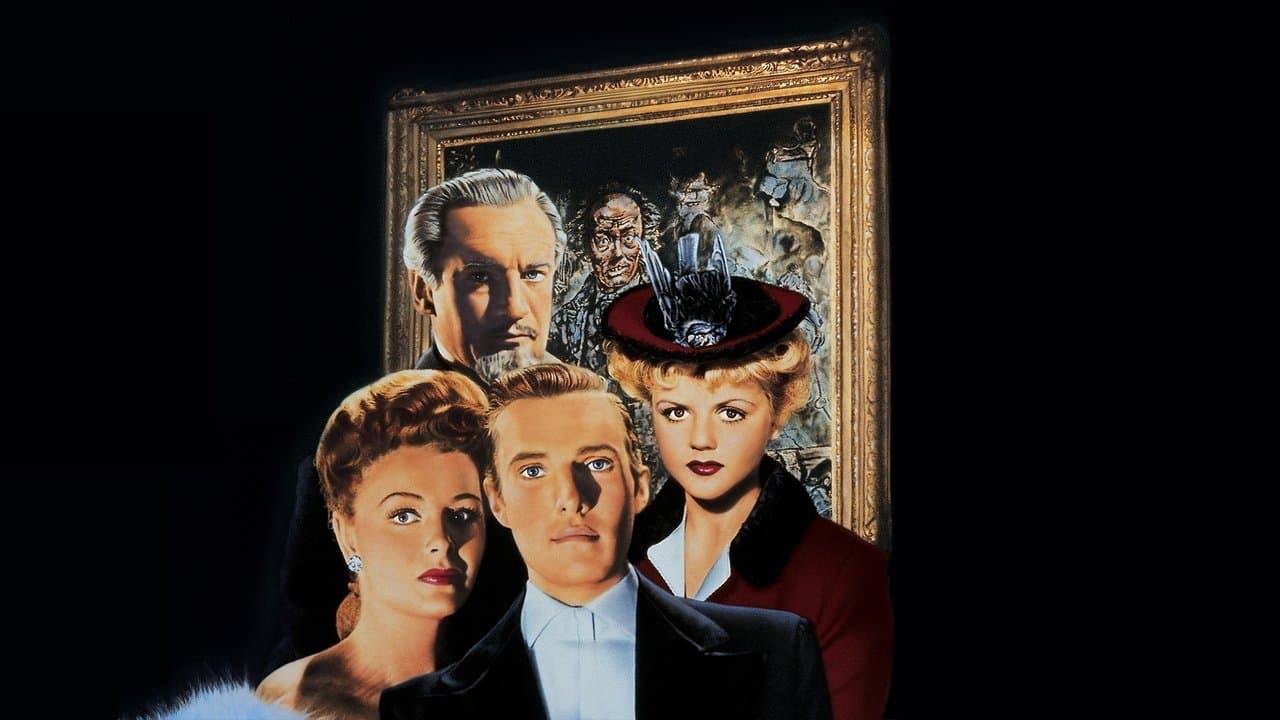
Metro-Goldwyn-Mayer brought considerable resources to this March 1945 release, with producer Pandro S. Berman overseeing a project that would demand both technical precision and psychological depth. Albert Lewin—who wrote and directed—understood that Wilde's story wasn't really about beauty at all; it was about the corruption that lies beneath attractive surfaces, the rot that money and privilege can conceal. The casting was inspired. George Sanders, already known for playing morally ambiguous characters, brought a silky menace to Lord Henry Wotton, the cynical mentor who corrupts Dorian's soul with philosophy disguised as wisdom. Hurd Hatfield, less famous but no less crucial, carried the film as Dorian—his face a canvas that had to convey innocence curdling into monstrosity without ever actually changing. Donna Reed, Angela Lansbury (in an early role), and Peter Lawford rounded out a cast that understood they weren't making a simple horror picture. Cedric Hardwicke's narration anchored the film's literary tone, while Herbert Stothart's score and Harry Stradling's cinematography created an atmosphere thick with dread. The production design captured both the glittering surface of high society and the shadowy depths beneath it—Wilde's London rendered in black and white, all marble and velvet and secrets.
What makes The Picture of Dorian Gray stand out
What's striking about this adaptation is how it doesn't shy away from the novel's real horror: not monsters or jump scares, but the idea that a human being can become monstrous while remaining beautiful to everyone around him. Sanders' performance is the key. He doesn't rant or rage; he whispers his corruptions, makes them sound reasonable, almost seductive. When he tells Dorian that "the only way to deal with an unfashionable thing is to make it fashionable," you feel the pull of his philosophy—and you understand how a young man might be ruined by it. Hatfield's work is subtler but equally effective. Early on, Dorian is genuinely likable, genuinely innocent. Watch his face when he first sees the portrait; there's real joy there, real wonder. But as the film progresses, something hardens in his expression. It's not that he becomes a different person—it's that the person he was always had the capacity to become this. The painting itself, when we finally see it in full horror, is genuinely disturbing. Lewin made the choice to show it to us, and the decision pays off. It's grotesque without being cartoonish, obscene without being silly. The film doesn't explain the magic; it simply presents it as fact, which somehow makes it more unsettling. I keep coming back to one scene: Dorian looking at his reflection in a mirror, still seeing perfection, while the camera cuts to the painting—and we see what he refuses to see. That's the real tragedy.
Where to stream The Picture of Dorian Gray online
The Picture of Dorian Gray is currently available on major OTT services, and you can check the "Where to Watch" widget at the top of this page to see which platforms are streaming it in your region right now. Movie OTT tracks streaming availability across the major services, so you'll always know where to find it—whether it's on a subscription service you already have or whether it's time to add another. At 111 minutes, it's a commitment but not an overwhelming one, and it's worth carving out an evening for. The film's age means it pops up on various platforms depending on licensing agreements, so if you don't see it on your usual service today, check back soon.
Frequently asked questions
Q: Is The Picture of Dorian Gray based on a true story?
No, it's an adaptation of Oscar Wilde's 1890 novel, which is a work of fiction. The story is entirely Wilde's invention—though it draws on real anxieties about beauty, aging, and morality that were very much alive in Victorian society.
Q: Who directed The Picture of Dorian Gray?
Albert Lewin both wrote and directed the 1945 MGM film. He was known for bringing literary sophistication to his film adaptations and understood the psychological and philosophical depth of Wilde's material.
Q: What's the difference between this 1945 version and other adaptations of the novel?
Lewin's version is notable for its fidelity to Wilde's text while still being cinematic. It emphasizes the psychological horror of the story—the corruption of the soul—rather than treating it as a straightforward supernatural thriller. The performances, particularly Sanders' and Hatfield's, give it a depth that sets it apart.
Q: Is The Picture of Dorian Gray a horror film?
It's classified as horror-drama-fantasy, and while it has supernatural elements and genuinely creepy moments, it's more accurately described as a psychological horror-drama. The real horror comes from watching a beautiful person become morally repugnant, not from jump scares or gore.
Q: How does the film end?
Without spoiling it: the ending is faithful to Wilde's novel and carries the weight of the story's moral logic. It's not a happy ending, but it's a just one.
Final thoughts on The Picture of Dorian Gray
Seventy-five years later, The Picture of Dorian Gray hasn't lost its bite. If anything, it's more relevant now—in an age of filters, cosmetic procedures, and the obsessive documentation of beauty, Wilde's story about a man who'd do anything to stay young feels almost prophetic. Lewin's film captures that timeless quality without ever winking at the camera or trying to update the material. It trusts the source material, trusts its cast, and trusts the audience to understand that real horror isn't about monsters—it's about what we're willing to become in pursuit of what we want. This is essential viewing for anyone interested in how literature translates to film, and it's equally rewarding for those who just want to watch a beautifully made, genuinely unsettling picture.