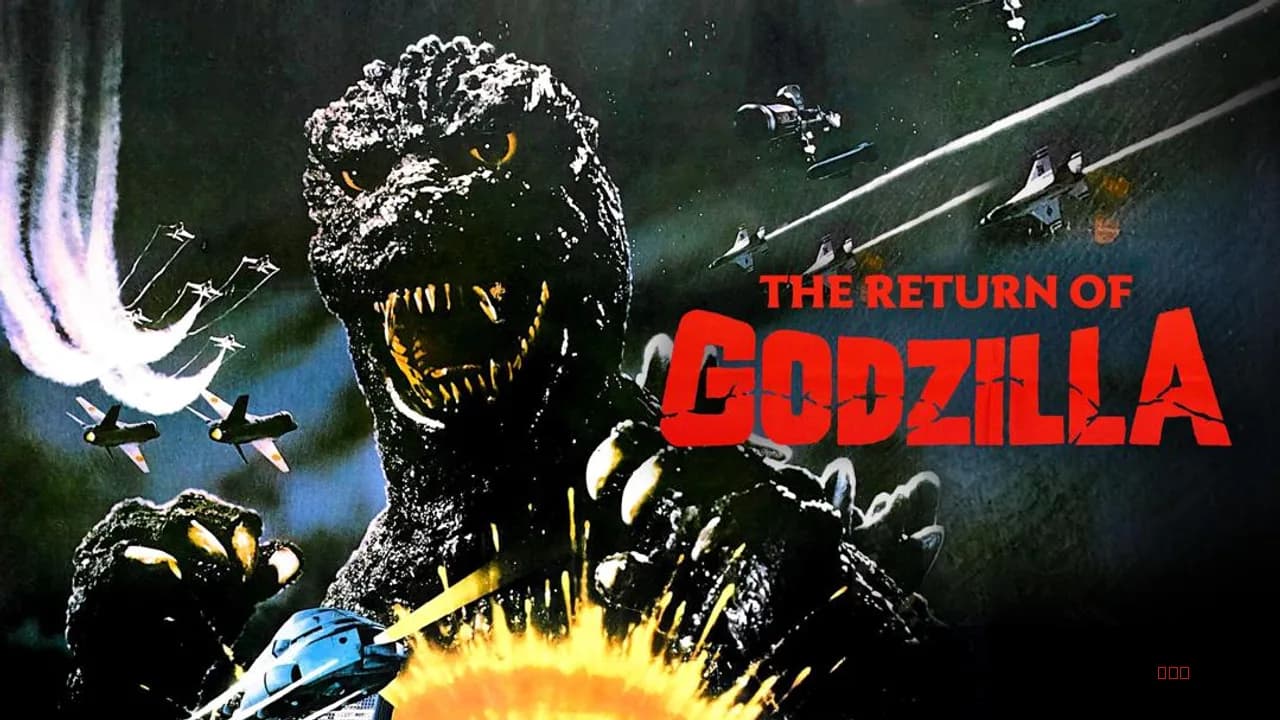
The story of The Return of Godzilla
The Return of Godzilla picks up where the original 1954 film left off—or rather, pretends the intervening decades of monster-movie sequels never happened. When the beast resurfaces off the Japanese coast, it's not just a giant radioactive lizard stomping Tokyo again. It's a geopolitical nightmare. The Japanese government scrambles to contain the news while the United States and Soviet Union circle like sharks, each willing to rain nuclear fire on Japan itself if it means stopping the monster. That's the real horror here. Not the creature feature itself, but the machinery of Cold War paranoia grinding away in the background, treating an island nation as expendable real estate. The film doesn't let you forget that Godzilla isn't the only threat—human ambition and fear are just as lethal.
Behind the making of The Return of Godzilla
Koji Hashimoto took the director's chair for what would become the final Shōwa-era Godzilla film and the first entry in the Heisei series. The 103-minute runtime gives the story room to breathe, moving deliberately through political intrigue before unleashing the spectacle. Teruyoshi Nakano handled the special effects, working with the practical suit-and-miniature techniques that defined the franchise. The cast brought a gravitas that earlier films had abandoned—Keiju Kobayashi, Ken Tanaka, and Yasuko Sawaguchi anchor the ensemble with performances that treat the scenario as tragedy, not pulp. The film arrived in 1984 when Japan's economy was surging and its pop culture was beginning its global ascent, yet Hashimoto's vision looks inward, wrestling with the nation's atomic trauma. Toho Pictures positioned this as a genuine reboot, a reset button for a franchise that had drifted toward rubber-suit comedies in the 1960s and 1970s. The production valued atmosphere over spectacle—though when the monster does appear, it's genuinely unsettling, a creature that's less a character and more a force of nature, something that can't be negotiated with or reasoned away.
What makes The Return of Godzilla stand out
What's striking is how the film uses its monster as a mirror for Cold War anxiety. The thing nobody mentions is that Godzilla itself barely appears for long stretches—the tension comes from waiting, from watching governments lie and posture while the threat grows. The performances ground everything in dread rather than wonder. Ken Tanaka's reporter character chasing the story, the bureaucrats wrestling with impossible decisions, the military brass calculating body counts—these are the moments that stick. The 1984 film doesn't treat the kaiju as a hero or anti-hero; it's a force that exposes how fragile international order really is. After the campier entries of the previous two decades, critics and audiences alike recognized this as a return to form. The moody, atomic beast had come back, and it'd brought existential dread with it. I keep coming back to that opening sequence—the fishing boat, the darkness, the way Godzilla emerges as almost an afterthought, as if the real catastrophe had already begun before anyone noticed. That's smart monster-movie craft, the kind that Movie OTT readers hunting for substantial creature features on streaming will recognize immediately. It's not just spectacle; it's cinema with something to say.
Where to stream The Return of Godzilla online
The Return of Godzilla is currently available on Netflix, making it accessible to millions of subscribers who want to see where the modern Godzilla renaissance actually began. If you're tracking the franchise's evolution—from the original 1954 Godzilla through the Heisei series and beyond—this 1984 entry is essential viewing. Movie OTT's Where to Watch widget at the top of this page shows you current availability across all major platforms in your region, so you can start streaming immediately. The 103-minute runtime makes it a manageable evening watch, though the slow-burn pacing demands your full attention. Don't expect the monster-movie spectacle of later entries; come for the political thriller wrapped around a giant creature, and you'll understand why this film matters.
Frequently asked questions
Q: Is The Return of Godzilla a reboot or a sequel?
It's both, technically. The film ignores all the sequels between 1954 and 1984, picking up directly after the original as if those decades of monster movies never happened. It's a hard reboot that reestablishes Godzilla as a genuine threat rather than a campy hero.
Q: Who directed The Return of Godzilla?
Koji Hashimoto directed the film, with special effects by Teruyoshi Nakano. It was Hashimoto's vision that stripped away the camp and reintroduced the monster as a source of existential dread.
Q: What's the runtime, and is it slow-paced?
The Return of Godzilla runs 103 minutes and deliberately builds tension through political intrigue before the monster appears. It's not action-packed throughout—it's a thriller first, a creature feature second.
Q: What's the IMDb rating for The Return of Godzilla?
The film holds a 6.8/10 on IMDb based on over 3,200 votes, reflecting a mixed but respectful reception from audiences who appreciate its tonal shift away from 1970s campiness.
Q: Where can I watch The Return of Godzilla?
The Return of Godzilla is currently streaming on Netflix. Check the Where to Watch widget on this page for real-time availability in your region.
Final thoughts on The Return of Godzilla
The Return of Godzilla deserves your time if you're serious about monster cinema or Cold War-era thrillers. It's a film that understands fear—not just the fear of a giant creature, but the fear of governments that can't control events and superpowers willing to destroy a nation to win a standoff. Hashimoto's reboot works because it takes itself seriously, treating atomic anxiety as the genuine horror it was for postwar Japan. Watch it on Netflix and you'll see why this 1984 entry launched the Heisei series and proved the King of Monsters still had something important to say.