The Story of They Made Me a Criminal
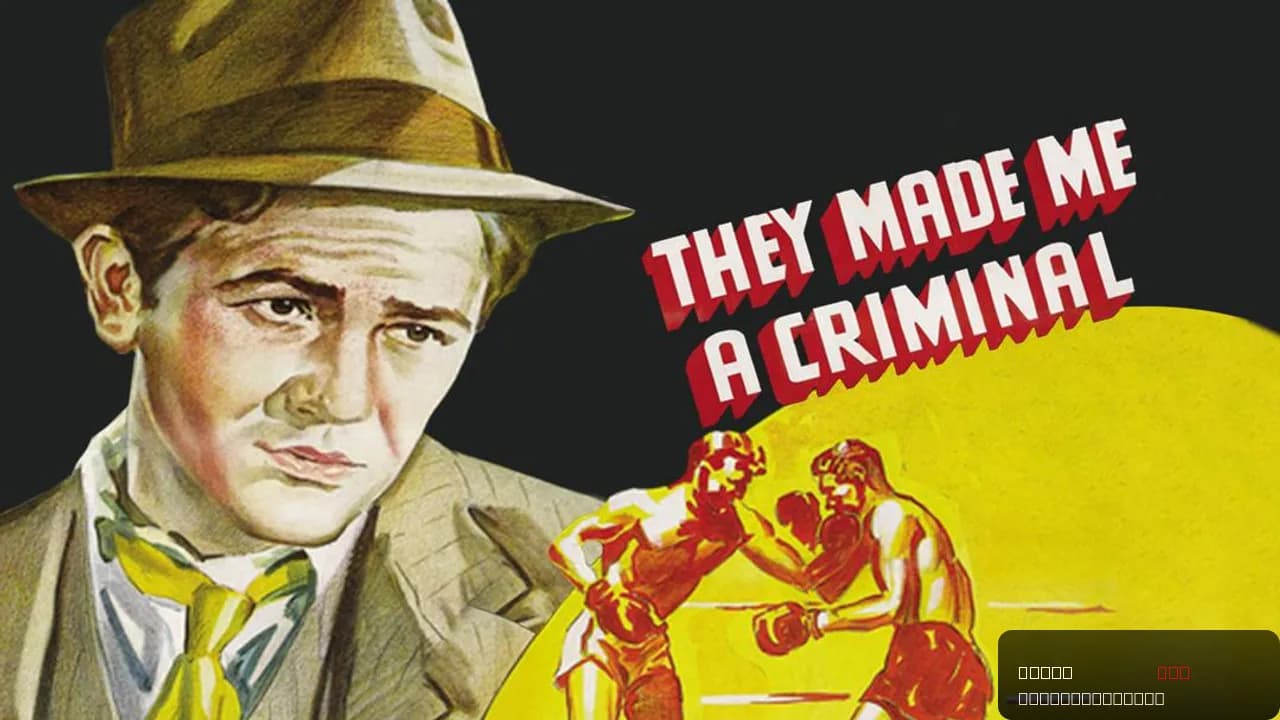
They Made Me a Criminal opens with a premise that feels almost noir-adjacent, though it's really something stranger: a world champion boxer, riding high after a major victory, wakes up to find himself at the center of a murder investigation. The victim is a journalist, and the boxer—John Garfield's "Johnnie"—has a problem. He was thoroughly drunk the night before, so thoroughly that he can't remember what he did or didn't do. Rather than stick around to sort it out, he bolts. What follows is his escape to a remote Arizona ranch, a place that becomes far more than just a hideout. It's a sanctuary run for delinquent youths, and Johnnie finds himself not just hiding, but teaching, mentoring, and gradually discovering that maybe he's worth something beyond the boxing ring. Meanwhile, a cop is on his trail—but this cop isn't just hunting a fugitive. He's chasing his own shot at redemption, his own chance to prove he's more than just a badge.
The setup hinges on what you're willing to forgive. Not everyone will buy the premise outright, and that's fair. A boxer too drunk to remember a murder? It requires a certain suspension of disbelief. But that's precisely the film's gamble—it's betting that you'll stay with it long enough to see where the real story goes.
Behind the Making of They Made Me a Criminal
They Made Me a Criminal arrived in 1939 as a remake of The Life of Jimmy Dolan (1933), directed by the legendary Busby Berkeley. Berkeley, of course, was already famous for his extravagant musical numbers—the kaleidoscopic choreography that defined so many Warner Bros. productions. But here he's working in a different register entirely: crime drama, with only the barest musical elements. The cast assembled was solid for the era. John Garfield was in the early phase of his career, still building the tough-guy persona that would define his later work. Claude Rains, one of Hollywood's finest character actors, plays the detective with the kind of nuanced restraint that made him invaluable to studio-era cinema. Ann Sheridan, Gloria Dickson, and May Robson round out the adult cast, while the film also features The Dead End Kids—a group of young performers who became something of a franchise for Warner Bros., appearing in multiple films throughout the late 1930s and 1940s.
Production took place partly in the Coachella Valley, California, which lent the Arizona ranch scenes an authentic desert quality. The film ran 87 minutes, a brisk runtime typical of the era. While specific box office figures for this title aren't widely circulated today, the film found its audience among Depression-era moviegoers who were drawn to stories about second chances and redemption—themes that hit differently when you're living through economic hardship. Movie OTT tracks how these older titles have migrated across streaming platforms, and They Made Me a Criminal's current availability across dozens of services speaks to its enduring status as a public domain or widely licensed property from the studio era.
What Makes They Made Me a Criminal Stand Out
What's striking about They Made Me a Criminal is how it refuses to stay in one lane. It's a crime thriller, yes, but it's also a redemption story, and underneath that sits something almost like a sports film—or at least, a film deeply interested in what happens when an athlete's identity gets stripped away. Garfield's performance anchors everything. He plays Johnnie as both genuinely panicked and genuinely capable of growth, which is harder than it sounds. The actor doesn't wink at the audience or telegraph "I'm learning a lesson here." Instead, he lets the change happen quietly, through his interactions with the kids at the ranch and through his growing connection to the life he's building there.
Claude Rains is equally good, maybe even better—which is saying something for a supporting role. His detective isn't just a plot device chasing the protagonist. He's a man wrestling with his own failure, his own sense that he's let himself and his profession down. When these two finally come into direct conflict, there's real weight to it, because both men have something at stake beyond the mechanics of the plot. The film also benefits from Berkeley's direction, which doesn't try to replicate his musical-comedy style but instead brings a kind of visual clarity and pacing to the drama. Scenes breathe. Conversations don't feel rushed. There's room for character work.
I keep coming back to the film's treatment of the Dead End Kids. Rather than making them comic relief or simply victims to be rescued, the script gives them agency and personality. They're damaged, sure, but they're not broken—and Johnnie's presence forces them to reckon with their own potential for change, just as their presence forces him to reckon with his.
Where to Stream They Made Me a Criminal Online
They Made Me a Criminal has found a wide home across streaming platforms, which speaks to both its public domain status and its appeal as a classic crime drama. You can currently watch it on services including Max, HBO Max Amazon Channel, MGM Plus, Prime Video, Tubi TV, Pluto TV, Philo, and fuboTV, among many others. The film also appears on specialty platforms like Kanopy, Hoopla, and JustWatch TV, as well as faith-oriented services like Pure Flix and Great American Pure Flix Amazon Channel. For the most current and complete list of where this title is available right now, check the "Where to Watch" widget at the top of this page—streaming availability shifts constantly, and that widget updates in real time. If you're already subscribed to one of the major services, there's a solid chance you can access it without an additional fee.
Frequently asked questions
Q: Who directed They Made Me a Criminal?
The film was directed by Busby Berkeley, best known for his elaborate musical numbers in 1930s Hollywood musicals. Here, he brings his visual sophistication to a crime drama, resulting in a tightly paced and visually coherent film that doesn't rely on spectacle but on character and tension.
Q: Is They Made Me a Criminal based on a true story?
No, it's not based on a true story, but it is a remake of The Life of Jimmy Dolan (1933). The plot is fictional, though the themes of redemption and second chances were resonant with audiences during the Depression era.
Q: What is the runtime of They Made Me a Criminal?
The film runs 87 minutes, which was a standard feature length for Hollywood productions in 1939. It's a brisk pace that doesn't feel rushed.
Q: Who stars in They Made Me a Criminal?
John Garfield plays the lead role of Johnnie, the boxer on the run. Claude Rains plays the detective pursuing him, and Ann Sheridan, May Robson, and Gloria Dickson round out the adult cast. The film also features The Dead End Kids, a group of young performers who appeared in multiple Warner Bros. films during this era.
Q: What's the plot of They Made Me a Criminal?
A championship boxer, unable to remember what he did during a drunken night, flees when a journalist turns up dead. He hides at an Arizona ranch for delinquent youths, where he finds unexpected purpose—while a cop with his own redemption arc pursues him.
Final Thoughts on They Made Me a Criminal
They Made Me a Criminal isn't a perfect film, and it doesn't pretend to be. It asks you to buy into a premise that strains credibility, and it wraps its themes up in a way that feels a bit tidy for modern tastes. But that's also part of its charm. There's an earnestness here, a genuine belief in the possibility of change and redemption, that feels almost radical in its simplicity. Garfield and Rains are both excellent, Berkeley's direction is assured, and the film moves. If you're exploring 1939 cinema or looking for a solid crime drama from the studio era, this one deserves your time. Movie OTT makes it easy to track down across its current streaming homes—just check that widget at the top of the page to see where it's available on your preferred service today.