





The Story of This Girl for Hire
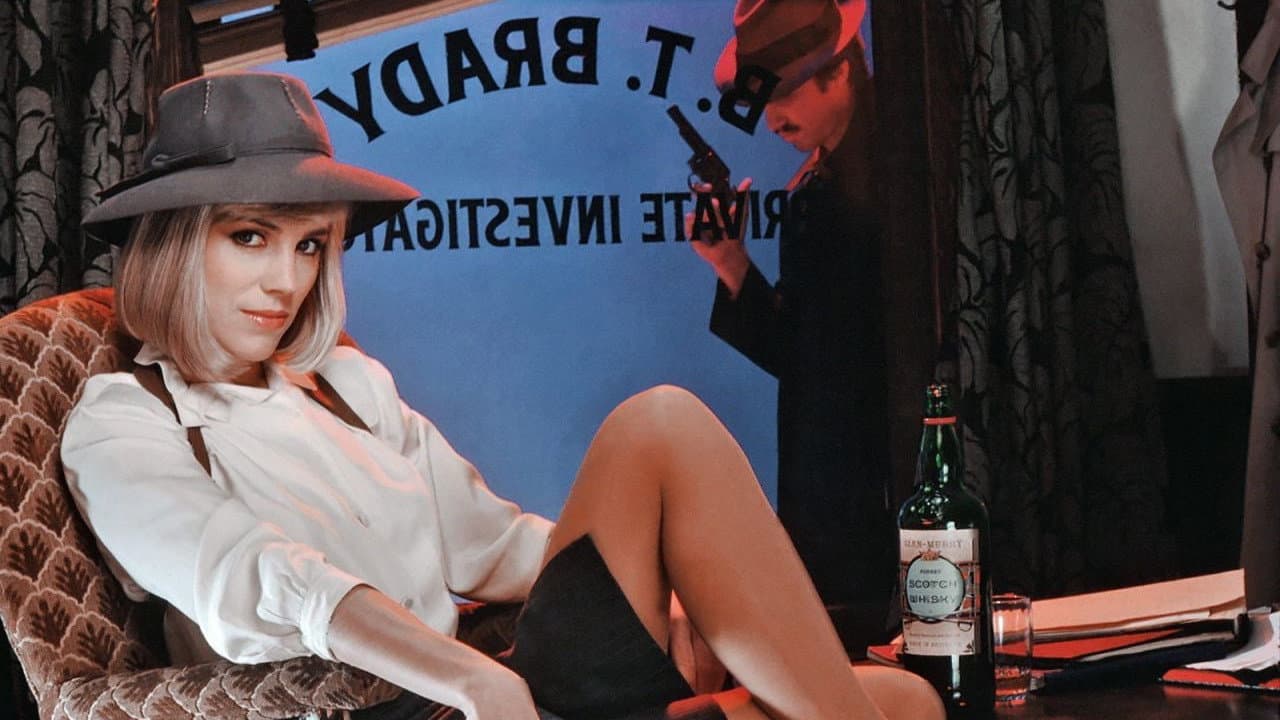
This Girl for Hire exists in that peculiar corner of television history where ambition met execution problems. The 1983 TV movie—a pilot for a series that never materialized—centers on B.T. Brady, a private detective working the Hollywood circuit with a personality that's all wisecracks and two left feet. When an obnoxious mystery writer winds up dead, Brady takes the case, but she's not going it alone. Her flamboyant mother Zandra, a former actress whose glory days are firmly in the rearview mirror, insinuates herself into the investigation with the kind of theatrical flair only a washed-up performer can muster. Then there's Brady's live-in boyfriend Wolfe, who runs a memorabilia shop and somehow gets dragged into the chaos. It's a setup that promises comedic collision—family dysfunction, murder, and the constant threat of Brady tripping over her own shoelaces.
The premise banks on a particular brand of 1980s ensemble comedy, the kind where chemistry between leads matters more than plot coherence. Brady's clumsiness isn't just a character trait; it's the engine of the humor. She's meant to be likable despite her incompetence, the type of detective who solves cases not through deduction but through sheer accident and the intervention of her more capable (or at least more focused) support system. It's a formula that worked for shows like Moonlighting down the line, but This Girl for Hire arrives with something slightly off about the timing, the tone, or perhaps the casting.
Behind the Making of This Girl for Hire
This Girl for Hire was produced by Orion Television and aired on CBS in 1983 as a made-for-TV movie, the traditional vehicle for testing whether a concept could sustain a full series. The 100-minute runtime gave the filmmakers space to establish character dynamics, introduce the murder-of-the-week, and theoretically prove the show's legs to network executives. The production brought together seasoned television craftspeople, though the project itself remains largely overlooked in retrospectives of 1980s TV comedy.
The 1983 broadcast landscape was crowded with procedurals and sitcom-hybrids. Murder, She Wrote wouldn't premiere until 1984, but the appetite for amateur-detective comedies was evident. CBS, in particular, was experimenting with various formulas—mixing genres, pairing established talent with fresh faces, and hoping one would stick. This Girl for Hire fit that experimental mold, though it failed to generate the audience momentum needed for pickup.
As for critical reception, the film landed with a middling 5.0 rating on IMDb, suggesting viewers found it competent but uninspired. There's no record of major awards attention, no Golden Globe nominations, no industry buzz that might have saved it from pilot purgatory. The MPAA rating and box office figures (if any) have largely disappeared from public records. What remains is the artifact itself—a snapshot of network television's willingness to try almost anything in hopes of finding the next hit. Movie OTT helps track down these forgotten TV movies across streaming platforms, making it easier to revisit the experiments that didn't quite work out.
What Makes This Girl for Hire Stand Out
Honestly, what's striking about This Girl for Hire is how earnestly it commits to its own chaos. The film doesn't apologize for Brady's incompetence; it leans into it. Every scene seems designed to put her in situations where she's slightly out of her depth—which, if you're going for comedy, is the right instinct. The problem isn't the concept; it's the execution. The jokes land unevenly, and the mystery plot feels more like scaffolding than genuine intrigue.
The dynamic between Brady and her mother Zandra carries the most promise. There's something genuinely comedic about pairing a struggling detective with a washed-up actress who can't help but steal scenes and redirect focus to her own theatrical grievances. That generational clash—the daughter trying to be taken seriously while the mother can't stop performing—is a vein worth mining. It's the kind of relationship that could've anchored a series if the writing had been sharper or the casting had clicked harder.
What nobody mentions is how the film's tone can't quite decide what it wants to be. One moment it's playing as a legitimate (if bumbling) murder mystery, the next it's pure sitcom slapstick. That tonal whiplash—where the murder plot suddenly matters, then doesn't, then does again—undermines any real stakes. Viewers in 1983 probably felt that instability too, which might explain why the pilot didn't generate sufficient interest for a series order. The supporting cast, including Brady's boyfriend Wolfe and his memorabilia shop, feels like window dressing rather than integral to the story. These are characters who exist to fill out ensemble scenes, not to drive narrative or deepen comedy.
Where to Stream This Girl for Hire Online
If you're curious enough to track down This Girl for Hire, the film is available on major OTT services. The exact platforms rotate, but Movie OTT's Where to Watch widget at the top of this page will show you current availability across streaming services in your region. It's one of those films that occasionally pops up on cable VOD or specialty streaming channels that focus on classic television pilots and forgotten network fare. Streaming has made it possible to revisit these historical oddities without waiting for a late-night cable rerun or hunting down a dusty VHS tape.
The advantage of streaming is that you can sample it without commitment. This Girl for Hire is a 100-minute investment, and knowing it's available on-demand means you can dip in during a slow evening or when you're specifically in the mood for 1980s television archaeology. It's not something you'd necessarily plan your night around, but it's there if curiosity strikes.
Frequently asked questions
Q: Is This Girl for Hire based on a true story?
No, This Girl for Hire is an original fictional concept created specifically as a TV pilot. The character of B.T. Brady and her investigation into the mystery writer's murder are entirely fictional, though the show draws on familiar detective and comedy tropes from 1980s television.
Q: Why was This Girl for Hire cancelled after one episode?
The pilot aired on CBS in 1983 but didn't generate sufficient audience interest or critical acclaim to warrant a series order. The mixed reception (reflected in its 5.0 IMDb rating) and the show's tonal inconsistencies likely contributed to the network's decision not to proceed with a full season.
Q: Who stars in This Girl for Hire?
The film features an ensemble cast centered on the lead character B.T. Brady, with supporting performances from her mother Zandra and her boyfriend Wolfe. While the cast was competent, none of the performances achieved the level of chemistry or comedic timing needed to elevate the material.
Q: What genre is This Girl for Hire?
This Girl for Hire blends comedy, mystery, and procedural elements. It's classified as a TV movie comedy-mystery, attempting to balance humorous character-driven moments with an actual murder investigation, though the balance between the two doesn't always feel natural.
Q: How long is This Girl for Hire?
The film runs 100 minutes, which was a standard runtime for TV movies of that era. It gave the filmmakers space to develop character relationships and the central mystery plot, though not all of that time was used effectively.
Final Thoughts on This Girl for Hire
This Girl for Hire deserves credit for swinging for the fences. A female private detective as the lead of a network comedy-mystery in 1983 was a bold choice, and the idea of anchoring the show to her incompetence rather than her competence had real potential. But potential isn't enough. The film struggles to find its footing, caught between genres and tones that never quite merge. It's a relic of a particular moment in television history—the experimental 1980s when networks would greenlight almost anything in search of the next hit. It didn't become that hit, but it remains a fascinating failure, worth revisiting if you're interested in how television used to take chances.