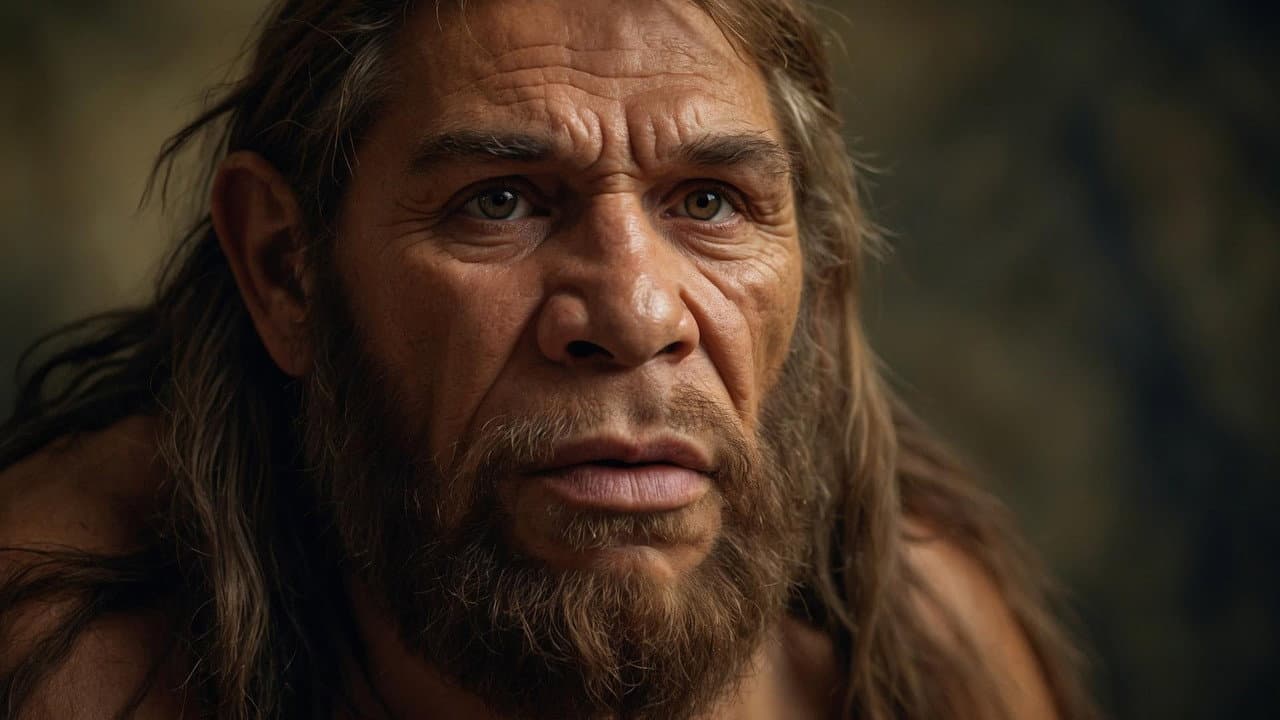

The Story of Thorin, le dernier Néandertalien
Thorin, le dernier Néandertalien is a 2024 documentary that tells the story of one of the most significant archaeological discoveries in recent European history. The film centers on the Mandrin Cave, a sprawling excavation site nestled in the Rhône Valley of France, where archaeologist Ludovic Slimak has spent years uncovering the secrets of human prehistory. What makes this documentary compelling isn't just the discovery itself—it's the detective work that led to it, the careful analysis of bone fragments and stone tools, and the larger questions about who we are and where we came from that such findings inevitably raise. The narrative follows Slimak and his team as they piece together evidence that Neanderthals inhabited this cave for more than 80,000 years, creating a vivid portrait of a species we thought we understood far less than we actually do.
At the heart of the film is Thorin himself—the first Neanderthal fossil discovered in France in half a century. The discovery is remarkable not just for its rarity but for what it tells us about the depth of human occupation in Western Europe during the Pleistocene. Rather than treating the excavation as a dry academic exercise, the documentary captures the genuine excitement and meticulous care with which archaeologists approach such finds. You'll see the painstaking work of extraction, the laboratory analysis, the cross-referencing with other sites across Europe. It's a story about patience, expertise, and the slow accumulation of knowledge.
Behind the Making of Thorin, le dernier Néandertalien
Thorin, le dernier Néandertalien is a co-production between ARTE, the renowned European public broadcasting network, and Fred Hilgemann Films, a production company known for high-quality documentary work. ARTE has long been a champion of intellectually ambitious programming—science documentaries, historical investigations, cultural deep-dives—and this project sits squarely in that tradition. The partnership with Hilgemann Films brought on-the-ground expertise and visual storytelling sensibility that elevates what could have been a straightforward academic documentary into something more cinematic and emotionally resonant.
The film premiered in 2024 to strong critical reception, earning an IMDb rating of 8/10—a solid indicator that both documentary enthusiasts and general audiences found it engaging. While specific box office figures for European documentary releases are rarely publicized with the fanfare of theatrical features, the fact that it's found distribution across major OTT platforms speaks to the breadth of its appeal. The documentary doesn't require a PhD in archaeology to follow, though those with deeper knowledge will appreciate the scientific rigor on display. What's striking is how the filmmakers balance accessibility with authenticity—they don't dumb down the science, but they also don't lose viewers in technical jargon. Ludovic Slimak himself appears throughout, and his genuine passion for the work becomes the emotional anchor that holds the whole piece together.
What Makes Thorin, le dernier Néandertalien Stand Out
Why does this documentary work so well? Part of it comes down to the inherent fascination of the subject matter—Neanderthals have always captured the human imagination, perhaps because they're close enough to us to feel like relatives, yet distant enough to remain mysterious. But beyond that, the film succeeds because it's not just about a single fossil. It's about methodology, about how we know what we know, about the landscape of human prehistory and our place in it. The documentary manages to make the invisible visible—80,000 years of habitation, countless generations of people whose names we'll never know, all suddenly present in the form of bones, charcoal, and worked flint.
What I keep coming back to is how the film respects both the scientific evidence and the human story embedded within it. There's a moment where Slimak describes the conditions under which Neanderthals lived in the cave, the seasonal patterns they might have followed, the tools they crafted—and suddenly you're not just looking at artifacts in a museum case, you're imagining the lives of actual people navigating a world radically different from our own. The cinematography of the cave itself is stunning, all shadow and stone, which reinforces the sense of discovery and the weight of time. The editing moves at a pace that feels neither rushed nor sluggish; it trusts the audience to stay engaged without needing constant cuts or dramatic music stings. That restraint is rare in documentary filmmaking, and it's one of the reasons the film has found such strong reception among both critics and viewers on streaming platforms.
Where to Stream Thorin, le dernier Néandertalien Online
Thorin, le dernier Néandertalien is available on major OTT services, making it accessible to documentary lovers across multiple streaming ecosystems. Rather than hunting through different websites to figure out where a title is available, Movie OTT aggregates current streaming information so you can see exactly which platforms carry what you want to watch. The documentary is well-suited to the streaming format—it's the kind of film you might watch in one sitting or across a couple of evenings, depending on your schedule. Because it's a documentary with a clear narrative arc rather than episodic content, you won't feel obligated to binge it all at once, but you also won't feel like you're abandoning a cliffhanger if you pause halfway through. The picture and sound quality on most major platforms will do justice to the cave cinematography and the careful sound design that makes the excavation feel immediate and real.
Frequently asked questions
Q: Who directed Thorin, le dernier Néandertalien?
The documentary was produced by ARTE and Fred Hilgemann Films, bringing together European public broadcasting expertise with specialized documentary filmmaking. While the film centers on archaeologist Ludovic Slimak's research and discoveries, the directorial and creative team worked to translate his scientific work into visual narrative form.
Q: Is Thorin, le dernier Néandertalien based on a true story?
Yes, entirely. The documentary documents real archaeological excavations at Mandrin Cave in the Rhône Valley and the actual discovery of Thorin, a Neanderthal fossil found by Ludovic Slimak's team. The film is a factual account of genuine scientific research, not a dramatization.
Q: What time period does Thorin, le dernier Néandertalien cover?
The documentary focuses on evidence from the Mandrin Cave showing that Neanderthals inhabited the site for over 80,000 years. The discovery of Thorin marks the first Neanderthal fossil found in France in approximately 50 years, making it a significant recent find in the field of paleoanthropology.
Q: Do I need a background in archaeology to understand Thorin, le dernier Néandertalien?
No. While the film is scientifically rigorous, it's designed for a general audience. The filmmakers explain the significance of findings and the methods used to date and analyze artifacts without requiring specialized knowledge, making it accessible to anyone interested in human prehistory.
Q: How long is Thorin, le dernier Néandertalien?
As a documentary feature, it runs a length typical of the format—substantial enough to explore its subject thoroughly without becoming exhausting. It's the kind of film that holds attention through narrative momentum and genuine curiosity about its subject matter.
Final Thoughts on Thorin, le dernier Néandertalien
Thorin, le dernier Néandertalien deserves your attention if you're drawn to documentaries that take their subjects seriously while remaining accessible and visually engaging. It's a film about science, yes, but also about patience, discovery, and the way we piece together meaning from fragments of the past. Whether you're a longtime documentary enthusiast or someone looking for something smarter than typical streaming fare, this one delivers. Check Movie OTT's current availability to find where it's streaming in your region, and give yourself the time to watch it properly—no distractions, no second screen. You'll come away with a deeper understanding of Neanderthals, of archaeology as a discipline, and of why these ancient discoveries still matter today.


