The Story of Three Faces West
Three Faces West opens in a small North Dakota town ravaged by the Dust Bowl—where the very earth seems to be abandoning its people. A Viennese surgeon, Dr. Braun, arrives with his daughter Leni, both refugees fleeing the shadow of Hitler's Austria. They're not just running from political danger; they're seeking a fresh start in a place that's itself desperate for renewal. When John Phillips, a local man with vision and grit, proposes leading the townspeople westward to Oregon's promised greener pastures, he falls hard for Leni. But she's already bound by obligation to the man who risked everything to help her and her father escape Europe. It's a setup that sounds simple—two men, one woman, impossible choice—but the film's real tension isn't romantic melodrama. It's about loyalty, survival, and whether gratitude can ever be a foundation for love.
How Three Faces West Came Together
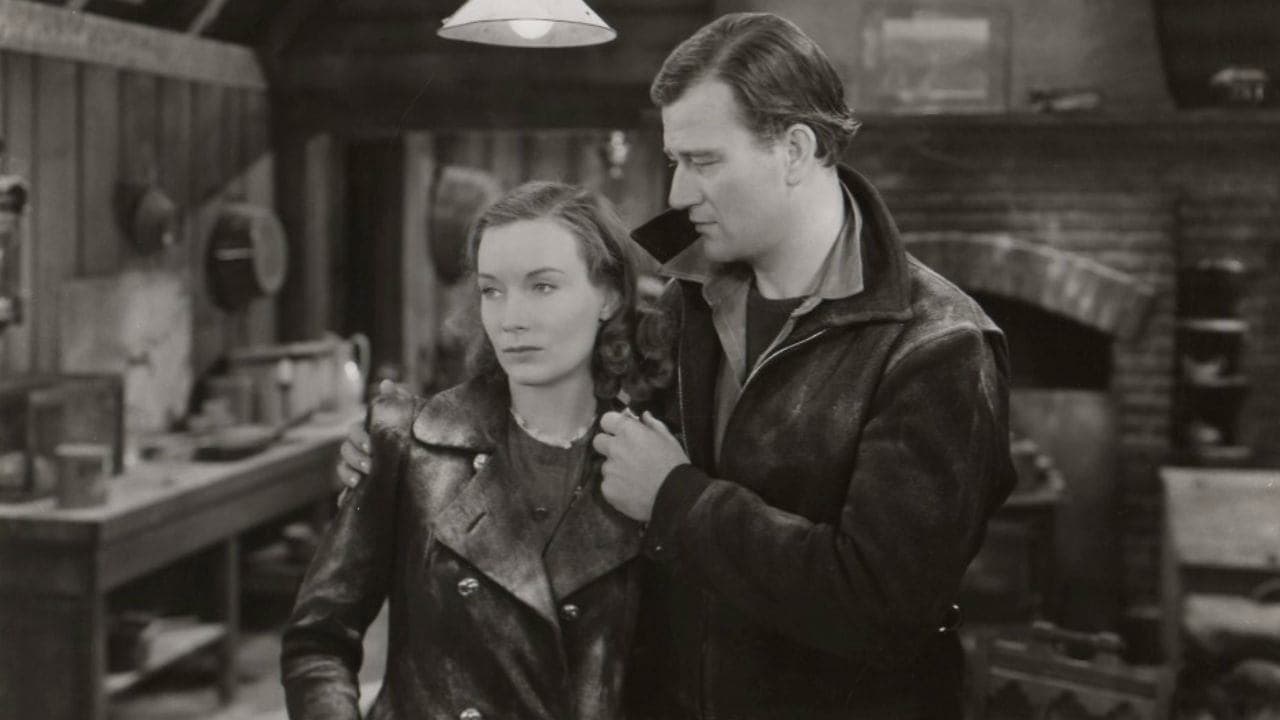
Three Faces West was produced by Republic Pictures in 1940, a studio known for churning out B-movies and Westerns on modest budgets. The 79-minute runtime reflects that efficiency—no wasted footage, everything moving toward resolution. The cast included Charles Coburn as Dr. Braun, bringing a quiet dignity to the role of a man uprooted from his life, and John Wayne as John Phillips, the idealistic leader trying to save his town. Wayne was already a rising star by 1940, though he hadn't yet become the icon he'd be by the late 1940s. Sigrid Gurie played Leni, the emotional center of the film, caught between two worlds and two men. The film arrived during a moment when Hollywood was beginning to grapple with the refugee crisis in Europe—not always gracefully, but with increasing frequency. It earned a modest IMDb rating of 5.5/10, suggesting audiences and critics found it earnest but uneven. The production values are what you'd expect from a Republic picture of that era: solid craftsmanship without extravagance, strong performances compensating for budgetary limits.
What Makes Three Faces West Stand Out
What's striking about Three Faces West is how it refuses to let the love story completely overshadow the historical moment. The Dust Bowl backdrop isn't just scenery—it's a character itself, forcing every person in the frame to reckon with survival and community. When Dr. Braun and Leni arrive, they're not exotic outsiders parachuting into a quaint town. They're joining people already in crisis, already desperate. The film doesn't shy away from showing how refugees might be viewed with suspicion, even compassion fatigue, in a town barely holding together. John Phillips's plan to move everyone west isn't presented as romance-novel fantasy; it's presented as practical desperation, and his attraction to Leni exists alongside his genuine commitment to his community. The thing nobody mentions is how the film actually complicates the "grateful immigrant" narrative that Hollywood often leaned on. Leni isn't simply grateful; she's conflicted, and the man she owes her life to isn't a villain either—he's someone who genuinely loves her. The performances ground these tensions. Coburn brings a melancholic wisdom to Dr. Braun, a man watching his daughter choose a future that doesn't include him. Wayne, in a role that doesn't showcase the charisma he'd later become famous for, plays a man trying to save others while losing the one thing he wants most. It's not his most celebrated performance, but it's honest.
Where to Stream Three Faces West Online
Three Faces West is currently available on major OTT services—you can check the "Where to Watch" widget at the top of this page for real-time availability across platforms in your region. Since streaming rights shift frequently, Movie OTT tracks current availability to save you the hunt. The film's public domain status in some territories means it occasionally surfaces on unexpected platforms, so it's worth checking multiple services if your first choice doesn't have it. Given that it's an 84-year-old Republic Pictures production, you'll find it on classic film collections and archive-focused streamers more often than on mainstream platforms.
Frequently Asked Questions
Q: Who directed Three Faces West?
The film was directed by Bernard Vorhaus, a prolific director who worked across multiple genres during Hollywood's Golden Age. Vorhaus had a steady career in B-movies and dramas throughout the 1930s and 1940s.
Q: Is Three Faces West based on a true story?
No, it's an original screenplay, though it was inspired by the genuine historical crisis of the Dust Bowl and the very real refugee situation in Europe during the late 1930s. The film blends these two historical realities into a fictional narrative.
Q: What is the official tagline for Three Faces West?
The film's tagline is "What barrier mars the path of their destiny...the fulfillment of their right to happiness?" It captures the central conflict between obligation and desire that drives the plot.
Q: How long is Three Faces West?
The film runs 79 minutes, a brisk runtime typical of 1940 studio productions that didn't linger on scenes the way later films often do.
Q: What genres does Three Faces West belong to?
It's classified as a drama, romance, and Western—a hybrid that uses the Western setting and migration narrative to explore deeper emotional and historical questions.
Final Thoughts on Three Faces West
Three Faces West won't blow you away with technical innovation or raw emotional power. It's a product of its era—earnest, sometimes clumsy, occasionally brilliant in small moments. But that's precisely why it's worth watching. There's something refreshing about a 1940 film that doesn't pretend to have easy answers about immigration, belonging, or love. The Dust Bowl setting gives the romance genuine stakes; nobody's choosing love in a vacuum here. If you're interested in how Hollywood processed historical trauma in real time, or if you want to see John Wayne in a role that actually demands something other than stoicism, it's worth your 79 minutes. Stream it on one of the major OTT services listed above and settle in for a film that trusts its audience to sit with uncomfortable questions.