Unpacking the Enigmatic Narrative of Ticket of No Return
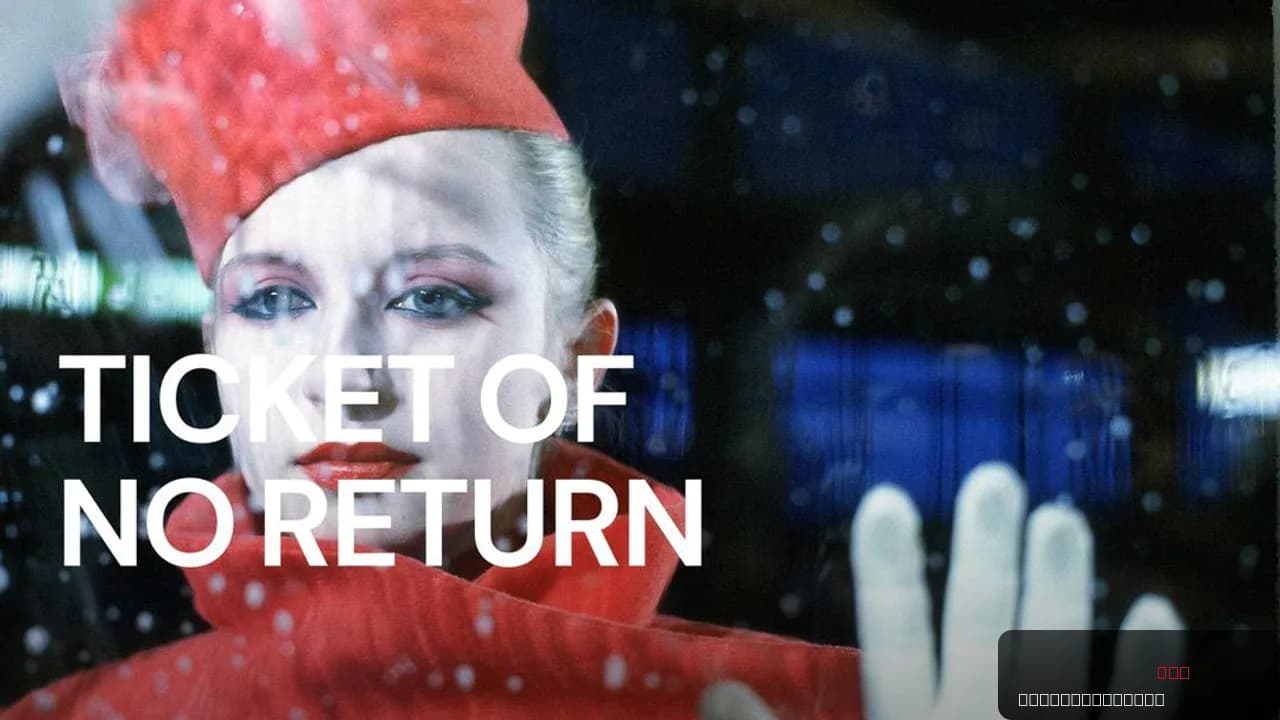
Ticket of No Return, Ulrike Ottinger's 1979 German drama, invites audiences into the singular world of a woman known only as "She." Having traveled to Berlin with a premonition of her own self-destruction, She embarks on a deliberate path to drink herself to death within ten days. Her journey is not one of despair, but rather a methodical, almost ritualistic embrace of excess, observed by a coterie of equally eccentric and unnamed women—the "Social Drinkers." As She navigates the city's nightlife and private spaces, her interactions are less about connection and more about performance, a calculated progression towards her chosen end. The film doesn't present a conventional plot with rising action and resolution; instead, it offers a series of meticulously crafted tableaux, each contributing to the protagonist's stark, self-imposed destiny (a true testament to Ottinger's artistic control). It's a challenging, hypnotic experience.
Production, Vision, and the Cast of Ticket of No Return
The genesis of Ticket of No Return lies firmly within the distinctive vision of German auteur Ulrike Ottinger. Released in 1979, this 109-minute drama isn't just a film; it’s widely regarded as the foundational piece of Ottinger's iconic "Berlin Trilogy," which also includes the later works Freak Orlando and Dorian Gray in the Mirror of the Yellow Press. This trilogy cemented Ottinger's reputation for crafting visually extravagant, often surreal, and deeply intellectual cinematic experiences that defy easy categorization. Her approach is intensely theatrical, transforming Berlin into a stage for her characters' allegorical journeys. The film brought together a fascinating ensemble, notably featuring Tabea Blumenschein in the central role of "She," whose stoic yet vulnerable performance anchors the film's deliberate pacing. Other key players include Lutze, Magdalena Montezuma, Orpha Termin, Monika von Cube, and Paul Glauer, each contributing to the film's unique, almost operatic atmosphere. And who could forget the legendary Nina Hagen, whose presence adds another layer of counter-cultural cool? Ottinger's direction here isn't about naturalism; it's about artifice, about creating a heightened reality that reflects internal states. For those interested in avant-garde cinema, tracking down information about these films and their creators is a rewarding experience, and Movie OTT helps aggregate where these seminal works might be found across various streaming services.
The Enduring Allure and Critical Resonance of Ticket of No Return
What gives Ticket of No Return its enduring power for audiences and critics decades after its 1979 release isn't its accessibility, but its audacity. It's a film that demands engagement, rewarding those willing to immerse themselves in its deliberate pace and striking aesthetics. The visual language is paramount: Ottinger uses lavish costumes, stark sets, and meticulous framing to create a dreamlike, almost painterly quality. Honestly, some of the shots are pure art. This isn't a narrative-driven film in the traditional sense; it’s an experience, a meditation on self-destruction as a form of artistic expression or rebellion. The performances, particularly Tabea Blumenschein's, are less about emotional realism and more about embodying archetypes—figures in a living, breathing painting. The film's themes of female identity, societal expectations, and the subversive act of choosing one's own demise are explored with a detached, almost clinical gaze, yet with an undeniable undercurrent of pathos. Hard to say if any film before or since has captured such a particular mood. While its experimental nature means it won't appeal to everyone, its artistic merit is clear; it holds a respectable 6.6/10 rating on IMDb from 611 votes, signaling its appreciation within a dedicated niche. As film scholar B. Ruby Rich once observed about Ottinger's work, "Her films are not just seen; they are encountered." That's it, exactly. The film challenges conventional notions of beauty and ugliness, pushing boundaries in a way few contemporary dramas dare.
Discovering Where to Stream Ticket of No Return Online
For cinephiles eager to experience the unique world of Ulrike Ottinger's Ticket of No Return, finding its streaming home is relatively straightforward. This seminal German drama is currently available for streaming on MUBI, a platform renowned for its curated selection of classic, independent, and international cinema. MUBI is an ideal destination for a film of this caliber, often serving as a digital art-house for works that challenge mainstream sensibilities. To confirm its current availability and explore other potential viewing options, you can always refer to the "Where to Watch" widget conveniently located at the top of this Movie OTT page. We're always updating our listings to ensure you have the most current information. It’s worth noting that streaming rights can change, so checking back with Movie OTT is a smart move if you don't immediately find what you're looking for or if you're tracking other avant-garde titles.
Frequently asked questions
Q: Who directed the 1979 German drama Ticket of No Return? A: Ticket of No Return was directed by the acclaimed German filmmaker Ulrike Ottinger. The film is considered the first installment in her influential "Berlin Trilogy."
Q: What is the runtime of Ticket of No Return? A: This experimental German drama has a runtime of 109 minutes. It offers a substantial, immersive viewing experience.
Q: Where can I stream Ticket of No Return online? A: Currently, Ticket of No Return is available to stream on MUBI. You can find up-to-date streaming information on Movie OTT's dedicated page for the film.
Q: What is the IMDb rating for Ticket of No Return? A: The film holds an IMDb rating of 6.6 out of 10, based on 611 votes. This rating reflects its niche appeal among fans of experimental and art-house cinema.
Q: Which actors are featured in Ticket of No Return? A: The cast includes Tabea Blumenschein in the lead role, alongside Lutze, Magdalena Montezuma, Orpha Termin, Monika von Cube, Paul Glauer, and the iconic Nina Hagen.
A Final Recommendation for Ulrike Ottinger's Ticket of No Return
If you're a viewer who appreciates cinema that defies easy categorization, Ticket of No Return is an absolute must-watch. It's not a film for passive viewing; it’s an invitation to engage with a unique artistic vision, a journey into the poetic and the provocative. Ulrike Ottinger's meticulous direction and the unforgettable performances create a world that lingers long after the credits roll. For those curious about the roots of avant-garde German cinema or simply seeking something truly different, this 1979 drama offers a rich, challenging, and ultimately rewarding experience. Here's a film that doesn't just tell a story; it makes you feel it. Movie OTT recommends it for anyone ready to step outside the mainstream.

