

The story of Tie Me Up! Tie Me Down!
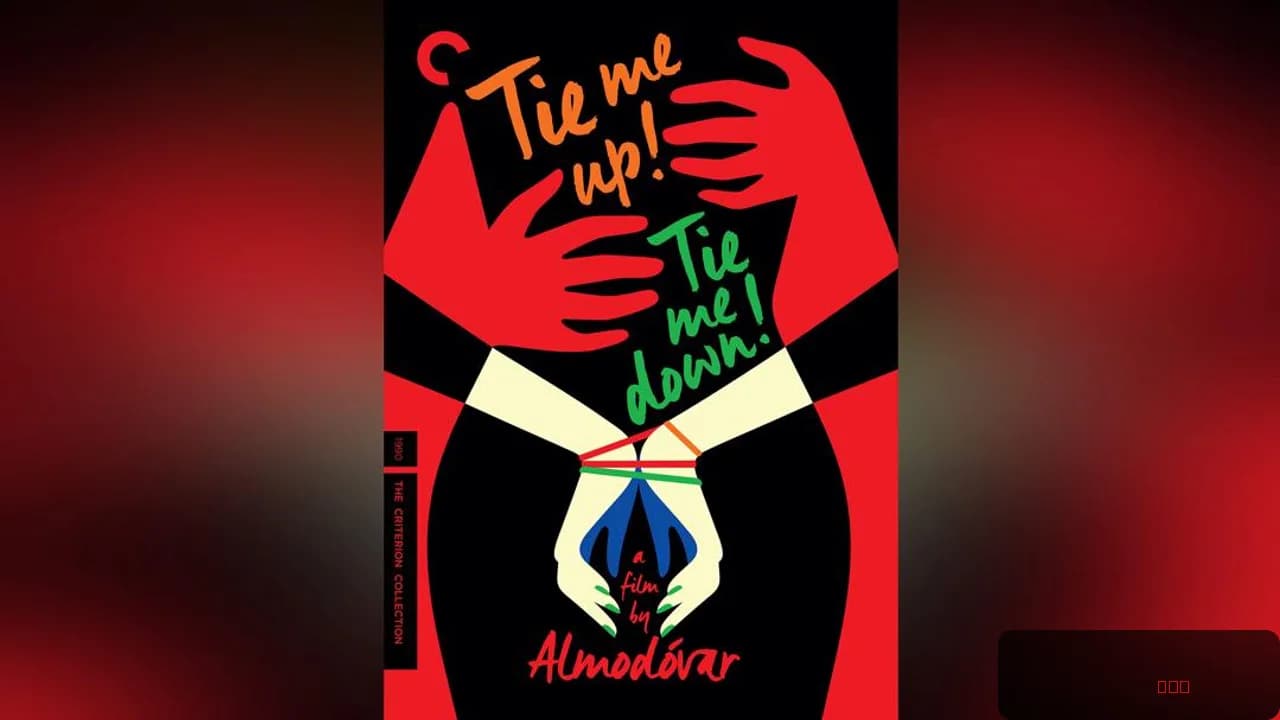
Pedro Almodóvar's Tie Me Up! Tie Me Down! opens on a man leaving a psychiatric hospital after years of confinement. He's been institutionalized since childhood, orphaned and alone—but he's convinced of one thing: his destiny is to find a woman named Marino, a recovering drug addict and adult film actress, and make her his wife. So he does what seems logical to him. He kidnaps her. What unfolds isn't a conventional thriller, though—it's something far stranger: a dark romantic comedy that asks whether love can bloom under the most impossible circumstances. Banderas plays Ricky, the ex-patient, with a mixture of childlike vulnerability and unsettling intensity. Abril's Marino is initially terrified, then gradually—bewilderingly—something shifts. The film doesn't look away from this contradiction. It leans into it, making the audience deeply uncomfortable while somehow maintaining a comedic pulse throughout its 101 minutes.
Behind the making of Tie Me Up! Tie Me Down!
Tie Me Up! Tie Me Down! was co-written and directed by Pedro Almodóvar, the Spanish filmmaker already known for his bold, genre-bending work. The 1990 release featured a stellar ensemble cast alongside leads Banderas and Abril: Francisco Rabal, Julieta Serrano, María Barranco, Loles León, and Rossy de Palma all brought depth to supporting roles. The film arrived during a period when Almodóvar was hitting his stride internationally, though this particular project proved more controversial than most. It earned an NC-17 rating in the United States—a kiss of death for mainstream distribution—which severely limited its theatrical reach. The box office reflected that reality: Tie Me Up! Tie Me Down! grossed just $4,087,361 worldwide, a modest return that belied its critical and cultural significance. Yet the film didn't go unnoticed by awards bodies. It accumulated 8 wins and 19 nominations across various ceremonies, signaling that despite its provocative premise, critics and industry professionals recognized the craft and audacity on screen. The Metascore sits at 55, indicating mixed critical response, while Rotten Tomatoes gives it a 69% Fresh rating—critics acknowledged its merits even when they had reservations about its ethics.
What makes Tie Me Up! Tie Me Down! stand out
Honestly, what's striking about Tie Me Up! Tie Me Down! is how it refuses to play by the rules of either genre it seems to be inhabiting. It's not a thriller because there's no real suspense—we know Ricky won't hurt Marino. It's not quite a romance because the foundation is coercion, which should be disqualifying. Yet Almodóvar treats both characters with such tenderness, such specificity, that the film becomes something else entirely: a meditation on loneliness, desperation, and the human need for connection, no matter how warped the circumstances. Antonio Banderas delivers a performance that shouldn't work—a man-child who's simultaneously menacing and pathetic, passionate and delusional—but it does work, largely because he never winks at the camera. He plays Ricky's conviction with absolute sincerity. Victoria Abril matches him, moving from terror to resignation to something that resembles, impossibly, genuine affection. Their chemistry is undeniable, which is exactly what makes the film so unsettling. You're not supposed to root for them as a couple, yet the film's emotional logic—the vulnerability both characters display, the way they see each other's damage and don't look away—pulls you in despite your better judgment. The supporting cast, particularly Francisco Rabal as Marino's aging father, grounds the film in a kind of domestic reality that makes the central premise even more bizarre by contrast. When you look at reviews from audiences who've discovered the film on streaming platforms, many echo a similar sentiment: they didn't expect to be moved, yet they were.
Where to stream Tie Me Up! Tie Me Down! online
Tie Me Up! Tie Me Down! is currently available on Prime Video, making it accessible to subscribers looking to explore Almodóvar's more provocative work. The film's streaming availability is tracked on Movie OTT, which aggregates where titles are currently available across platforms. Since the film carries an NC-17 rating, it's worth noting that you'll need to be logged in with an adult account to access it—Prime Video enforces rating restrictions. The 101-minute runtime means it's a manageable single-sitting watch, though you'll likely want to process what you've seen afterward. If you're new to Almodóvar's filmography, this isn't necessarily the best entry point (try Women on the Verge of a Nervous Breakdown first), but for those already familiar with his style, it's an essential piece of his artistic evolution.
Frequently asked questions
Q: Who directed Tie Me Up! Tie Me Down!?
Pedro Almodóvar co-wrote and directed the film in 1990. It's one of his most controversial works and represents a bold departure into darker territory than some of his earlier comedies.
Q: What's the IMDb rating for Tie Me Up! Tie Me Down!?
The film holds a 7/10 rating on IMDb based on 33,454 votes, suggesting a solid level of audience engagement despite—or perhaps because of—its provocative premise.
Q: Is Tie Me Up! Tie Me Down! based on a true story?
No, the film is an original screenplay written by Almodóvar. The premise is entirely fictional, though it explores real psychological and emotional themes around isolation and connection.
Q: Why did Tie Me Up! Tie Me Down! receive an NC-17 rating?
The film earned its NC-17 rating due to sexual content and the overall controversial nature of its premise involving kidnapping and coercion, even within a comedic framework.
Q: Where can I watch Tie Me Up! Tie Me Down! in 2024?
The film is currently streaming on Prime Video. Check Movie OTT's where-to-watch widget at the top of this page for the most up-to-date platform availability.
Final thoughts on Tie Me Up! Tie Me Down!
Tie Me Up! Tie Me Down! isn't a film for everyone—and Almodóvar knew that when he made it. It's deliberately provocative, ethically ambiguous, and structurally designed to make you question your own responses to what you're watching. But that's precisely why it matters. It's a film that trusts its audience to handle complexity and contradiction. The performances are extraordinary. The direction is assured. And despite everything—the kidnapping, the coercion, the madness—there's a strange, undeniable humanity at its core. If you've got the stomach for it, it's worth your time.